Gary Saretzky Photo Books
Samaras, Lucas. Lucas Samaras: Photos Polaroid Photographs, 1969-1983.
Samaras, Lucas. Lucas Samaras: Photos Polaroid Photographs, 1969-1983.
Couldn't load pickup availability
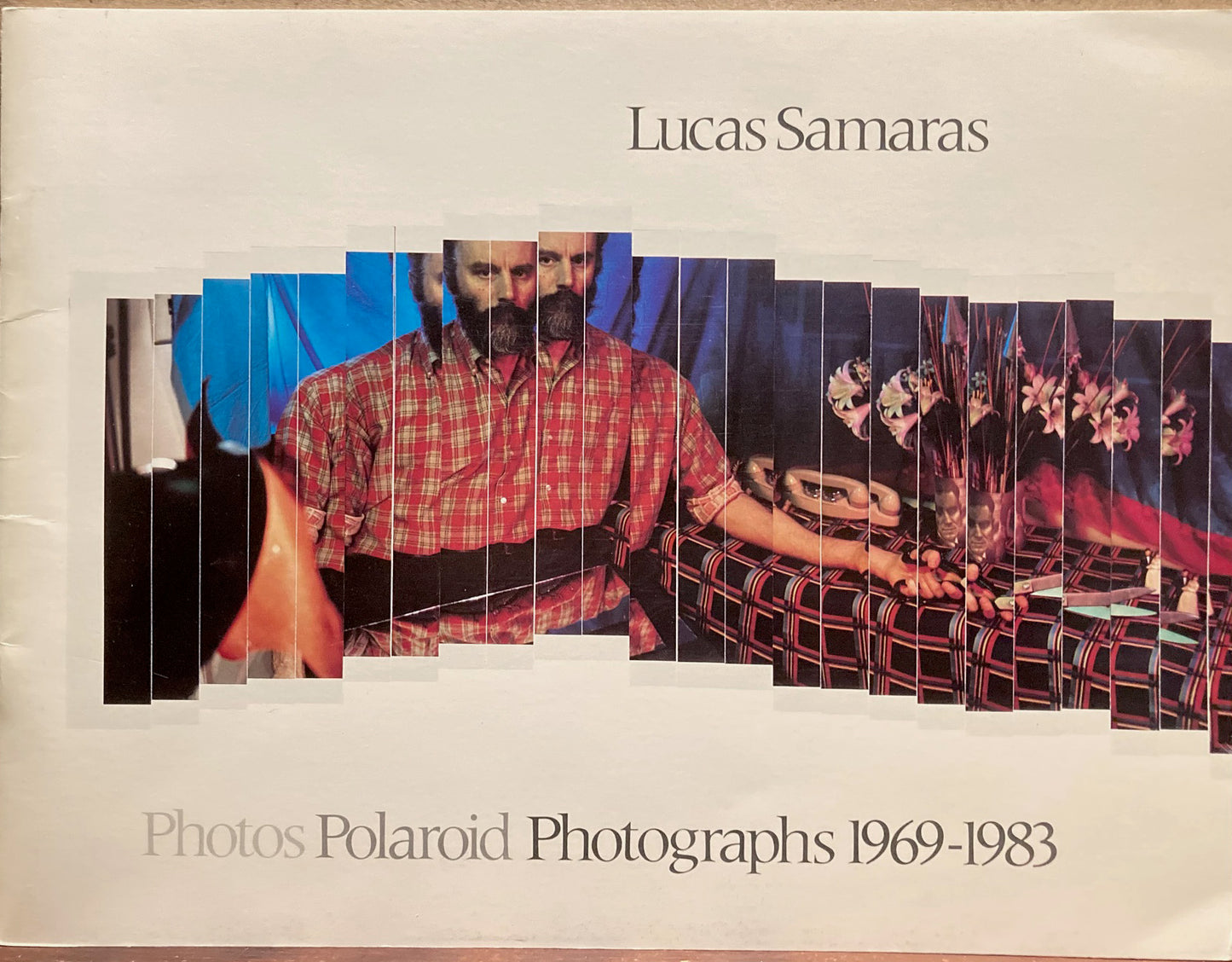
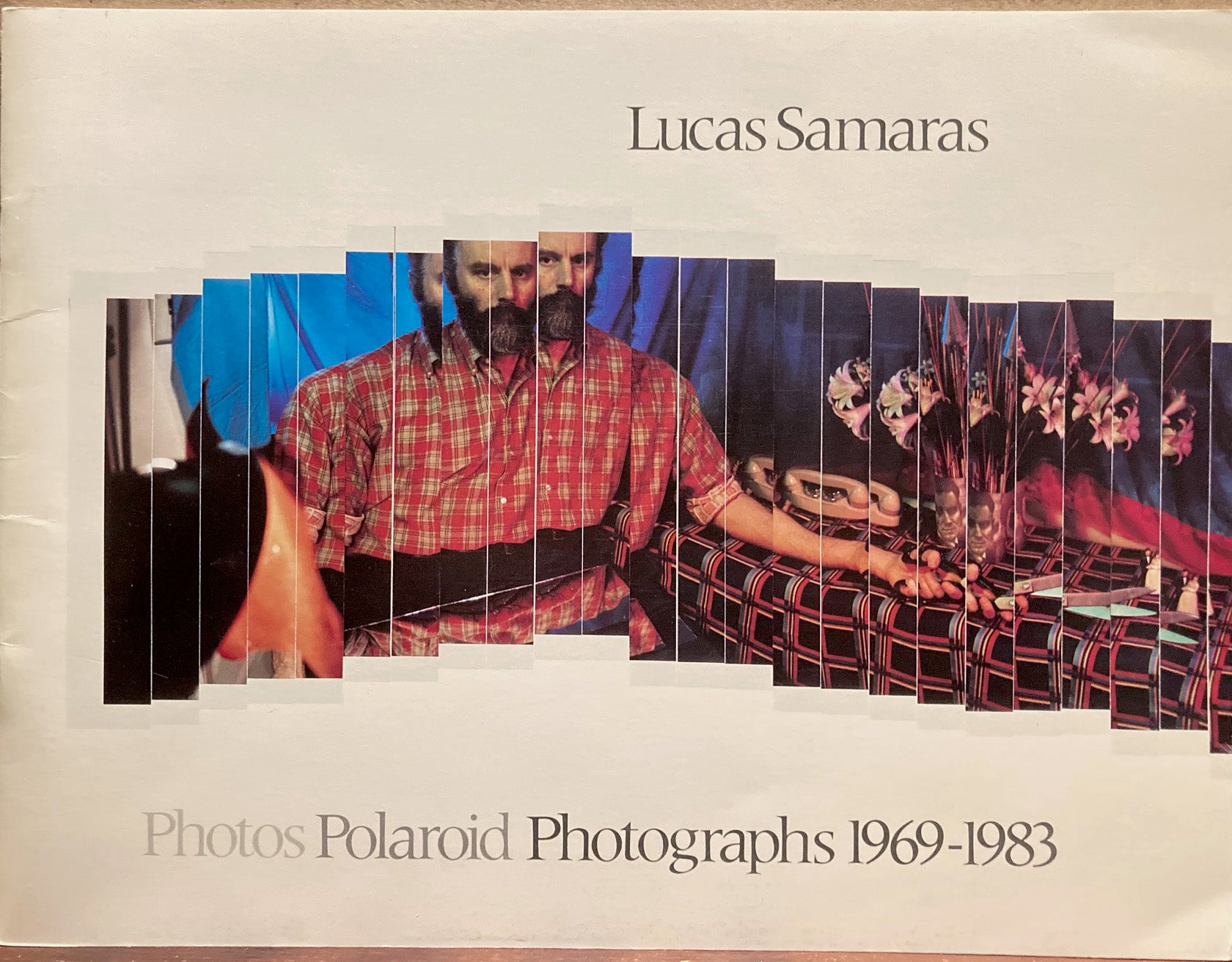
Musee Nat'l D'Art Moderne/ICP, 1983. Touring Exhibition Catalog. Texts: Alain Sayag; Roger Marcel Mayou; Peter Weiermair; and William A. Ewing. [Includes examples from Samaras' series, AutoPolaroids, Splits, and Photo-Transformations.] Oblong illustrated wraps, 24 pages, VG+ with small shallow indentations and crimps on cover.
Lucas Samaras (1936–2024) was a Greek-born American multidisciplinary artist, sculptor, and photographer acclaimed for his pioneering, psychological explorations of self-identity and auto-portraiture. Raised in Greece before immigrating to the United States in 1948, he studied art at Rutgers University under Allan Kaprow and participated in early "Happenings" and performance art alongside Fluxus figures before establishing his practice in New York. Samaras gained widespread prominence in the 1970s as one of the first artists to radically experiment with Polaroid instant photography.Through seminal series such as AutoPolaroids and Photo-Transformations, he manipulated the wet dyes and chemicals of developing Polaroid film stock while staging theatrical, often distorted self-portraits inside his living space and studio. His broader body of work—which includes mirrored room installations, assemblage boxes, and digital manipulations—frequently interrogated themes of narcissism, transformation, and physical form. Over a six-decade career, his work earned major retrospectives at institutions such as the Whitney Museum of American Art, the Metropolitan Museum of Art, and the Art Institute of Chicago, cementing his status as a key pioneer of modern photographic experimentations.
Lucas Samaras: Photos Polaroid Photographs, 1969-1983 is a groundbreaking exhibition catalogue published by the Centre Georges Pompidou in Paris. Organized by the Polaroid International Collection, this volume accompanied a major traveling retrospective that traced fourteen years of radical photographic experimentation by the celebrated Greek-born American multidisciplinary artist Lucas Samaras. The publication captures a foundational moment in contemporary art where the immediate, commercial medium of instant photography was transformed into a site for raw, surrealist self-exploration.
Key Overview and Objectives
-
The Studio as a Laboratory: The catalogue showcases how Samaras turned his cramped New York apartment-studio into a theatrical stage. Operating entirely alone, he utilized the immediate feedback of the Polaroid system to act simultaneously as his own director, performer, critic, and audience.
-
A Creative Psychodrama: Rather than producing traditional portraits, Samaras used the publication to chronicle an unflinching, often discomforting autobiographical exploration that challenged the boundaries of identity, gender, and the human form.
Core Series and Artistic Innovation
-
AutoPolaroids (1969–1971): The volume highlights Samaras's early black-and-white and color experiments. These works rely on intense, confrontational staging, theatrical lighting, and hand-applied ink to manipulate his own naked image.
-
Photo-Transformations (1973–1976): A central focus of the catalogue is Samaras's legendary exploitation of the Polaroid SX-70 film system. Recognizing that the dye emulsion remained wet and malleable under its plastic coating for several minutes after ejection, he used styluses, fingers, and rubber tools to physically "paint" and distort the wet chemical layers. This resulted in nightmarish, melting self-portraits that dissolve the boundaries between photography and abstract painting.
-
Sittings and Panoramas (Late 1970s–1983): The later sections of the book transition into his large-format color work. One series features friends, critics, and art world figures posing naked in his studio while Samaras remains clothed, reversing the typical power dynamics of portraiture. The volume concludes with his panoramic works, where he sliced multiple large-format Polaroids into vertical strips and meticulously wove them back together to create elongated, fractured, and monumental composite figures.
Significance
Photos Polaroid Photographs, 1969-1983 stands as a monumental document of post-war avant-garde photography. By showcasing Samaras’s masterful subversion of instant-film technology, the Pompidou publication cements his legacy as a pioneer who shattered the concept of straight documentary photography, transforming the instant snapshot into a deeply expressive, psychological fine art medium.