Gary Saretzky Photo Books
Saltzman, Jeffrey. The Pillars of Hercules by Jeffrey Saltzman.
Saltzman, Jeffrey. The Pillars of Hercules by Jeffrey Saltzman.
Couldn't load pickup availability
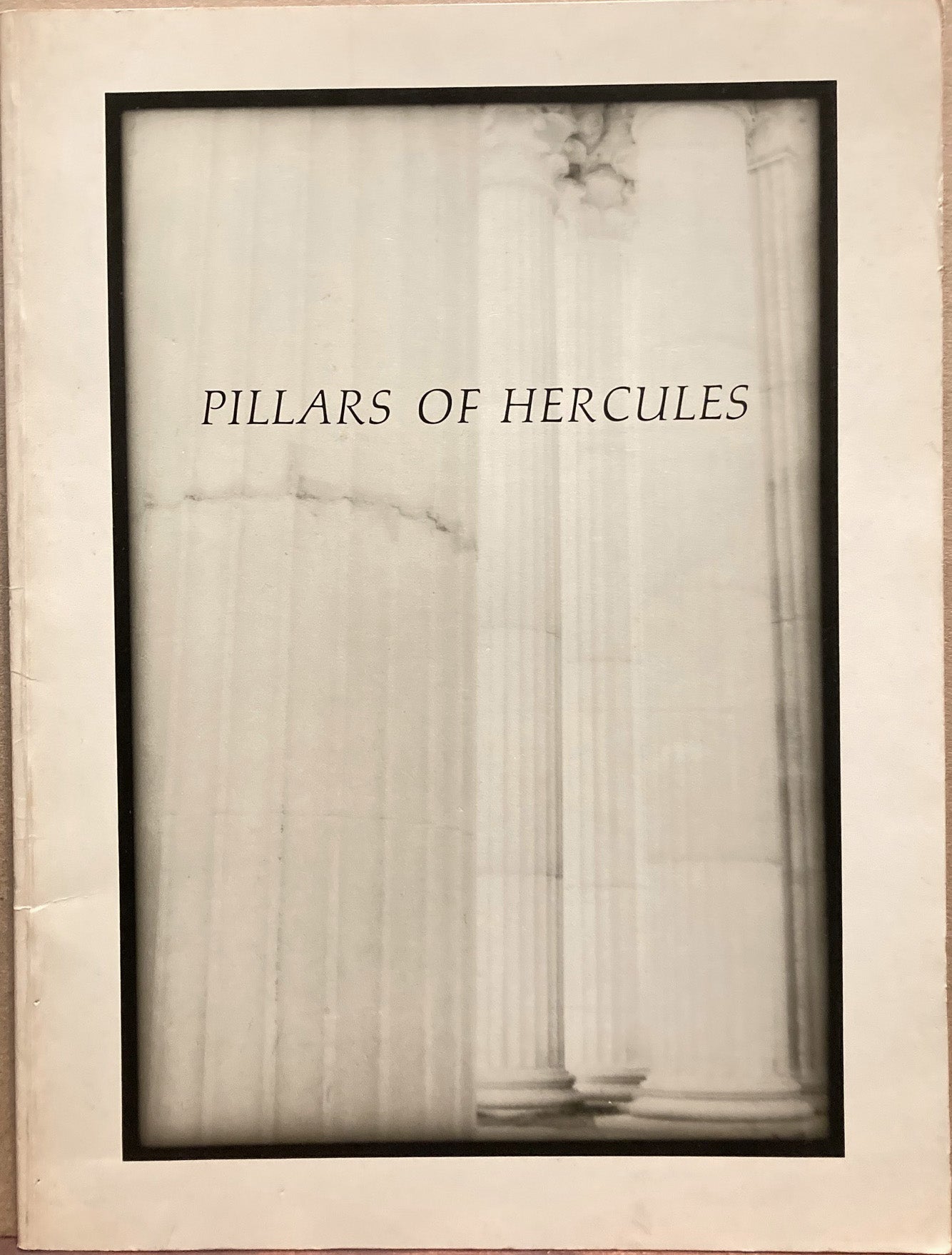
Alan Wofsey Fine Arts, 1978. [Photographs of pillars and other architectural elements, sometimes with nude male or female figures, in soft focus.] Twenty full page black-and-white illustrations, book 9x12 inches. Wraps, near fine with crimp on back cover. Summary:
The Pillars of Hercules is an evocative, finely crafted fine-art photography monograph by American photographer Jeffrey Saltzman. Comprising full-page, high-quality duotone black-and-white plates, this volume serves as a brief but visually dense exploration of neoclassical architecture and the human form, showcasing Saltzman’s distinct pictorialist style.
Key Overview and Objectives
-
Intersecting Form and Structure: The primary artistic objective of the book is to explore the aesthetic dialogue between rigid, classical man-made architecture and the fluid geometry of the human body.
-
Mythological Subtext: Drawing its name from the legendary mythological phrase for the entrance to the unknown world at the Strait of Gibraltar, the book uses its title to frame its architectural subjects as monumental, symbolic thresholds of transition and ancient strength.
Core Themes and Visual Style
-
Neoclassical Splendor: The core imagery centers around dramatic, soft-focus captures of grand pillars, columns, cornices, and other classical architectural elements. Saltzman captures these monuments with an eye for dramatic scale, emphasizing their enduring, monolithic textures.
-
The Figure in Space: Interspersed throughout the architectural imagery are carefully staged nude figures. Rather than acting as traditional portraits, the bodies are juxtaposed against the stone structures, echoing the shapes of the columns and highlighting a stark contrast between soft, living flesh and cold, permanent stone.
-
Dreamlike Pictorialism: Saltzman’s visual approach relies on a soft-focus technique and high-contrast duotone printing. The heavy use of deep shadows, muted ambient light, and atmospheric blurring gives the imagery a romantic, timeless quality reminiscent of late 19th- and early 20th-century Pictorialism.
Significance
The Pillars of Hercules stands as an excellent example of late-1970s fine-art photography that deliberately rejected straight, sharp documentary realism in favor of symbolic, atmospheric manipulation. By seamlessly blending architectural study with figurative fine-art nude photography, Saltzman’s monograph offers a brief but highly cohesive meditation on classical form, beauty, and mythology.
