Gary Saretzky Photo Books
Russell, Andrew J. Westward to Promontory. Photographs by A.J. Russell.
Russell, Andrew J. Westward to Promontory. Photographs by A.J. Russell.
Couldn't load pickup availability
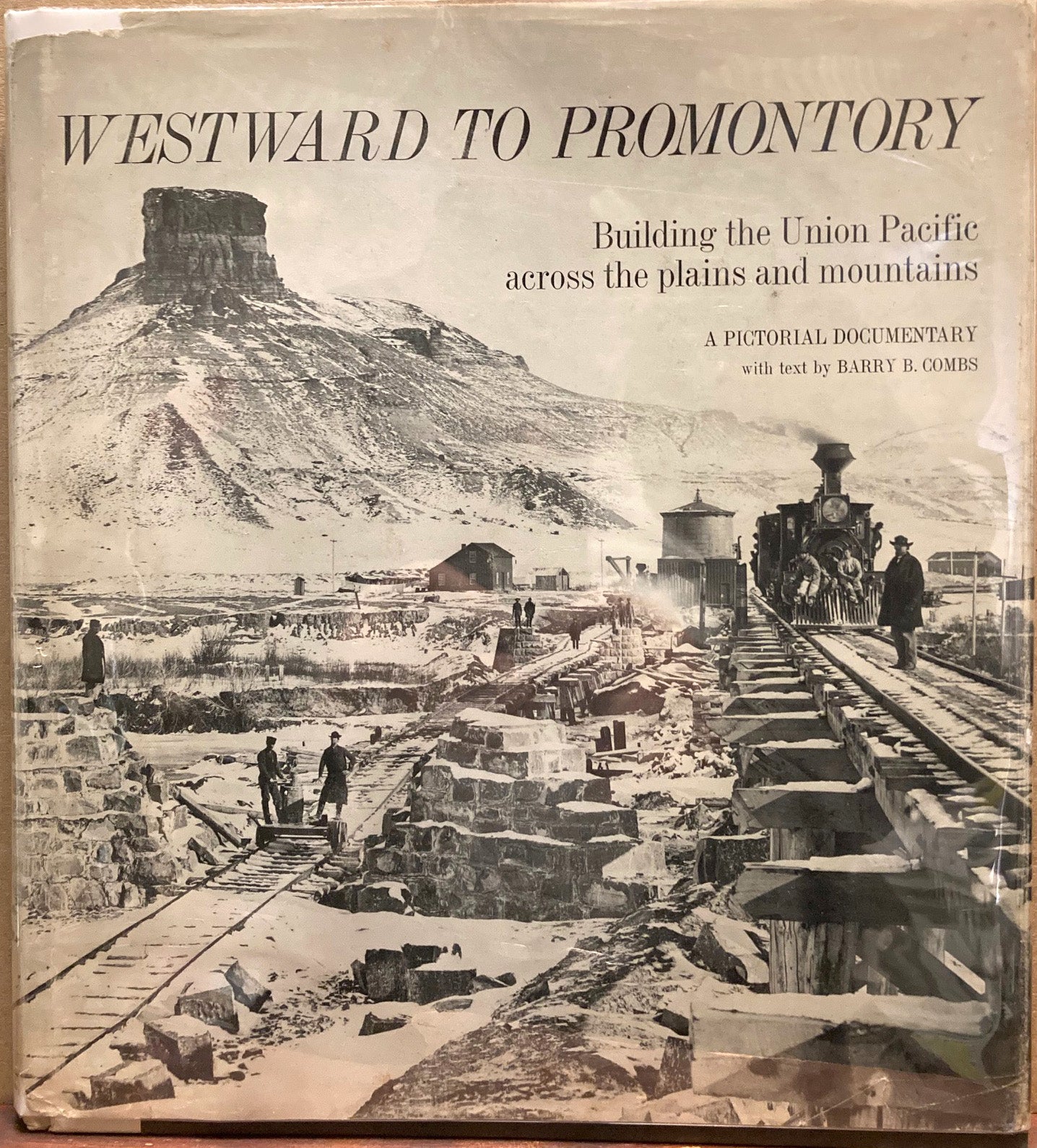
Building the Union Pacific Across the Plains and Mountains. A Pictorial Documentary. Photos by A.J. Russell. Promontory Press, 1969. ISBN 0883940116. (ISBN numbers were adopted in 1969.) Text by Barry B. Combs. Illustrated with reproductions of A.J. Russell photographs made with 10 x 13 collodion wet plate negatives. Essential book on the history of railroads and Russell’s western landscape photography. Before he did these photos, A.J. Russell was active as a photographer during the Civil War. He is considered one of the major figures in Western United States landscape photography in the nineteenth century. Important book for both the history of railroads and the history of photography. Fine with very good chipped and edge worn dust jacket. There are three small pieces of the dust jacket missing on the top and bottom edges, the largest on the back about one inch in diameter.
Andrew Joseph "A.J." Russell (1829–1902) was a 19th-century American photographer celebrated for his seminal documentation of the American Civil War and the expansion of the American West. Raised in upstate New York, Russell originally trained as a portrait painter before enlisting in the Union Army in 1862, where he served as a captain in the 141st New York Infantry. After learning the wet-collodion photographic process, he was reassigned to the U.S. Military Railroad Corps, becoming the War Department's sole official military officer-photographer and capturing critical battleground scenes, engineering feats, and wartime infrastructure. Following the war, Russell was hired as the official photographer for the Union Pacific Railroad, producing over 200 large-format plates and hundreds of stereoviews culminating in his landmark 1869 album The Great West Illustrated. His most famous photograph, East and West (or "The Joining of the Rails"), famously captured the driving of the Golden Spike at Promontory Summit, Utah, on May 10, 1869, cementing the completion of the First Transcontinental Railroad. He later returned to New York City, working for two decades as a pioneering photojournalist and illustrator for Frank Leslie’s Illustrated Newspaper.
Westward to Promontory: Building the Union Pacific Across the Plains and Mountains is a historic pictorial documentary that chronicles the monumental construction of the eastern half of the First Transcontinental Railroad.
The Core Photographic Collection
The book's centerpiece is the remarkable work of Andrew J. Russell, the official photographer for the Union Pacific Railroad. Russell captured the grueling, epic engineering feat using massive 10x13-inch glass plate negatives.
The visual narrative documents the rapid progression of the tracks through treacherous terrains, from the flat expanses of the Great Plains to the rugged cliffs of the Rocky Mountains. The imagery culminates in the iconic Golden Spike ceremony at Promontory Summit, Utah, where the Union Pacific and Central Pacific rails finally met.
Key Themes and Visual Content
-
Engineering and Human Labor: The photographs provide a raw, detailed look at the thousands of surveyors, engineers, and laborers—predominantly Irish immigrants and Civil War veterans—who laid the tracks.
-
The Transformed Landscape: The plates vividly illustrate the taming of the American wilderness, featuring dramatic landscapes intersected by newly built trestles, bridges, tunnels, and early steam locomotives.
-
Historical Documentation: Beyond the technical achievements, Russell's work captures the temporary, lawless "Hell on Wheels" tent towns that sprung up along the construction route.
Format and Commentary
-
Pictorial Scope: The book functions as both a high-quality art monograph and a primary historical record, utilizing the large format of the publication to reproduce Russell's wide-angle glass plate shots with exceptional clarity.
-
Narrative Integration: The photographs are accompanied by historical text and detailed captions written by historian Barry B. Combs, which provide crucial geopolitical context, engineering statistics, and anecdotes about the daily lives of the workers.
