Gary Saretzky Photo Books
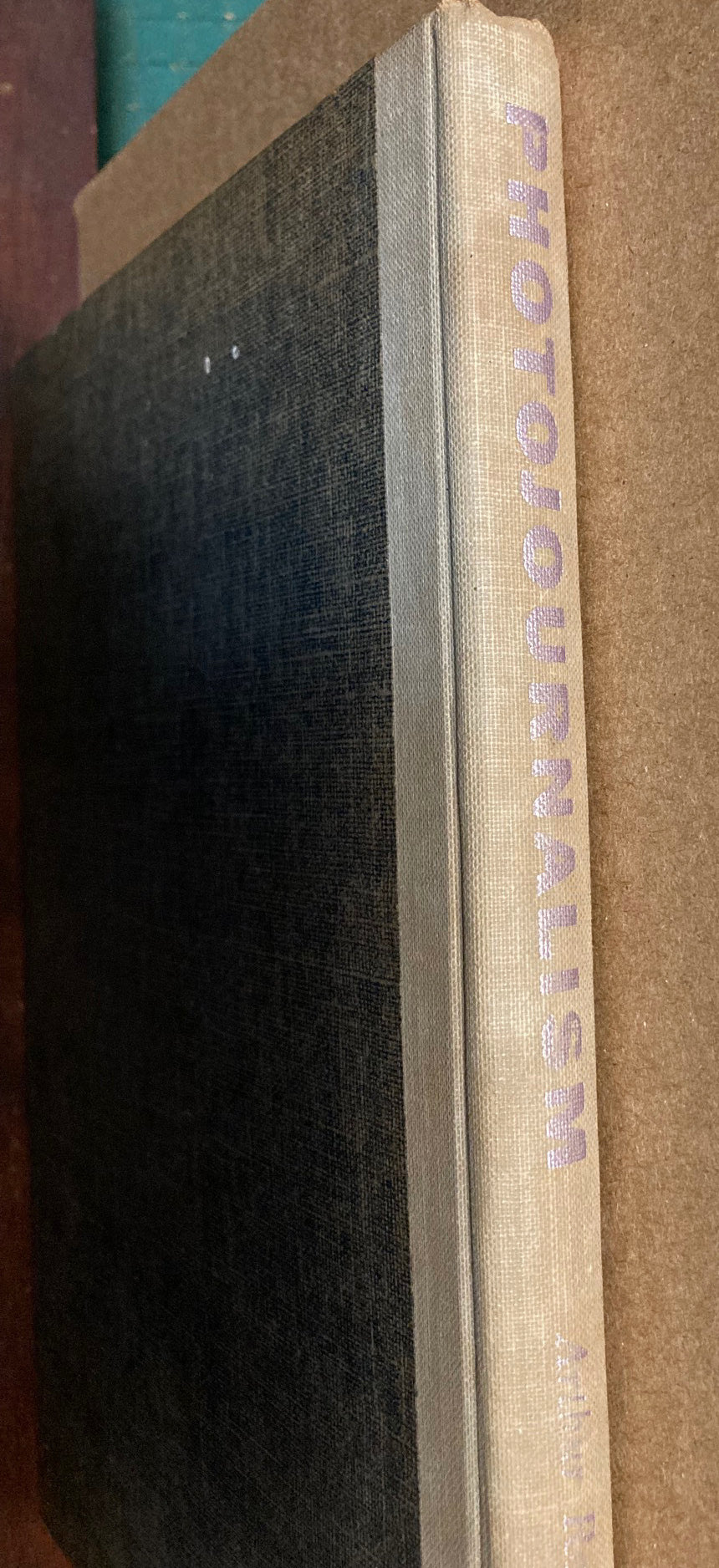
Rothstein, Arthur. Photojournalism. Pictures for Magazines and Newspapers by Arthur Rothstein.
Rothstein, Arthur. Photojournalism. Pictures for Magazines and Newspapers by Arthur Rothstein.
Couldn't load pickup availability
Amphoto, 1956. 1st edition. [Arthur Rothstein worked for Roy Stryker at the Farm Security Administration before moving on to Look Magazine, where he was Technical Director at the time of this book's release. Includes photos by Rothstein, Joe Rosenthal, Fred Hanson, Joseph Costa, Max Desfor, Paul Nadar, Eadweard Muybridge, Frank Bauman, et al. This copy is signed by previous owner, the late Trenton, New Jersey, photographer, M.W. Barish.] VG+, no dust jacket. Summary:
Photojournalism: Pictures for Magazines and Newspapers by Arthur Rothstein, first published in 1956, is considered a seminal textbook and practical guide that helped codify photojournalism as a distinct professional discipline. Drawing from his extensive experience with the Farm Security Administration (FSA) and as the Director of Photography for Lookmagazine, Rothstein provides a comprehensive overview of the craft, balancing technical execution with ethical responsibility.
Vision and Communication
Rothstein explores how visual images function as a universal language. He argues that the primary role of a photojournalist is to communicate a narrative clearly and immediately, using the camera as an objective reporting tool rather than an instrument for purely personal artistic expression.
The Dynamics of the Photo Story
A central focus of the book is the mechanics of constructing a "picture story" or photo essay for print media. Rothstein details the collaborative process between the photographer, the picture editor, and the art director, illustrating how single exposures are selected, cropped, and sequenced to form a cohesive, impactful narrative layout.
Craftsmanship, Instinct, and Equipment
The text offers practical advice on the technical demands of the field. Rothstein emphasizes the importance of a photographer’s "presence and instinct"—the ability to anticipate moments, remain unobtrusive, and react quickly under pressure. He discusses equipment choices, including the advantages of emerging smaller formats like the 35mm camera, and explains how to manipulate lighting, apertures, and laboratory development to achieve maximum clarity.
Ethics and Legalities
Addressing the serious responsibilities of the press, Rothstein provides a foundational look at the ethics of documentary media. He tackles complex issues surrounding truth in imagery, the dangers of staged setups, and the baseline legal constraints regarding copyright and the right to privacy.
