Gary Saretzky Photo Books
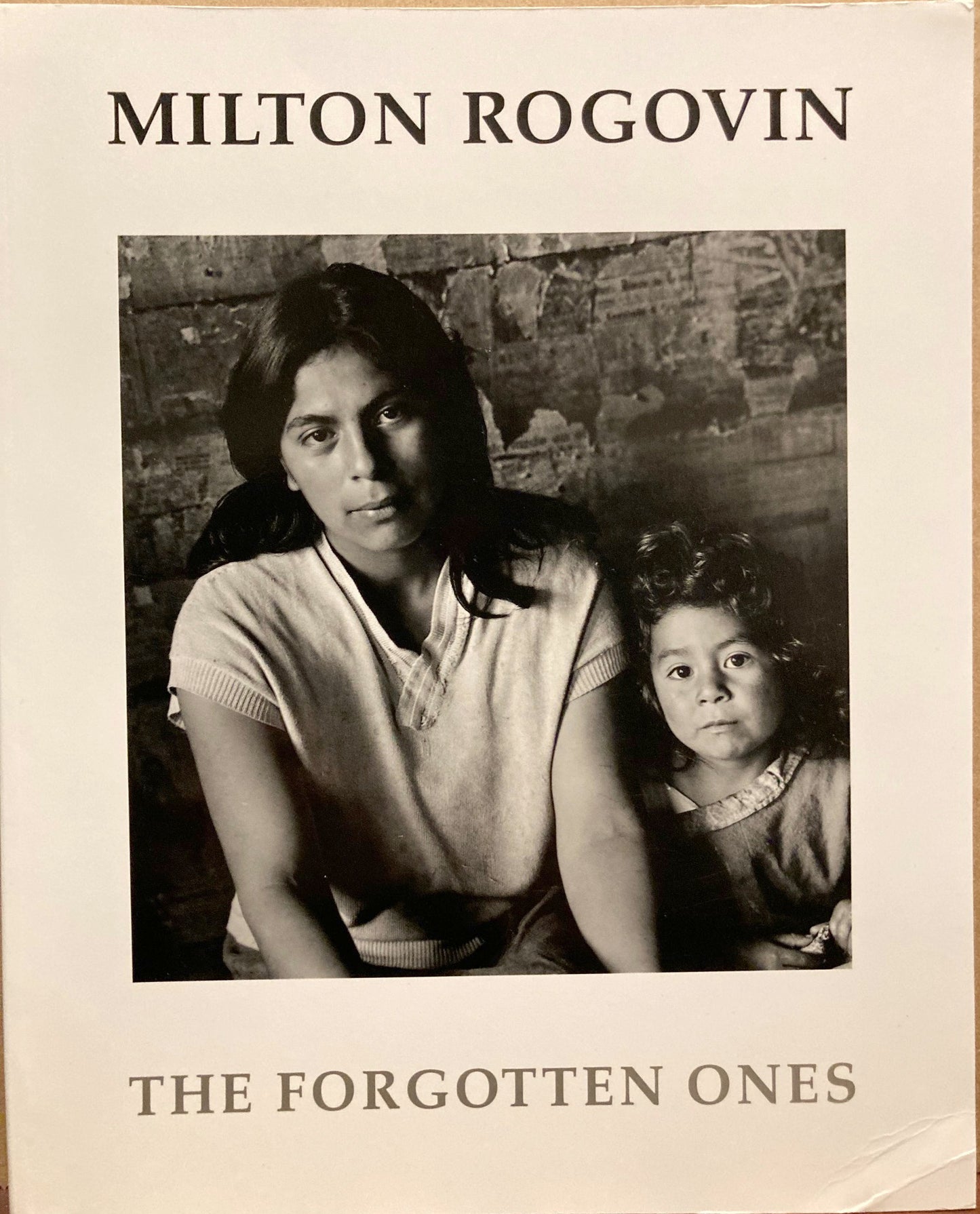
Rogovin, Milton. Milton Rogovin: The Forgotten Ones.
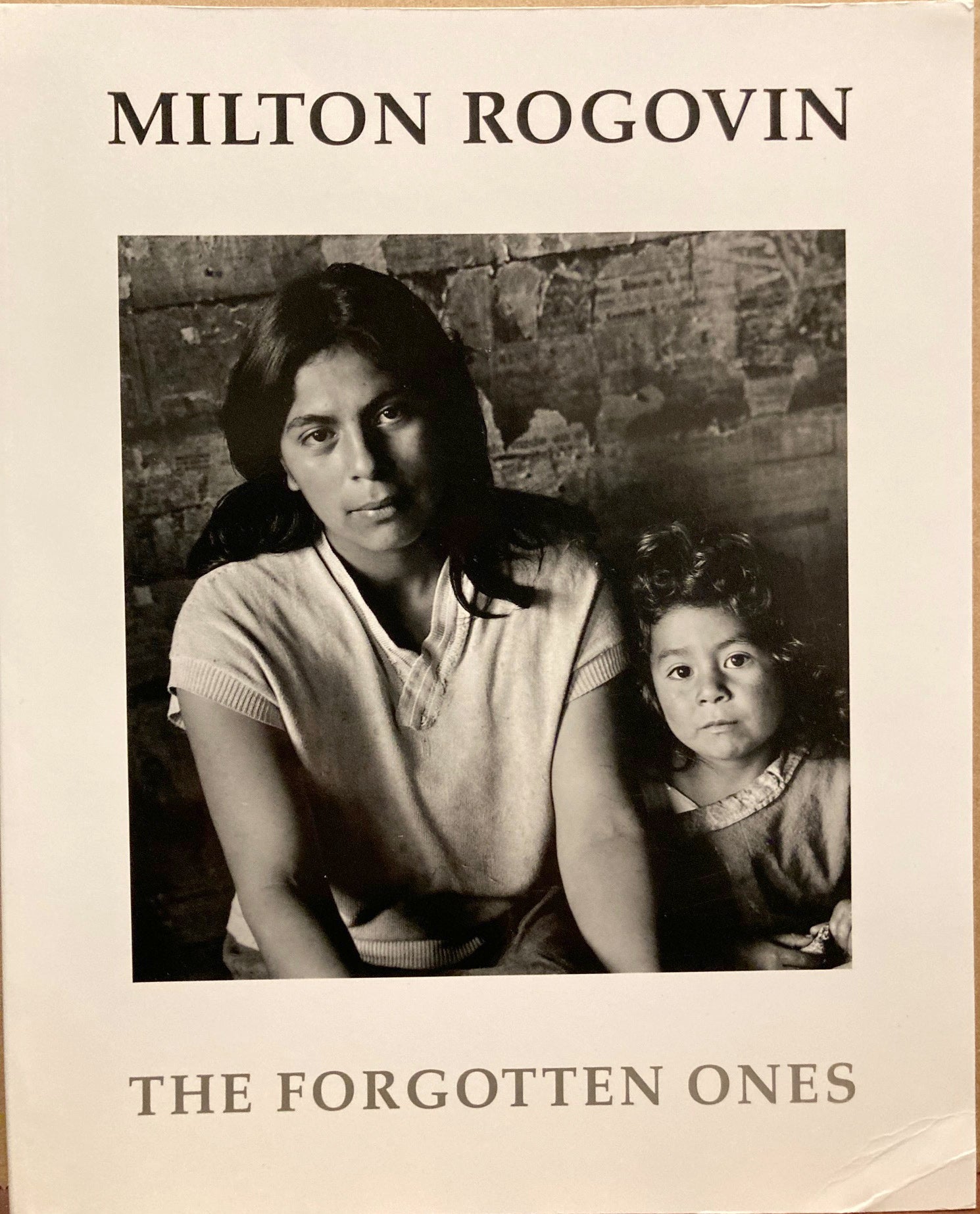
Rogovin, Milton. Milton Rogovin: The Forgotten Ones.
Couldn't load pickup availability
University of Washington, 1985. Texts by Cheryl A. Brutvan, Robert J. Doherty, and Fred Licht. [Retrospective of Milton Rogovin's photographs of the working class. Includes interview with the photographer.] Wraps, crease in lower right corner of cover, otherwise VG+. Summary:
Milton Rogovin: The Forgotten Ones is a powerful photographic monograph and celebration of the life's work of social documentary photographer Milton Rogovin.
Origin and Context
The book highlights Rogovin’s unique journey into photography. Originally an optometrist, his business was ruined in the 1950s after he was blacklisted for refusing to answer questions before the House Un-American Activities Committee. Turning to the camera as a new means of expression, he dedicated his life to documenting marginalized communities, poor working-class families, and laborers—the individuals he felt society had cast aside as "the forgotten ones."
Core Visual Narrative
The visual heart of the book centers around the Lower West Side of Buffalo, New York, where Rogovin spent decades meticulously documenting a depressed six-block area.
The collection is celebrated for its deep empathy and unique longitudinal structure:
-
Lower West Side Diversity: Rogovin’s portraits give profound dignity to a diverse cross-section of residents, including African Americans, Puerto Ricans, Native Americans, and poor whites.
-
The Passage of Time: A defining element of the work is Rogovin’s commitment to returning to the exact same families and individuals over consecutive decades. Through these chronological pairings and triptychs, the imagery maps the physical, emotional, and social evolution of his subjects over time.
-
Global Scope: While rooted in Buffalo, the anthology expands to encompass his parallel documentary work capturing working-class conditions across Appalachia, Chile, France, Scotland, Spain, and Mexico.
Artistic Approach
-
Collaboration and Respect: Unlike intrusive street photography, Rogovin’s method relied entirely on a direct, cooperative approach. His subjects look straightforward into the camera, active participants in how they are framed.
-
Duotone Craftsmanship: The book features over 120 rich duotone reproductions that highlight Rogovin's signature use of unmanipulated, natural lighting to capture raw texture and human expression.