Gary Saretzky Photo Books
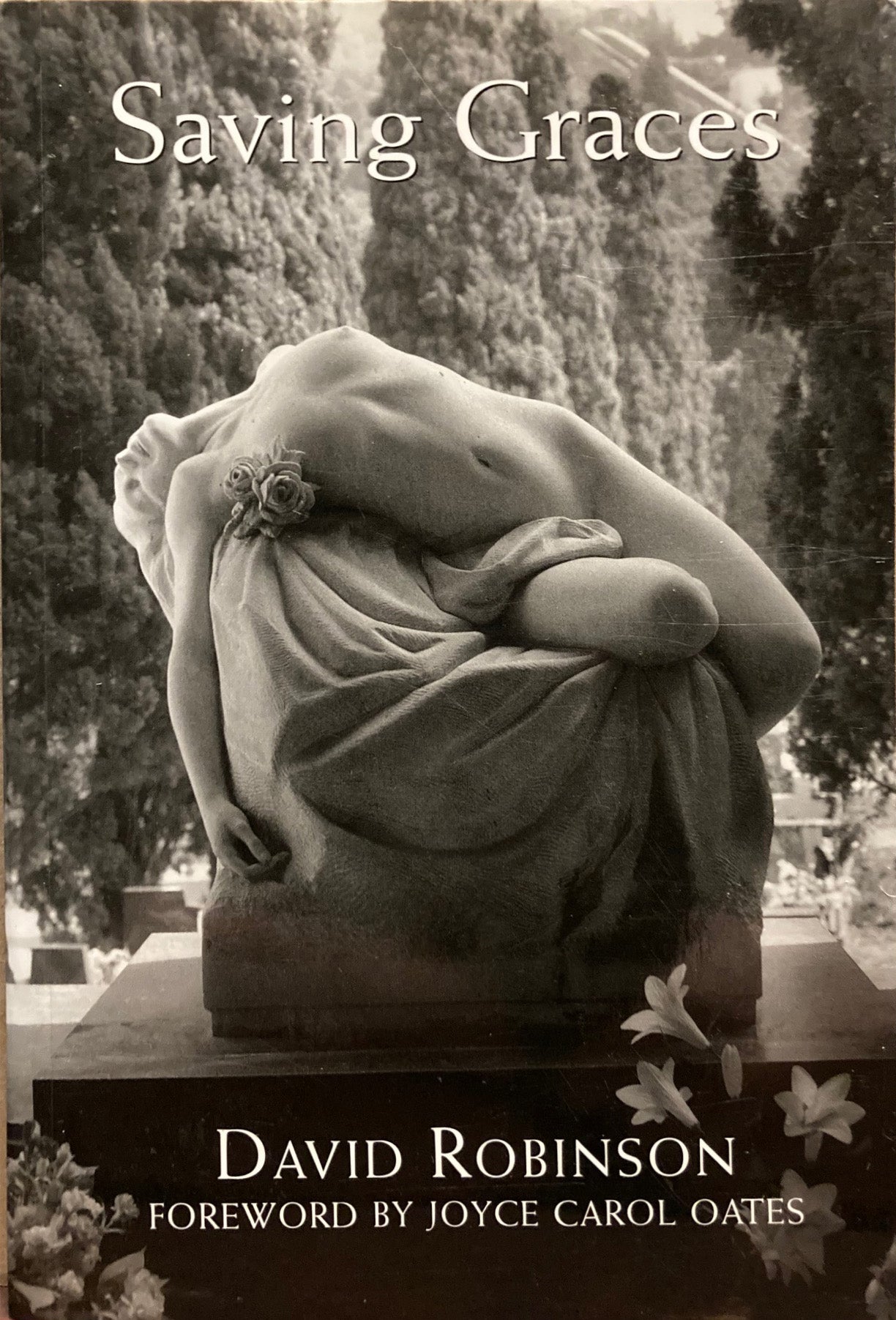
Robinson, David. Saving Graces: Images of Women in European Cemeteries by David Robinson.
Robinson, David. Saving Graces: Images of Women in European Cemeteries by David Robinson.
Couldn't load pickup availability
W.W. Norton, 1995. Foreword by Joyce Carol Oates. 1st printing in wraps, very good with a bit of curling to front wrapper, else fine. $15.95 price sticker on verso. Summary:
Saving Graces: Images of Women in European Cemeteries is a striking photographic study by American photographer David Robinson that documents 19th-century funerary art across Europe.
Featuring a foreword by acclaimed author Joyce Carol Oates, the book consists of 52 stark, monochrome photographs focused on a specific, recurring phenomenon: sculpted, idealized female figures mourning the dead.
Core Themes & Content
-
The "Saving Graces": Robinson focuses entirely on the allegorical female statues that adorn the graves of the 19th-century haute bourgeoisie. Strikingly, these figures are distinctly human women—not winged angels—portrayed in various stages of profound distress or vulnerability.
-
The Four Stages of Grief: Robinson categorizes the emotional and physical states of these carved marble and bronze women into four distinct expressions:
-
Total Collapse: Women completely prostrated and overcome by wracking, incapacitated grief.
-
Reaching Upward: Figures stretching toward the heavens as if trying to call a lost loved one back to Earth.
-
Immobile Sorrow: Distraught figures frozen in place, often holding their heads in their hands.
-
Resignation: Figures who appear calm, accepting of death, and quietly resigned to their loss.
-
-
The Conflation of Death and Eroticism: A central paradox explored by both Robinson and Oates is the overt sensuality of the statues. Many of these grieving figures are highly romanticized, voluptuous, and draped in revealing, wet-look shrouds—or are even starkly nude. The book examines this intersection of grief, male fantasy, and status, where a beautiful, young woman is captured weeping or swooning over a grave for all eternity.
Visual Style
Robinson strips away background clutter, names, dates, and color to focus purely on the texture, shading, and emotional weight of the stone and bronze. The resulting black-and-white portfolio functions as a narrative on romanticized mortality, memory, and the psychosexual mindset of Victorian-era commemoration.
