Gary Saretzky Photo Books
Riis, Jacob. How the Other Half Lives by Jacob Riis.
Riis, Jacob. How the Other Half Lives by Jacob Riis.
Couldn't load pickup availability
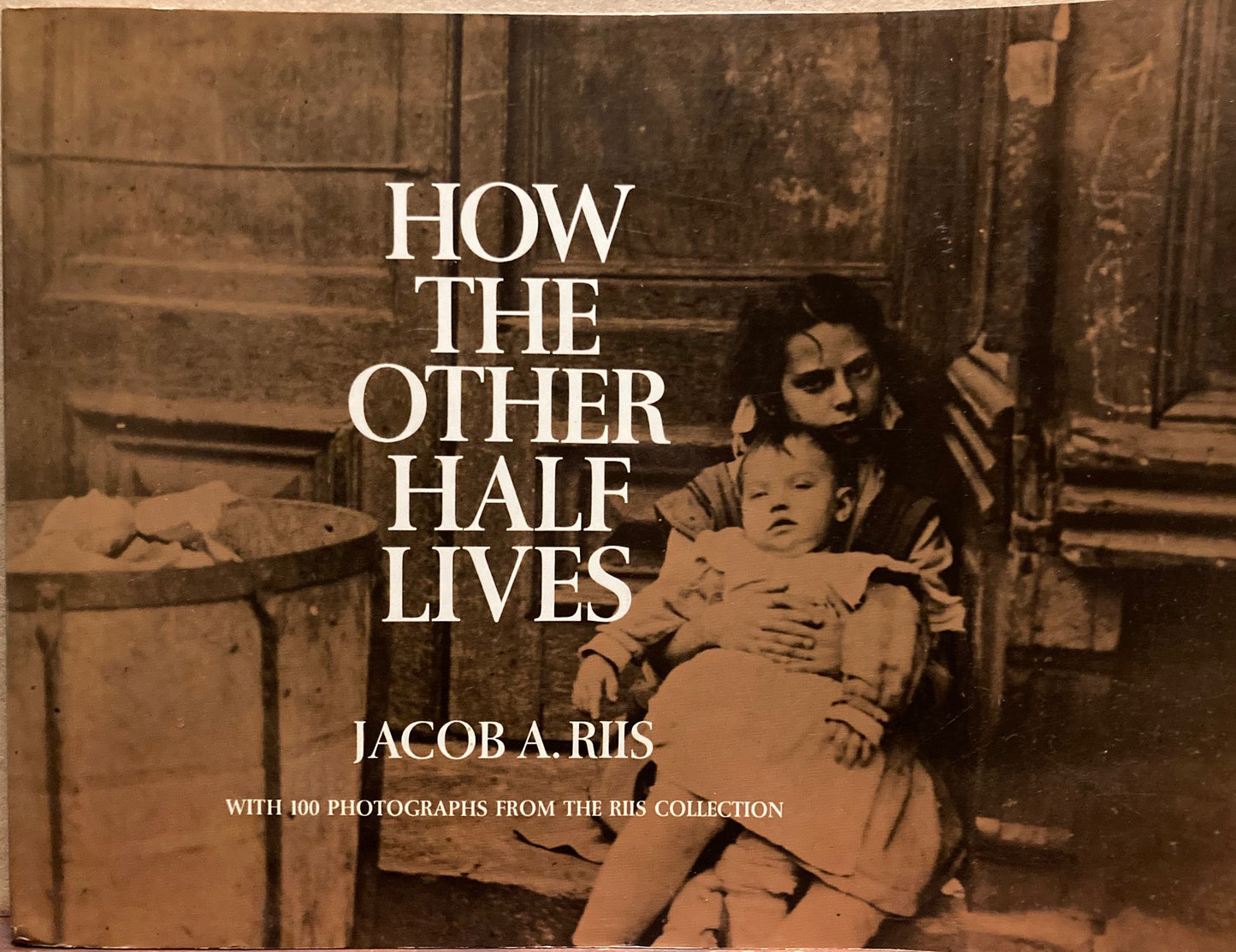
Studies Among the Tenements of New York by Jacob Riis (1890). With 100 Photographs from the Riis Collection. Reprint. Dover, 1971. Reprint of the 1890 edition with additional photographs. The original edition had 38 drawings from photographs while this edition has 100 half-tones and is a fuller realization of Riis' intentions. Wraps, as issued, VG+. Summary:
How the Other Half Lives: Studies among the Tenements of New York (originally published in 1890; Dover reprint, 1971) is a foundational work of photojournalism and social muckraking by Danish-American reformer Jacob Riis. The 1971 Dover edition is particularly significant because it was the first publication to faithfully reproduce Riis’s original, stark photographs from his surviving glass-beam negatives, rather than the crude woodcuts used in the 1890 original.
The book exposed the horrific, squalid living conditions of the lower-class immigrants living in New York City’s Lower East Side tenements to the wealthy and middle classes.
Core Themes & Content
-
The Reality of the Tenements: Riis combines vivid, gritty prose with statistical data and his own photographs to document extreme overcrowding, lack of sanitation, rampant disease (like typhus and tuberculosis), and high infant mortality. He takes readers into dark, windowless rooms, sweatshops, and dangerous alleyways like "Bandits' Roost."
-
Systemic Greed vs. Human Cost: Riis directly blames greedy landlords who subdivided rooms to maximize rent, as well as a public that turned a blind eye. He argues that the squalor, crime, and perceived immorality of the slums are not inherent character flaws of the poor, but rather the direct result of their toxic environment.
-
Ethnic Enclaves: The book is structured by touring different immigrant neighborhoods—including Italian, Jewish, Chinese, German, and African American enclaves. While Riis challenged the wealthy to care, his writing reflects the racial stereotypes and prejudices of his era, even as he advocated for their basic human rights.
-
A Call for Reform: Riis presents practical solutions, arguing that better housing, stricter building codes, and private-public partnerships to build affordable housing are moral and civic duties. He warns that if the wealthy do not help lift up "the other half," the despair of the slums will eventually erupt and endanger all of society.
Impact and Legacy
The book was an immediate sensation and a catalyst for the Progressive Era. It deeply moved Theodore Roosevelt (then a New York civil service commissioner), who famously told Riis, "I have read your book, and I have come to help." The work led to immediate legislation enforcing stricter tenement housing laws, the tearing down of the worst slums, and the implementation of indoor plumbing and parks in poor neighborhoods.