Gary Saretzky Photo Books
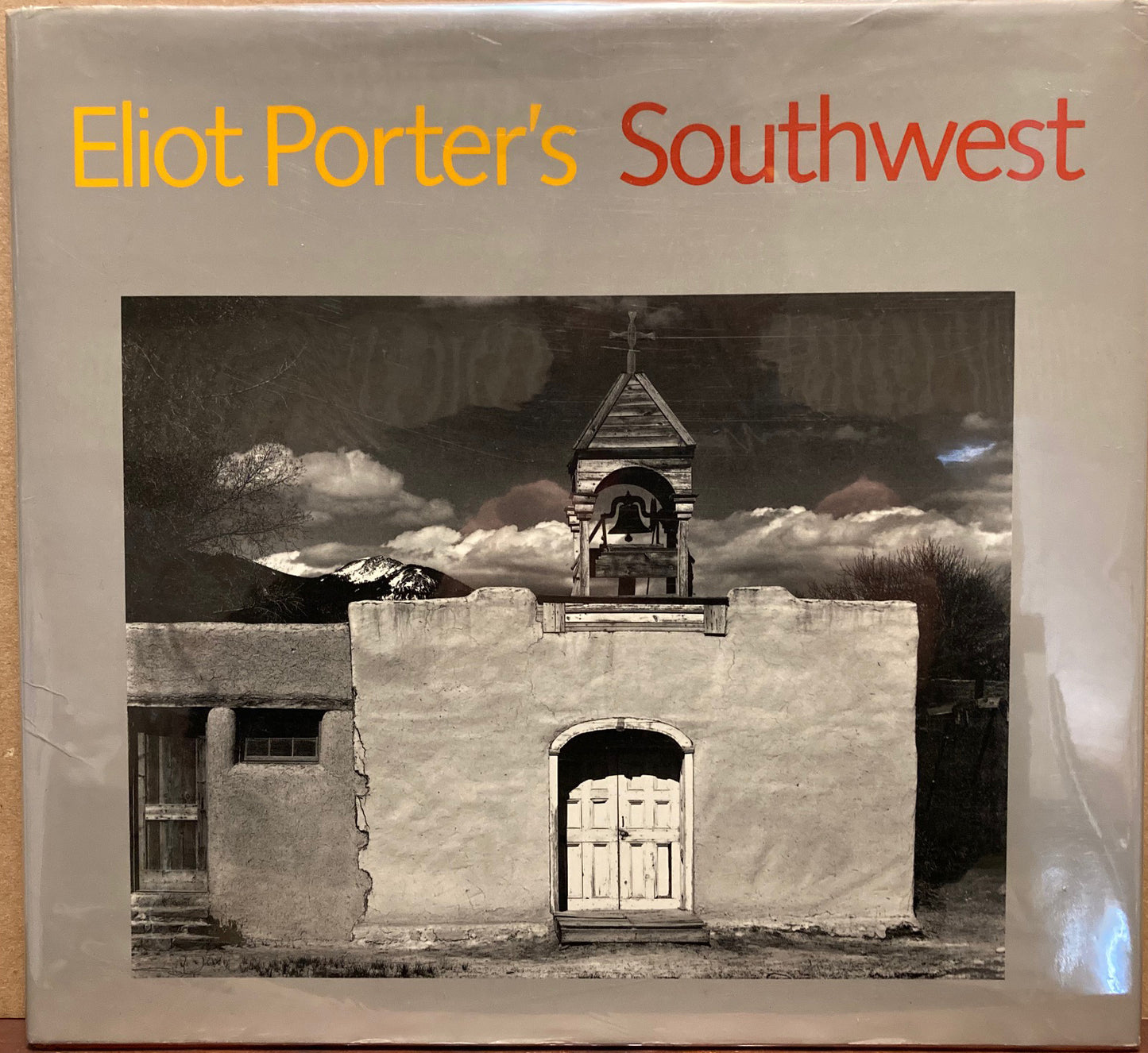
Porter, Eliot. Eliot Porter's Southwest by Eliot Porter.
Porter, Eliot. Eliot Porter's Southwest by Eliot Porter.
Couldn't load pickup availability
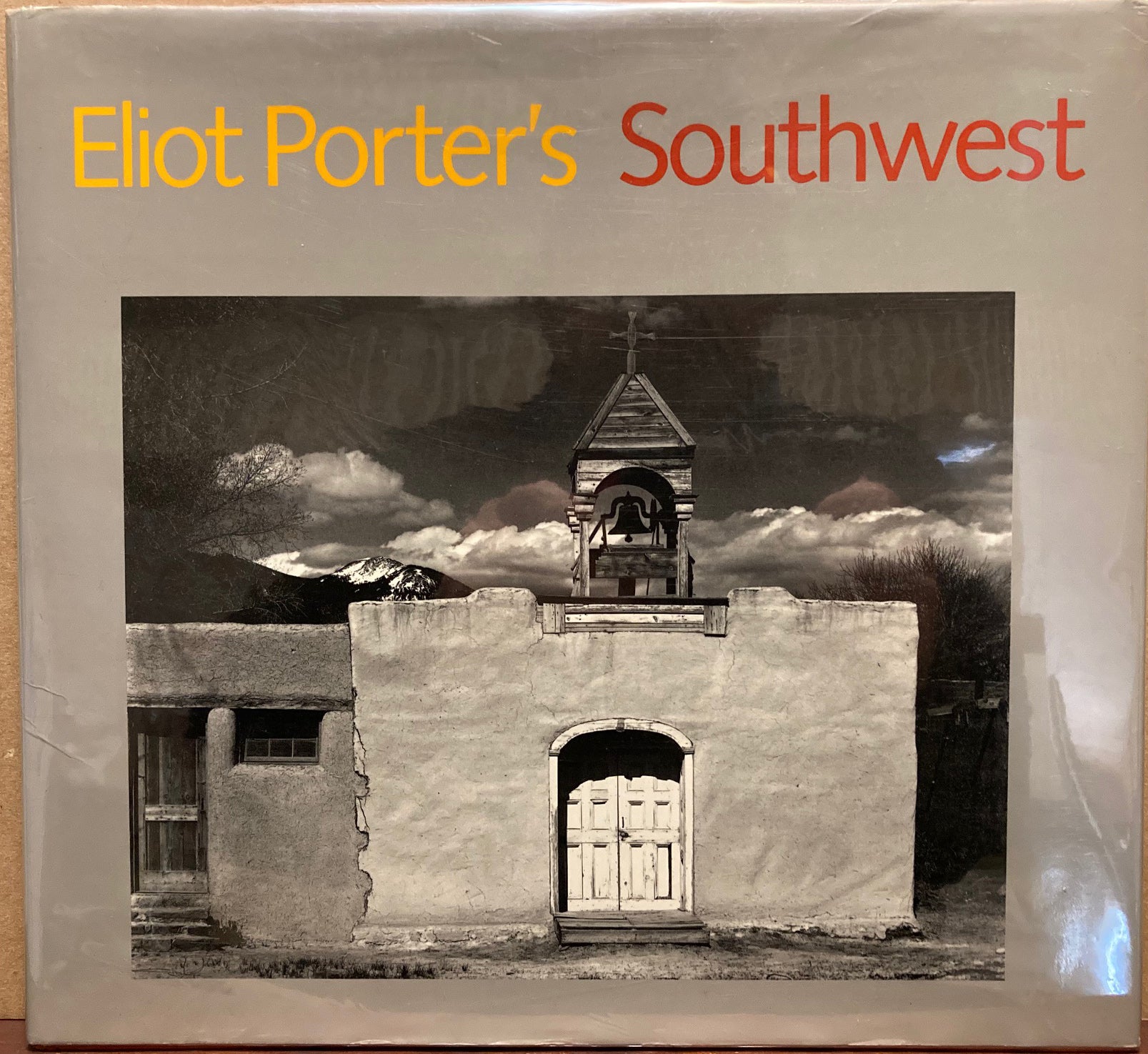
Holt, Rinehart and Wilson, 1985. 1st printing. Very good with small area of damp staining on outside of top corners, not affecting dust jacket or inside of book. Protected dust jacket has light indentations where someone used it as a writing support, only visible on close examination. A very presentable copy of Porter's only book in black-and-white.
Eliot Porter (1901–1990) was an American photographer celebrated as a pioneer of color nature photography and a major advocate for environmental conservation. Born in Winnetka, Illinois, Porter earned degrees in chemical engineering and medicine from Harvard University and worked as a biomedical researcher before encouragement from Alfred Stieglitz and Ansel Adams led him to commit fully to photography in the late 1930s. Initially working in black-and-white to capture the stark, architectural landscapes and subtle textures of the American Southwest after relocating to Santa Fe, New Mexico, he soon departed from the prevailing monochrome tradition by mastering the complex dye-transfer printing process to render delicate intimate landscapes, vibrant foliage, and birds in their natural habitats with rich tonal subtlety and scientific accuracy. His landmark 1962 Sierra Club photobook, “In Wildness Is the Preservation of the World,”combined his exquisite color imagery with the writings of Henry David Thoreau, setting a new precedent for environmental publishing and serving as a crucial tool for wilderness preservation campaigns across North America. Over a long career that included publications on Glen Canyon, the Galapagos, and Antarctica, Porter's work transformed color photography into an accepted fine art form while deepening public appreciation for the natural world.
Eliot Porter's Southwest (published by Holt, Rinehart & Winston in 1985) is a significant, large-format monograph that offers a unique look into the early career of master photographer Eliot Porter. While Porter is universally celebrated as a pioneer of vibrant color nature photography and dye-transfer printing, this 160-page volume departs from his signature format to present a curated collection of ninety-one classic black-and-white images taken between 1939 and 1965, accompanied by Porter's own evocative narrative text.
Core Content & Visual Framework
1. The Monochromatic Evolution
The book provides critical historical context for Porter’s artistic origins. Before committing completely to color film, Porter’s black-and-white work was championed by legendary gallery owner Alfred Stieglitz, who gave him a solo exhibition at An American Place in 1938, and by curator Beaumont Newhall at the Museum of Modern Art. This volume showcases his absolute mastery of silver gelatin printing, revealing how his early command of tonal range, shadow, and texture laid the foundation for his later color achievements.
2. The Intimate Landscape vs. The Grand View
Unlike his contemporaries like Ansel Adams, who frequently photographed expansive, sweeping panoramic views of the American West, Porter’s vision of the Southwest focuses on what art historians call the intimate landscape. The plates focus heavily on isolated, close-up details of nature, establishing a quieter, more abstract relationship with the environment.
3. Cultural and Architectural Topography
In addition to pristine natural geology, the collection features rare documentation of human presence and history across the southwestern territory. Porter captured numerous photographs of older, weathered wooden structures, historic ghost towns, early settlements, and traditional adobe buildings, many of which were still occupied at the mid-century mark. This imagery functions as both a fine-art study of rustic materials and a quiet, historical record of the changing American frontier.
Eliot Porter's Southwest serves as a crucial retrospective piece that rebalances Porter’s historical legacy. By isolating his early monochrome work, the volume proves that his status as a master photographer depended not just on his innovative technical use of color, but on a deep, fundamental understanding of composition, form, and structural elegance.