Gary Saretzky Photo Books
Porter, Eliot. Down the Colorado. Diary of the First Trip through the Grand Canyon by John Wesley Powell, 1869.
Porter, Eliot. Down the Colorado. Diary of the First Trip through the Grand Canyon by John Wesley Powell, 1869.
Couldn't load pickup availability
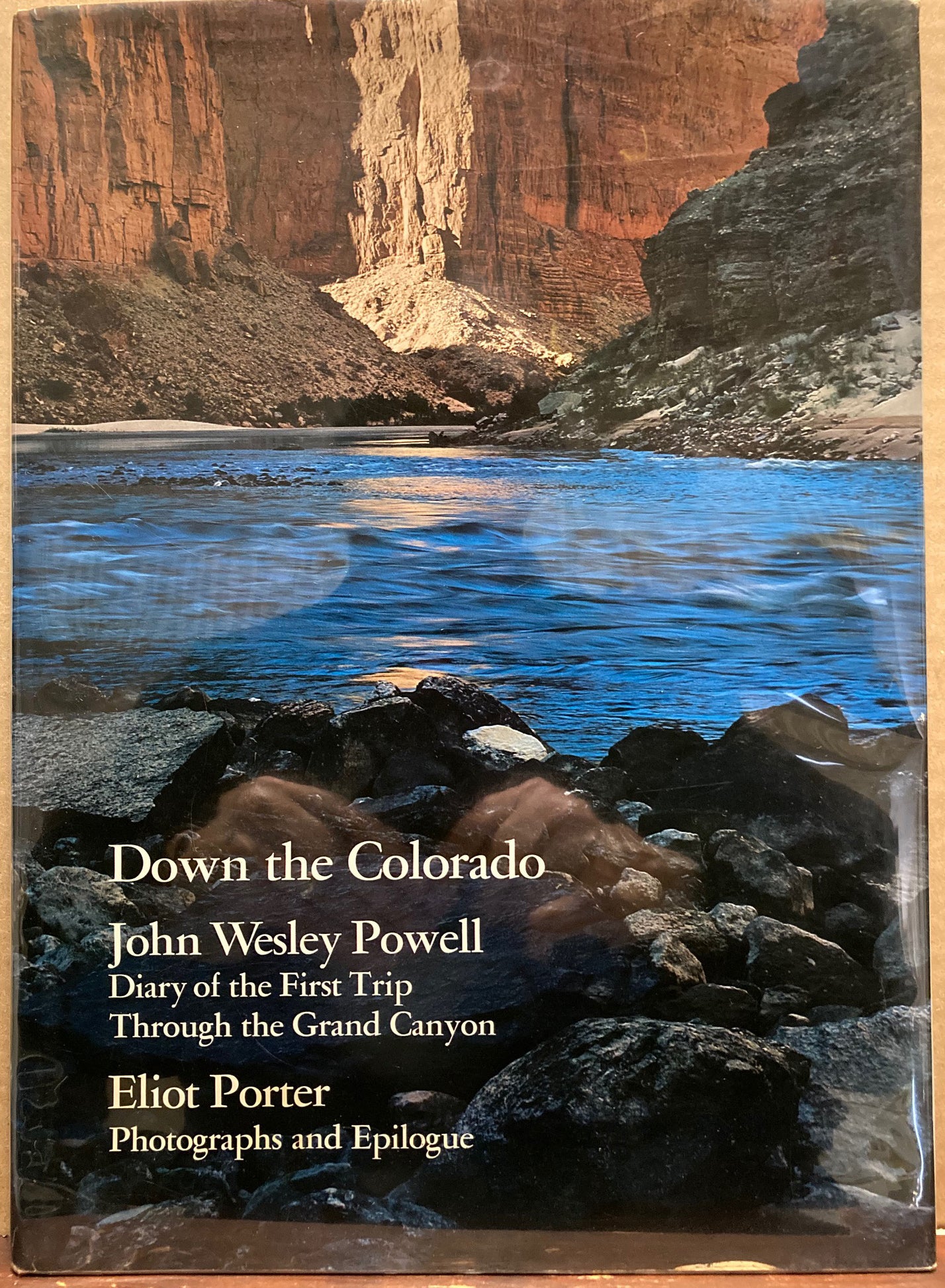
E.P. Dutton, 1969. Photographs and Epilogue by Eliot Porter. Beautifully printed black-and-white and color photographs by Eliot Porter on heavyweight glossy paper, this oversize book was written by the famous one-armed explorer Powell about his trip down the river in 1869. [Eliot Porter was one of the major scenic photographers of the 20th century. He produced many books of his work, including In Wildness Is the Preservation of the World, The Place No One Knew, Baja California, Summer Island, Forever Wild, Galapagos: The Flow of Wildness, Appalachian Wilderness, Antarctica, Birds of North America, The Tree Where Man Was Born: The African Experience, Moments of Discovery, Eliot Porter's Southwest, and others. Porter was closely associated with Alfred Stieglitz early in his career. His archives are at the Amon Carter Museum in Fort Worth, Texas.] Large (10x14 inch) quarto, orange cloth, 168 pages. Summary:
Down the Colorado: Diary of the First Trip through the Grand Canyon, 1869 (published by E.P. Dutton in 1969) is a significant, large-format volume released to commemorate the centennial of Major John Wesley Powell’s historic, government-sponsored exploration of the Colorado River. The 168-page book features a foreword by anthropologist Don D. Fowler and pairs an abridged version of Powell’s classic 19th-century expedition journal with contemporary color and black-and-white photography, alongside a critical epilogue, by master nature photographer Eliot Porter.
Core Content & Visual Framework
1. Powell's 1869 Expedition Diary
The primary narrative of the book consists of the daily journal entries written by Major John Wesley Powell, the one-armed Civil War veteran, geologist, and explorer. His text documents the grueling three-month, 900-mile journey undertaken by ten men in four wooden boats down the uncharted waters of the Green and Colorado Rivers. Powell’s writing shifts seamlessly between high-stakes adventure and precise, pioneering geological observations of the canyon strata.
2. Eliot Porter's Photographic Companion
Rather than attempting to literally illustrate Powell's historic journey with archival drawings or portraits, Eliot Porter provides a modern visual counterpoint. His plates capture the raw, pristine beauty of the Grand Canyon, Glen Canyon, and the surrounding river basin through a highly sophisticated use of color saturation and lighting. Porter applies his signature "intimate landscape" style, focusing heavily on close-up details of eroded sandstone walls, reflections in tranquil eddies, and hidden side canyons to evoke the emotional and sensory experience of being deep within the canyon system.
3. The Epilogue and Environmental Advocacy
In his concluding epilogue, Porter shifts the book's focus from historical celebration to modern conservation crisis. Writing in the late 1960s, Porter laments the severe ecological changes that occurred in the century following Powell's trip, explicitly critiquing the construction of massive water management projects like the Glen Canyon Dam, which flooded many of the pristine areas Powell originally documented. Porter uses his text and imagery to advocate for the strict preservation of the remaining untamed sections of the Colorado River against industrial development.
Down the Colorado stands as an exceptional marriage of historical exploration literature and 20th-century environmentalism. By pairing Powell’s foundational text with Porter’s masterful photography and conservationist epilogue, the publication honors America's frontier past while issuing a stark, visual warning about the vulnerability of its most iconic natural wonders.
Copies available:
- 1st printing, minor wear at extremities, small soiled spot on rear cover, and bookplate of previous owner on flyleaf. No dust jacket.
- 1st printing, a trifle wear on edges, end papers with light foxing, small rubber stamp of previous owner inside front cover, VG protected dust jacket.
- 2nd printing. Fine with protected VG dust jacket that has a small chip in one corner, minor other wear to extremities, and a light crease on inner rear flap.
