Gary Saretzky Photo Books
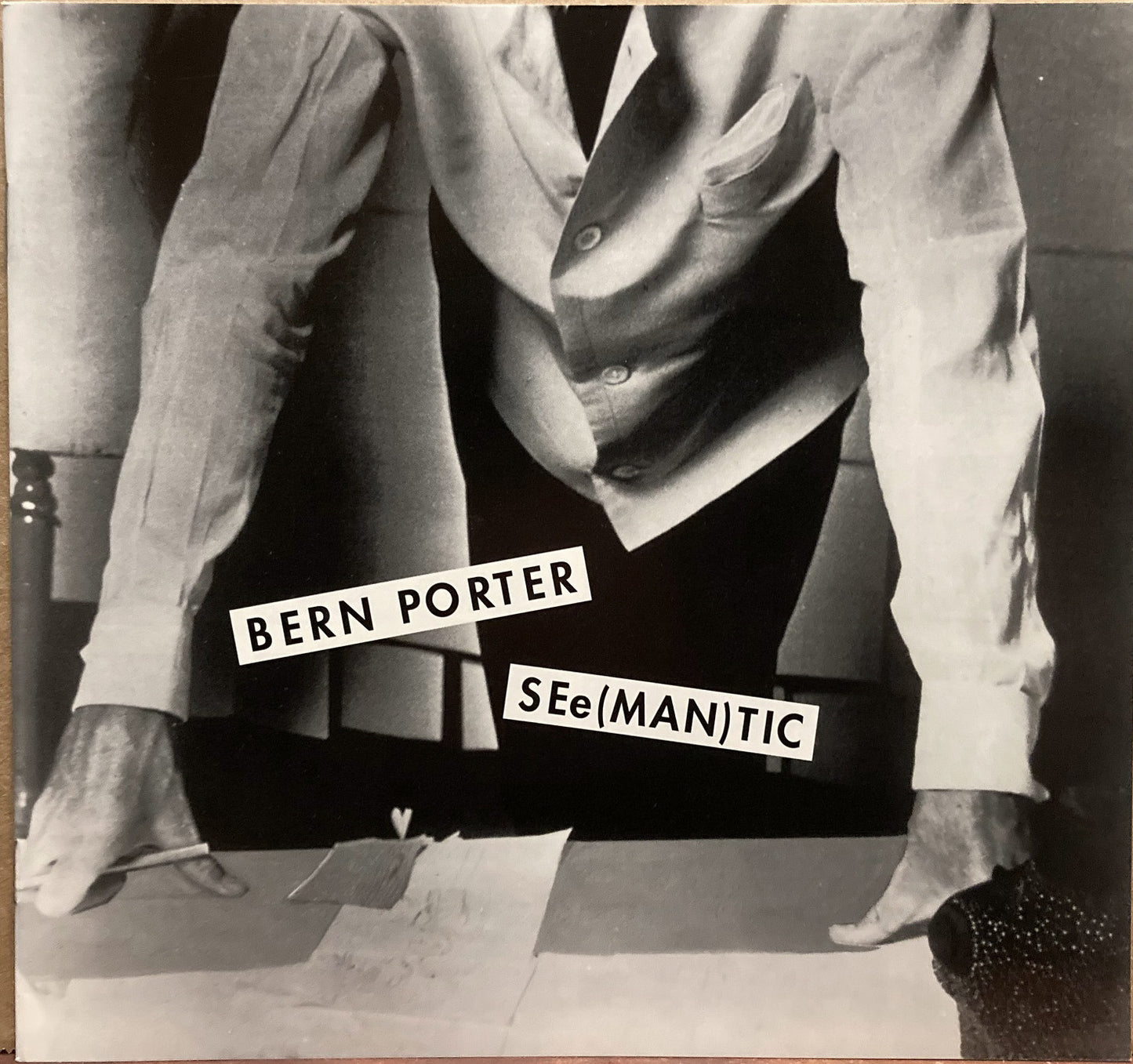
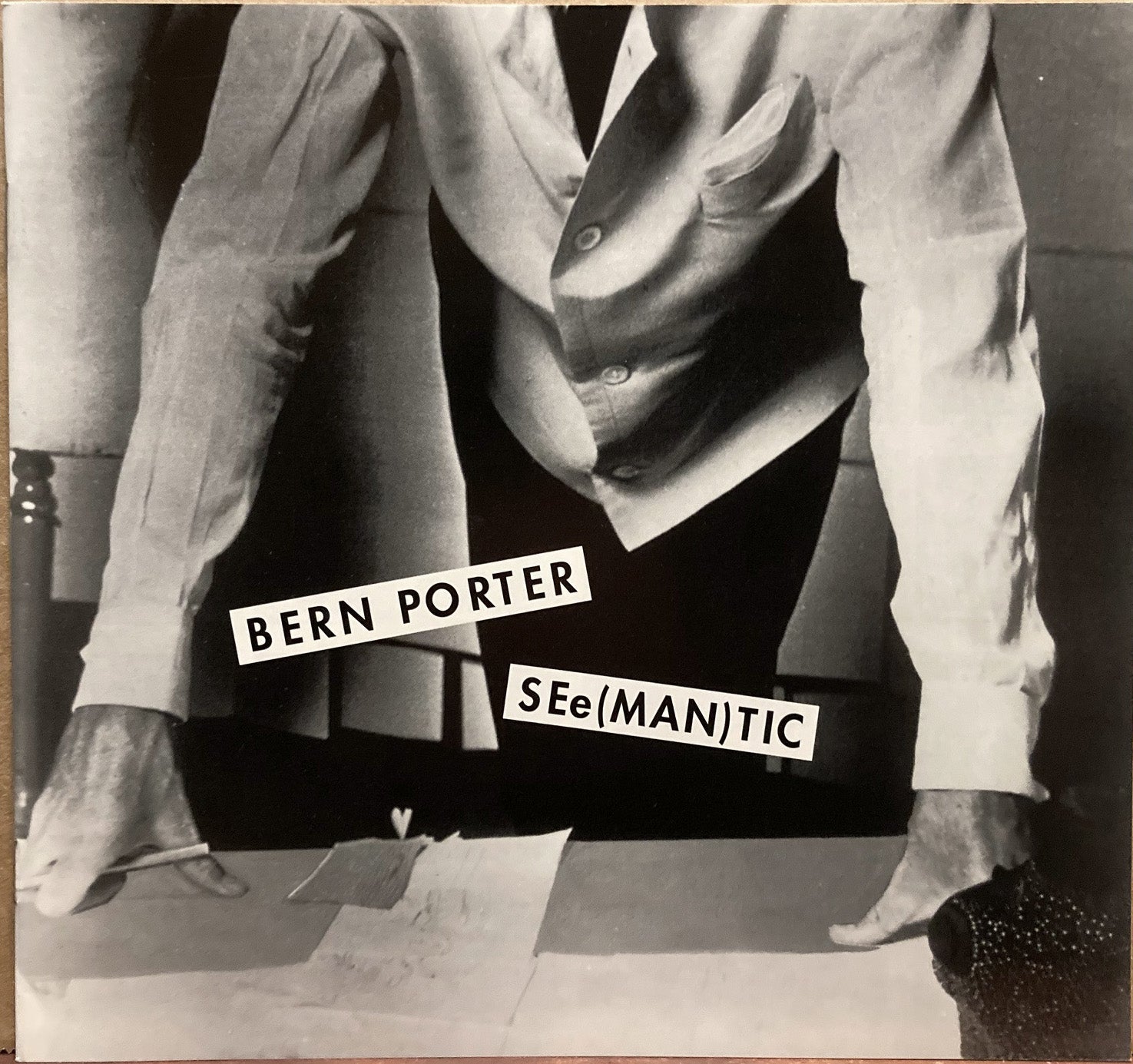
Porter, Bern. Bern Porter. SEe(MAN)TIC. January 15 - March 20, 1994.
Porter, Bern. Bern Porter. SEe(MAN)TIC. January 15 - March 20, 1994.
Couldn't load pickup availability
Light Gallery, Syracuse University. Number 35, Robert B. Menschel Photography Gallery. Exhibition catalog, well illustrated with photographs. Includes some mixed media works. Text and illustrations by Bern Porter. Wraps, 32 pages, fine. Summary:
Bern Porter: SEe(MAN)TIC (1994) is a 32-page exhibition catalog published as Number 35 in the Robert B. Menschel Photography Gallery series at Syracuse University. The publication accompanied a landmark exhibition of the same name that ran from January 15 to March 20, 1994. Curated by Amy Hufnagel, who also contributed the catalog’s primary critical essay, the volume features numerous black-and-white image reproductions documenting the radical, avant-garde visual art and literary philosophy of pioneer Bern Porter.
Core Content & Conceptual Framework
1. The "Found" Philosophy and Visual Poetry
The catalog centers on Porter’s lifework with what he termed "Founds"—artworks constructed by isolating, cutting, and recontextualizing everyday printed materials, advertisements, blueprints, and diagrams. Hufnagel’s essay traces how Porter, who began compiling scrapbooks of newspaper clippings as a child, developed this practice into a sophisticated form of visual poetry and spatial commentary. The text demonstrates how his arrangements bridge the gap between literature and fine art, forcing viewers to find new, subconscious meanings in discarded mass media.
2. "Sci-Art" and the Intersection of Disciplines
A unique focus of the publication is exploring Porter's dual identity as both a vanguard artist and a literal nuclear physicist who worked on the Manhattan Project before resigning out of pacifist protest. The catalog examines his self-formulated concept of Sci-Art, an aesthetic movement aimed at unifying scientific methodology with artistic expression. The printed reproductions showcase how Porter utilized technical typography, charts, and architectural schematics as raw artistic materials, transforming clinical data into emotional, anti-institutional statements.
3. Alternative Media and Material Subversion
The volume highlights Porter's expansive role in alternative publishing networks, including mail art, performance poetry, and experimental artist's books. The black-and-white plates document his mastery over alternative visual formats, including early 1940s photograms and xerographic collages. Hufnagel contextualizes these works as deliberate acts of subversion against the preciousness of commercial art markets, championing cheap, accessible duplication as a valid medium for cultural critique.
SEe(MAN)TIC stands as a crucial institutional record celebrating one of the 20th century’s most eccentric and multi-disciplinary creators. Published by the Robert B. Menschel Photography Gallery—a space managed by Syracuse University's renowned Light Work organization—the catalog captures how Porter’s interactive, text-and-image "Founds" anticipated the fragmented, media-saturated critiques of the late-modern digital era.