Gary Saretzky Photo Books
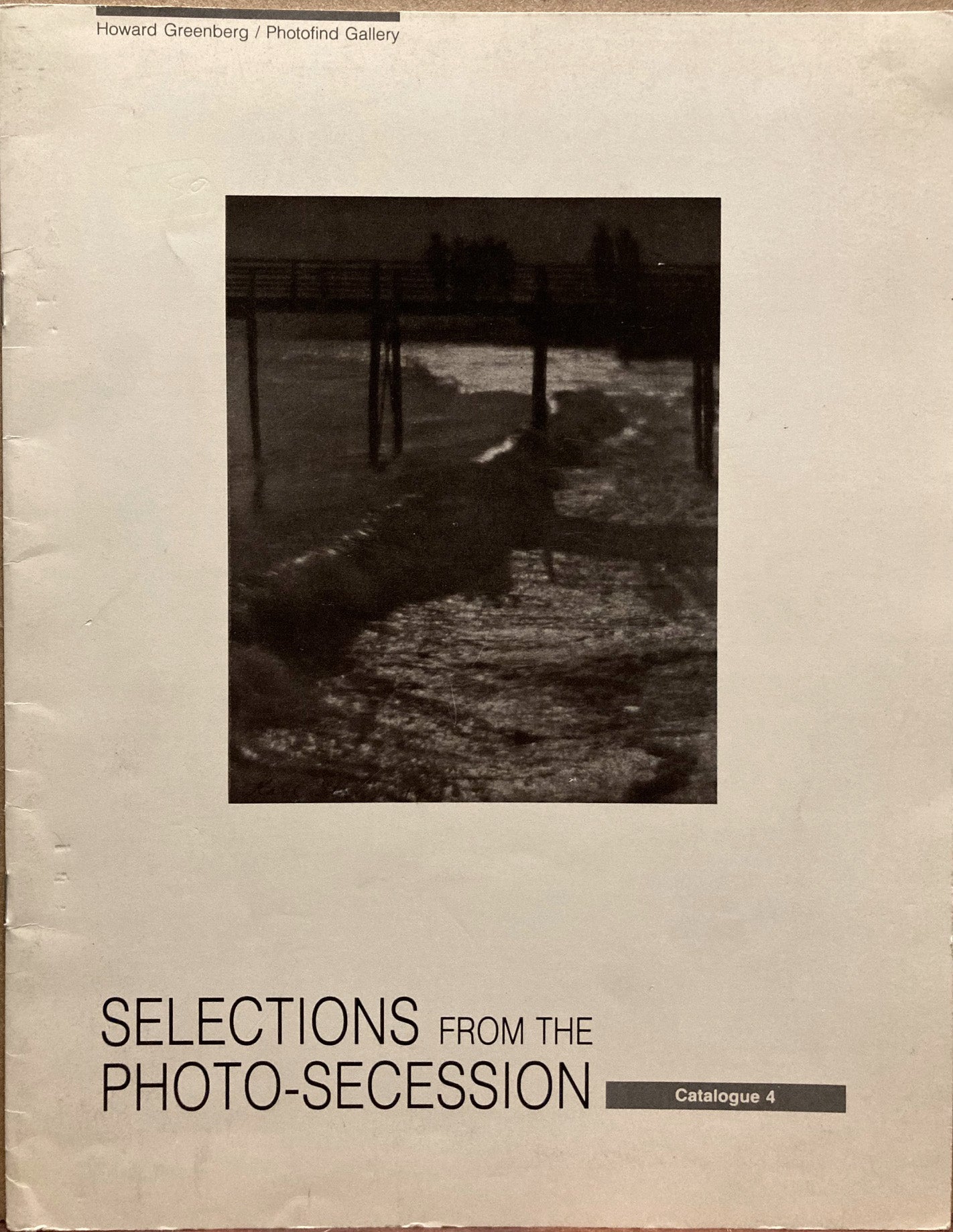
Photo-Secession. Selections from the Photo-Secession. Catalogue 4.
Photo-Secession. Selections from the Photo-Secession. Catalogue 4.
Couldn't load pickup availability
Howard Greenberg/Photofind Gallery, 1986. Introduction and notes on the photographs by Joan Munkacsi. With complete list of members of the Photo-Secession. 28 plates with list of prices printed inside back cover. Photographers include Alfred Stieglitz (including portrait as youth); Karl Struss; George H. Seeley; T. O’Conor Sloane, Jr. (a member from New Jersey); Paul B. Haviland; Joseph T. Keiley; Alvin Langdon Coburn; Frederick H. Evans; Alice Boughton; Paul Strand; Heinrich Kuehn; Robert Demachy; Constant Puyo; Harry C. Rubincam; Hill & Adamson; Frank Eugene; Clarence White; Gertrude Kasebier; William H. Orison Underwood; William J. Mullins; Anne Brigman; William B. Post; and Eva Watson-Schütze (born in New Jersey). Wraps, 20 pages, near fine. Summary:
Selections from the Photo-Secession (Catalogue 4), published in 1986 by the Howard Greenberg/Photofind Gallery, is a highly focused 40-page dealer and exhibition catalog documenting a curated collection of early 20th-century American photography. Compiled by foundational photography dealer Howard Greenberg during his gallery's influential early years in Woodstock, New York, the catalog tracks a significant inventory of works produced by members of the Photo-Secession—the avant-garde movement founded by Alfred Stieglitz in 1902 to promote photography as a fine art.
Core Content & Visual Framework
1. Curatorial Vision and Photographic Plates
The catalog features high-quality monochrome reproductions that showcase 55 selected works from the gallery's inventory. The visual presentation focuses on the core members of the Photo-Secession circle, providing a rare look at original, vintage prints. The catalog highlights rare masterworks from defining figures of the movement, including Alfred Stieglitz, Edward Steichen, Clarence H. White, Gertrude Käsebier, Alvin Langdon Coburn, Robert Demachy, and Heinrich Kühn.
2. The Pictorialist Aesthetic
The plates in the volume highlight the distinct, painterly aesthetic of Pictorialism that defined the Photo-Secession. The selected images emphasize hand-crafted manipulation, utilizing delicate tonal processes such as photogravure, platinum printing, and gum bichromate. The works feature soft-focus landscapes, intimate portraits, allegorical figure studies, and atmospheric urban scenes, all designed to distance the medium from purely scientific or commercial recording and prove its emotional and artistic validity.
3. Historical Record and Market Documentation
Alongside the visual plates, the catalog serves as an important document of the 1980s fine-art photography market. It includes detailed, academic cataloging for each artwork, including title, date, medium, print type, dimensions, and provenance when available. The publication features an introductory essay that contextualizes the historical importance of the Little Galleries of the Photo-Secession (popularly known as "291") and charts how these historic images helped transition photography into modern museum collections.
