Gary Saretzky Photo Books
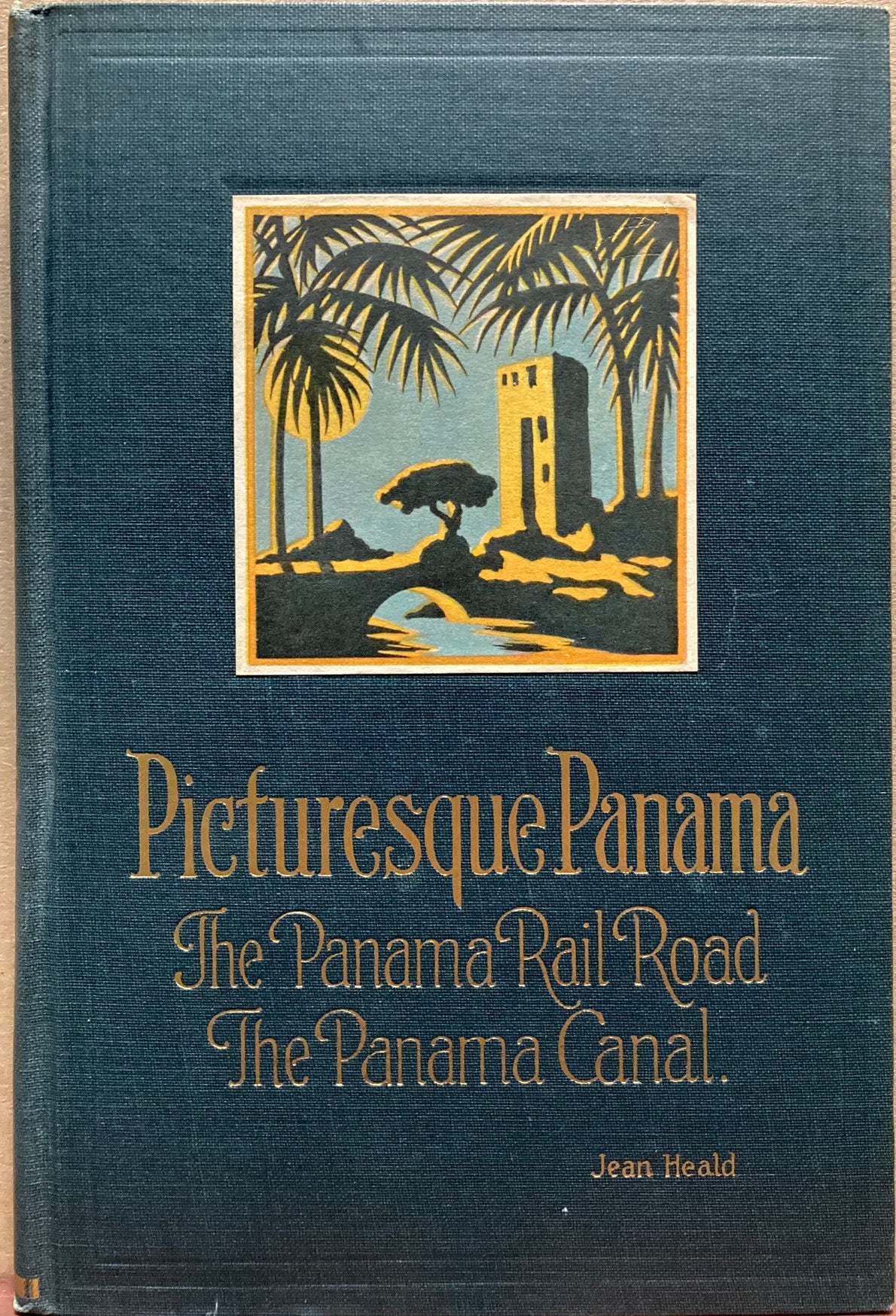
Panama. Picturesque Panama: The Panama Railroad, The Panama Canal. by Jean Sadler Heald. Association copy.
Panama. Picturesque Panama: The Panama Railroad, The Panama Canal. by Jean Sadler Heald. Association copy.
Couldn't load pickup availability
No publisher, privately printed by Curt Teich & Co., 1928. Profusely illustrated, 126 pp., corner of last page missing, not affecting text, otherwise fine. Inscribed as gift from Pulitzer Prize winning author & educator Carl Van Doren (1885-1950) to Philip A. [Damon?], April 15, 1935. [Note: Carl Van Doren's nephew Charles Van Doren was the principal contestant in the "Quiz Show Scandal" in the 1950s.] Summary:
Picturesque Panama: The Panama Railroad, The Panama Canal (originally published in 1928 by I.L. Maduro, Jr.) is a concise historical survey and promotional travelogue written by Jean Sadler Heald. Published during the height of the American Canal Zone era, the volume combines a sweeping historical narrative with detailed descriptions of the local landscape, offering contemporary readers an accessible overview of the isthmus's radical engineering achievements and tropical environment.
Core Content & Historical Framework
1. The Colonial Legacy and Early Transit Route
The volume establishes historical context by tracing the geopolitical importance of the Panamanian isthmus from the arrival of European explorers. Heald documents the early Spanish colonial era, detailing the construction of the historic Camino Real (the gold trail) and the constant threats posed by Caribbean buccaneers. This foundational history sets the stage for the region's 19th-century transformation, detailing the immense financial, human, and engineering challenges behind the completion of the Panama Railroad in 1855, which created the world's first transcontinental rail link.
2. The Engineering Triumphs of the Canal
A primary focus of the text is the dramatic saga of the Panama Canal's construction. The narrative contrasts the disastrous, disease-ridden failure of the initial French effort led by Ferdinand de Lesseps with the subsequent, highly militarized success of the American project. Heald details the crucial public health campaigns led by Colonel William C. Gorgas to eradicate yellow fever and malaria, alongside the unprecedented engineering feats required to carve out the Culebra Cut and construct the monumental Gatun Dam and lock systems.
3. A Travelogue of the American Canal Zone
Beyond the structural history, the book functions as a vivid guide to the geography, towns, and daily operations of the Canal Zone in the late 1920s. The text provides highly descriptive profiles of the flora, fauna, and local customs encountered by travelers journeying between the terminal cities of Cristóbal and Balboa. The writing reflects the distinct social hierarchy and colonial perspective of the American administration, framing the clean, highly organized Canal Zone as a triumph of modern industrial civilization over a challenging tropical wilderness.
Picturesque Panama serves as a valuable cultural artifact capturing the mid-interwar period of American involvement in Central America. By blending romanticized descriptions of the tropical landscape with a celebratory account of industrial conquest, Heald's work provides modern historians with an unvarnished window into how the early 20th-century Western world viewed imperial progress and technological dominance.
