Gary Saretzky Photo Books
O'Sullivan, Timothy. T.H. O'Sullivan, Photographer. By Beaumont and Nancy Newhall with an appreciation by Ansel Adams.
O'Sullivan, Timothy. T.H. O'Sullivan, Photographer. By Beaumont and Nancy Newhall with an appreciation by Ansel Adams.
Couldn't load pickup availability
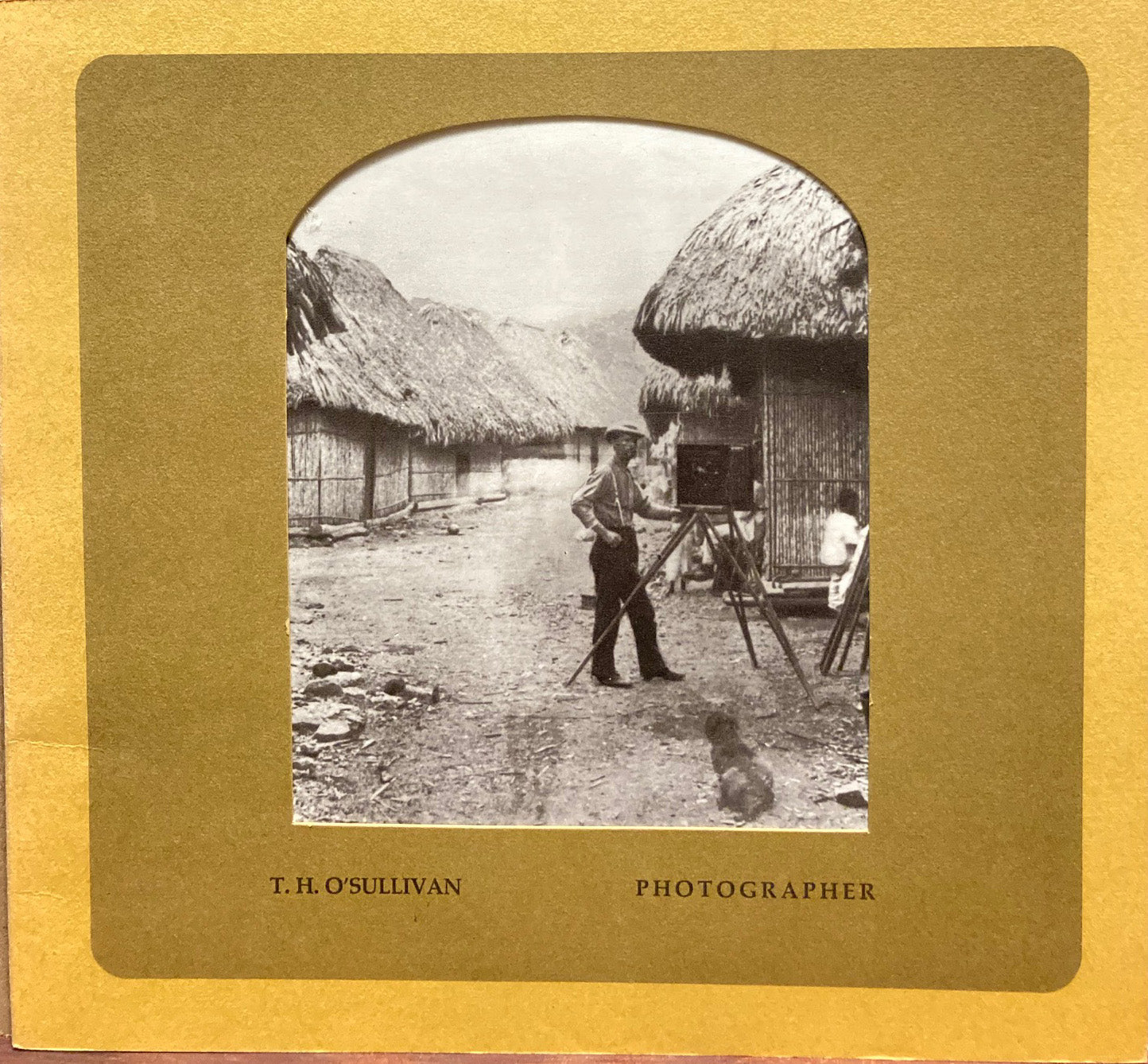
George Eastman House in cooperation with the Amon Carter Museum, 1966. Wraps, 40 full page plates of Civil War and Western views. [Cover photo of John Moran in Panama, seen through cutout in cover, has been misidentified as a Timothy H. O'Sullivan self-portrait.] Like new with light crimp near spine.
Note: Timothy O’Sullivan was hired as the official photographer for an expedition to Panama tasked with finding the route for the future Panama Canal. O’Sullivan returned after five months with 200 stereographic views and 100 glass negatives, less than expected as a result of bad weather. He was succeeded in 1871 by John Moran. Summary:
T.H. O'Sullivan, Photographer (published in 1966 by the George Eastman House in cooperation with the Amon Carter Museum of Western Art) is a foundational, 44-page exhibition catalog and critical monograph. Co-authored by seminal photographic historians Beaumont and Nancy Newhall, the publication accompanied the first comprehensive institutional exhibition designed to evaluate Timothy H. O'Sullivan strictly through the lens of modern fine art, rather than mere historical or geographical documentation.
Core Content & Critical Framework
1. The Newhalls' Historical Chronology
The biographical essay by Beaumont and Nancy Newhall meticulously pieces together O'Sullivan's fragmented history. Using military records, government survey reports, and period correspondence, they map out his trajectory from an apprentice in Mathew Brady’s New York studio to a frontline battle documentarian under Alexander Gardner. The text closely tracks his later, grueling journeys across the American West as the chief photographer for Clarence King’s Geological Exploration of the Fortieth Parallel and George Wheeler's Geographical Surveys West of the 100th Meridian.
2. Ansel Adams' Aesthetic Appreciation
A defining feature of this monograph is the introductory appreciation written by master landscape photographer Ansel Adams. Adams provides a rigorous technical and formal analysis of O'Sullivan’s imagery, elevating him from a 19th-century technician to a brilliant visual strategist. Adams analyzes how O'Sullivan worked around the steep limitations of the wet-plate collodion process under extreme field conditions, praising his sophisticated understanding of:
-
Stark Scale and Isolation: His deliberate placement of human figures or survey wagons against looming canyon walls to convey the immense emptiness of the American wilderness.
-
Geometric Form and Texture: His ability to leverage the harsh, unsoftened sunlight of the desert to emphasize the raw, architectural geology of rock formations.
3. A Curated Visual Portfolio
The catalog includes a meticulously printed plate section reproducing key works from O'Sullivan's surviving portfolio. The selections intentionally balance his somber, stark imagery of the Civil War with his grand, often surreal surveys of the American West. Iconic plates—such as his geometric studies of the limestone tufas at Pyramid Lake and the ancient cliff dwellings at Canyon de Chelly—are presented with minimal text, allowing viewers to appreciate his uncanny anticipation of 20th-century modernist composition.
Published concurrently with James D. Horan’s biography in 1966, this George Eastman House catalog shifted the academic consensus on 19th-century survey photography. By pairing the Newhalls' rigorous historical narrative with Ansel Adams' artistic validation, the book successfully brought O'Sullivan out of the archives of the U.S. War Department and permanently established him in the canon of fine-art photography.
