Gary Saretzky Photo Books
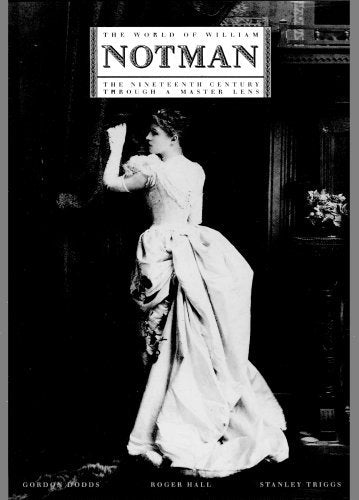
Notman, William. The World of William Notman: The Nineteenth Century Through a Master Lens by Roger Hall, Gordon Dodds, and Stanley Triggs.
Notman, William. The World of William Notman: The Nineteenth Century Through a Master Lens by Roger Hall, Gordon Dodds, and Stanley Triggs.
Couldn't load pickup availability
David Godine, 1993. [Lavishly illustrated monograph on best known 19th century Canadian photographer whose large business extended to the United States.] Issued at $75. Mint, hardcover with dust jacket, new in original shrink wrap. Summary:
The World of William Notman: The Nineteenth Century Through a Master Lens (published in 1993 by David R. Godine in collaboration with the McCord Museum of Canadian History) is a comprehensive biographical study and historical monograph. Co-authored by historians Roger Hall, Gordon Dodds, and museum curator Stanley Triggs, the 226-page volume features over 200 duotone reproductions, chronicling the life, business empire, and artistic legacy of Canada's first internationally acclaimed photographer.
Core Content & Historical Framework
1. The Rise of a Photographic Empire
The biography traces William Notman's journey from an impoverished Scottish immigrant fleeing a family business bankruptcy to his rapid ascent as the "Photographer to the Queen" in Montreal. The authors detail how Notman synthesized artistry with shrewd industrial capitalism, constructing a massive network of over twenty branch studios stretching across Canada and into the northeastern United States. The text highlights his innovative franchise model, which dominated the portrait market during the late Victorian era.
2. Documenting the Dominion and the Railroad
A primary focus of the monograph is Notman’s role as the premier visual chronicler of a developing nation. The book showcases his extensive commissions for the Grand Trunk Railway and the Canadian Pacific Railway, documenting the grueling construction of monumental engineering feats like the Victoria Tubular Bridge. The authors analyze how his landscapes and industrial views provided a vast, rapidly growing global audience with its first definitive, romanticized glimpses of the Canadian wilderness and expanding urban frontiers.
3. Innovation in Studio Craft and Composite Photography
The authors delve deeply into the technical and theatrical innovations developed inside Notman's Montreal headquarters. Lacking high-speed film, Notman pioneered complex composite photography—painstakingly cutting out individual studio portraits of hundreds of people and pasting them onto painted canvas backdrops to recreate massive social events, such as skating carnivals and snowshoe clubs. The text highlights his ability to simulate winter blizzards and outdoor camping scenes entirely indoors using animal furs, salt, and magnesium flares.
4. A Social Ledger of the 19th Century
The volume functions as a sweeping sociological profile of Victorian North America. Through his studio doors passed a diverse cross-section of 19th-century society, from indigenous chiefs and fur trappers to political architects of the Canadian Confederation and visiting international celebrities like Buffalo Bill Cody and Sitting Bull. The book analyzes how Notman's stylized, dignity-focused portraits helped shape the emerging national identity and bourgeois self-image of a young dominion.
Released alongside a major traveling exhibition, The World of William Notman stands as the definitive academic work on 19th-century Canadian photography. By drawing directly from the vast Notman Photographic Archives at the McCord Museum, the authors successfully elevated Notman from a regional commercial businessman into a towering figure of international photographic history, cementing his status as an essential pioneer of visual sociology and early industrial documentation.
