Gary Saretzky Photo Books
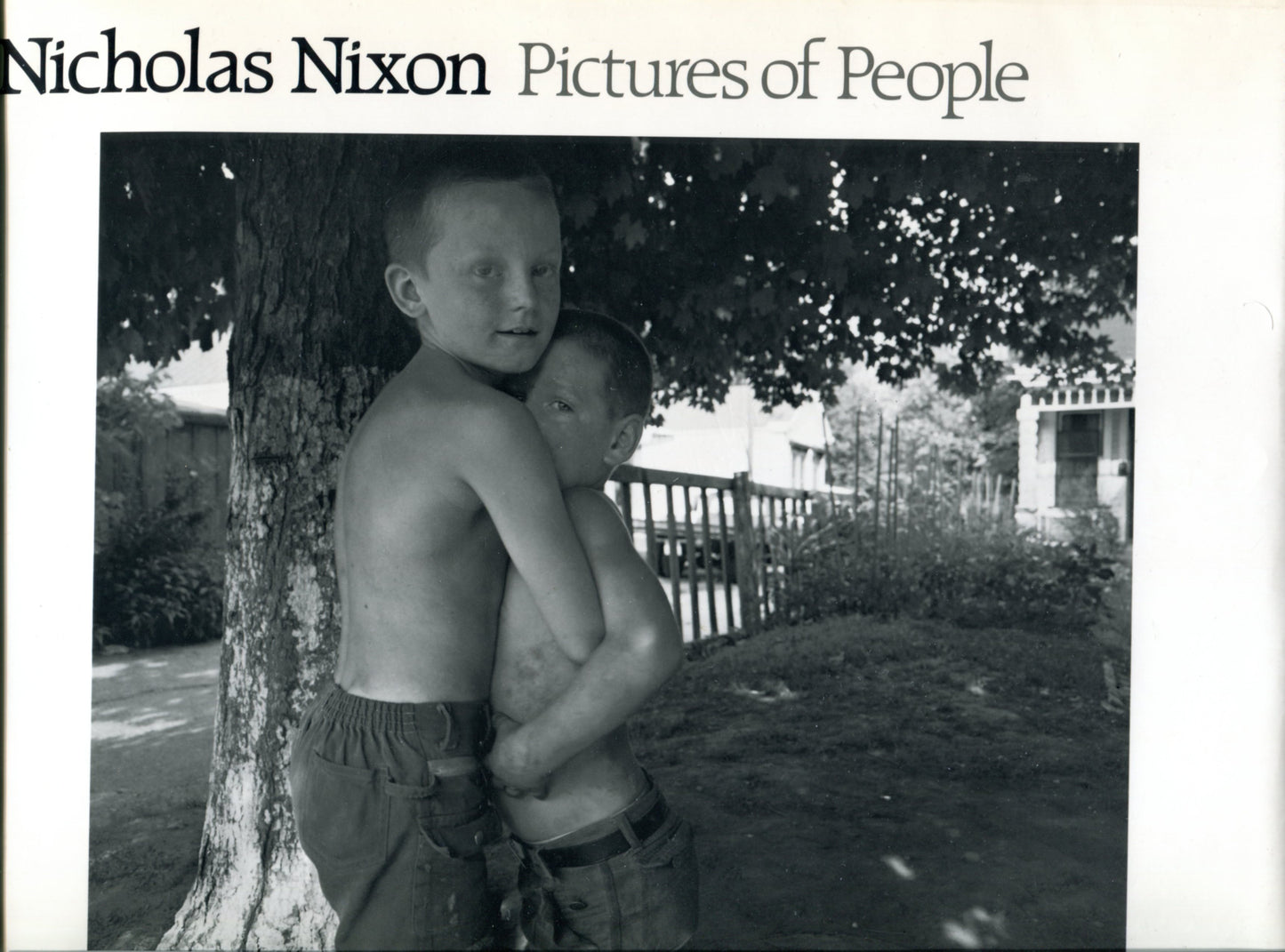
Nixon, Nicholas. Pictures of People by Nicholas Nixon.
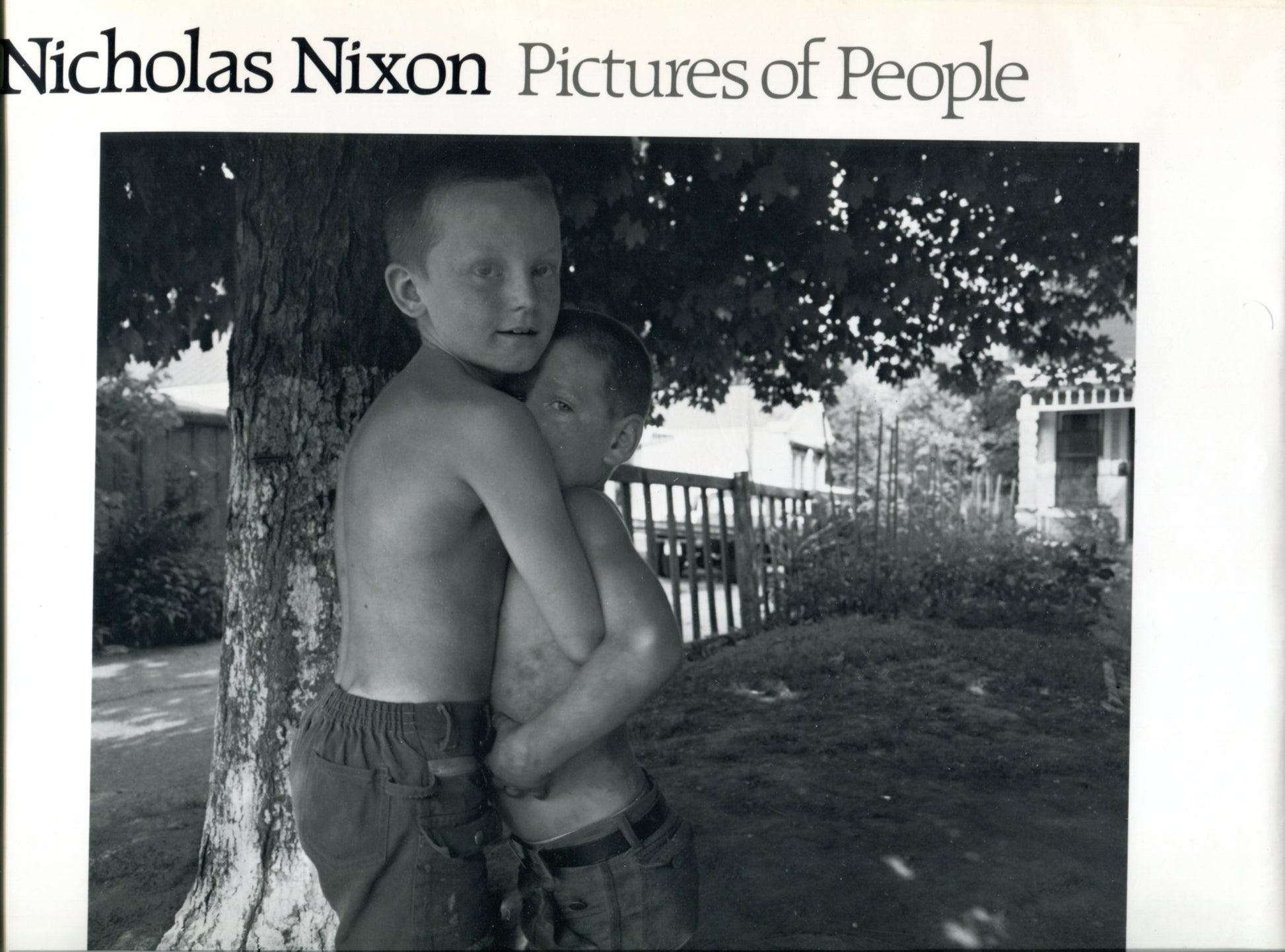
Nixon, Nicholas. Pictures of People by Nicholas Nixon.
Couldn't load pickup availability
Museum of Modern Art, New York, 1988. Introduction by Peter Galassi. 1st edition.[Includes portraits of older people and AIDS patients.] Signature of previous owner, artist and photographer Ken Kaplowitz, at top right of preliminary title page. Small spot of wear at top right corner of cloth, probably from binding. Hardcover, near fine with near fine dust jacket with some hardly noticeable microscratches from shelf wear, now housed in new protector. A very attractive copy.
Nicholas Nixon (b. 1947) is an American portraitist and documentary photographer celebrated for his mastery of large-format black-and-white photography and his intimate, extended visual studies of human connection, aging, and time.Born in Detroit, Michigan, Nixon earned a BA in American literature from the University of Michigan and an MFA in photography from the University of New Mexico. First coming to national attention through his inclusion in the landmark 1975 exhibition New Topographics: Photographs of a Man-Altered Landscape at George Eastman House, he built a distinguished career utilizing an $8 \times 10$-inch view camera to produce contact prints noted for their extreme clarity and physical immediacy. Nixon is best known for his series The Brown Sisters, an annual group portrait of his wife, Bebe, and her three sisters that he documented every year starting in 1975, creating a historic long-term record of familial intimacy and physical aging. His work also includes seminal series on urban architecture, nursing home residents, and his 1991 publication People with AIDS, which offered empathetic portraits during the height of the HIV/AIDS epidemic.Recipient of two Guggenheim Fellowships and three National Endowment for the Arts Fellowships, Nixon’s photographs are held in major permanent collections, including the Museum of Modern Art, the Metropolitan Museum of Art, the National Gallery of Art, and the Museum of Fine Arts, Boston.
Pictures of People (published in 1988 by the Museum of Modern Art, New York) is a seminal 128-page monograph and exhibition catalog documenting the mid-career achievements of American photographer Nicholas Nixon. Featuring an introductory essay by esteemed MoMA curator Peter Galassi, the publication accompanies a major solo exhibition, bringing together Nixon’s most critically acclaimed series from the late 1970s through the 1980s to explore the themes of intimacy, aging, and human vulnerability.
Core Content & Conceptual Framework
1. Large-Format Intimacy and Technological Contrast
The book highlights Nixon’s distinctive technical approach, which utilizes a massive, tripod-mounted 8x10-inch view camera. The introductory essays and visual sequences analyze how Nixon uses this traditionally slow, rigid commercial setup to capture highly spontaneous, tender, and candid human interactions. The contact prints made directly from these large-format negatives yield an extraordinary level of microscopic clarity and rich tonal rendering, forcing the viewer into an uncomfortably close and hyper-detailed confrontation with the textures of human skin and emotion.
2. Landmark Narrative Series
The volume acts as a comprehensive registry for several of Nixon’s most influential, long-term documentary sequences, organized into distinct thematic chapters:
-
The Brown Sisters: The definitive early entries of Nixon's legendary annual project, which photographs his wife, Bebe, and her three sisters in the exact same order each year to track the subtle, inexorable physical and psychological toll of aging and sisterly bonds.
-
Old Age Homes: A series of uncompromising, empathetic portraits documenting residents in nursing homes, capturing the stark realities of bodily decay, cognitive decline, and extreme isolation with profound dignity.
-
People on the Porches: Environmental portraiture of families and individuals living in working-class neighborhoods across the American South and urban Boston, exploring public space, domestic intimacy, and socio-economic realities.
-
The AIDS Series: Crucial early portraits from his deeply moving project chronicling the devastating physical wasting and emotional vulnerability of young men dying during the height of the HIV/AIDS epidemic.
3. The Humanist Portrait Tradition
The publication positions Nixon as a towering figure in the continuation of the 20th-century American humanist documentary tradition. Galassi's critical essay analyzes how Nixon's work deliberately strips away the heavy conceptual artifice and cold irony prevalent in late-1980s postmodernism. Instead, the book frames Nixon's practice as an honest, direct inquiry into the shared biological and emotional experiences that define the human condition, from the vitality of youth to the vulnerability of death.
Published by the Museum of Modern Art during a pivotal shift in contemporary photography, Pictures of People stands as a benchmark text for modern portraiture. By proving that traditional, large-format documentary photography could remain radically relevant and emotionally piercing in a contemporary art landscape, this catalog cemented Nixon’s status as one of the preeminent visual chroniclers of human intimacy and mortality in the late twentieth century.