Gary Saretzky Photo Books
Mortensen, William. The Photographic Magic of William Mortensen by Deborah Irmas.
Mortensen, William. The Photographic Magic of William Mortensen by Deborah Irmas.
Couldn't load pickup availability
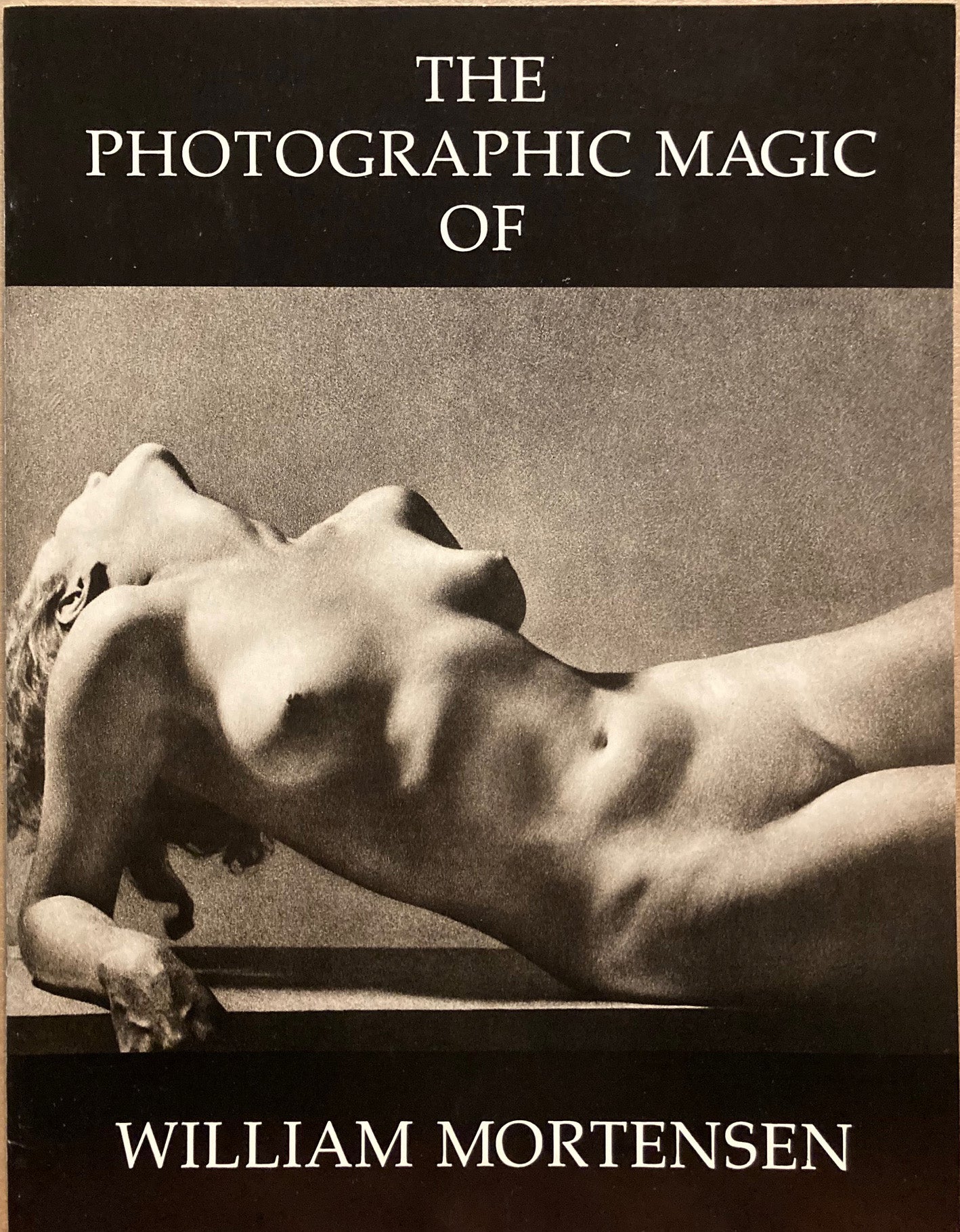
Los Angeles Center for Photographic Studies, 1979. Stapled wraps, exhibition catalog (dates not stated), 12 pages (including covers) with excellent illustrations and exhibition checklist. Illustrated with 9 photos including two full page in color and self-portrait. Contains a checklist of 72 works in the exhibition, chronology, and bibliography. Fine, very fresh, slight waviness along bottom edge of front cover. Kept in plastic sleeve.
William Mortensen (1897–1965) was an American photographer, author, and influential exponent of Pictorialism,celebrated for his theatrical, grotesque, and overtly stylized imagery. Born in Utah, Mortensen moved to Hollywood in the 1920s, where he worked as a designer and still photographer for film productions—including Cecil B. DeMille’s The King of Kings—a period that profoundly shaped his cinematic approach to staging, costume, and lighting. Operating out of his photography school in Laguna Beach, California, he developed elaborate darkroom manipulation techniques, such as the metalchrome process and texture screens, to yield painterly, etch-like prints featuring romantic, mythological, and macabre themes. Mortensen's highly staged aesthetic and championing of photography as a manipulative art form placed him in fierce ideological opposition to Ansel Adams and the Group f/64 purists, who dismissed his work as kitsch; however, his prolific instructional books and distinctively dark vision secured his enduring influence as a pioneer of surreal, grotesque, and manipulated fine-art photography.
The Photographic Magic of William Mortensen is a highly influential, 12-page photography exhibition catalog written by art historian and curator Deborah Irmas. This slim, staple-bound catalog played a critical role in reviving historical and academic interest in one of American photography's most controversial figures.
Overview of the Catalog
-
The Subject: William Mortensen was a brilliant Hollywood portraitist and Late Pictorialist master who specialized in highly manipulated, theatrical, and often grotesque imagery. Because his style clashed with the "pure," unmanipulated aesthetic championed by straight photographers like Ansel Adams and Edward Weston, his massive contributions had been largely scrubbed from 20th-century photo history.
-
Content & Structure: The catalog documents a pioneering retrospective exhibition. It contains a curated checklist of 72 exhibited works, an artist chronology, a comprehensive bibliography, and 9 striking photographic illustrations, including a self-portrait and full-page color plates.
-
The Essay: Irmas provides a foundational biographical and critical essay that recontextualizes Mortensen's work for a late-1970s audience, examining his unique techniques and his philosophical defiance of photographic purism.
The Return of Photographic Manipulation
The central focus of The Photographic Magic of William Mortensen is the defense of photography as a highly stylized, creative art form rather than a mere recording tool. Irmas showcases Mortensen's complex "ends-justify-the-means" philosophy, where he freely combined photography with drawing, etching, and chemical manipulation.
By analyzing his dramatic, narrative-driven imagery—ranging from Hollywood glamour and classic nudes to macabre scenes of witchcraft, monsters, and the occult—the catalog bridges the gap between historical Pictorialism and the rising wave of 1970s Neo-Pictorialist artists who were rediscovering the expressive power of staging and darkroom manipulation.
Note: On January 27, 1897, William Mortensen was born in Park City, Utah, the son of Danish immigrants. A few years after service in WWI, Mortensen began taking photos of Hollywood actors. He loved horror movies and began creating fictional, highly manipulated photos of witches and demons, as well as nudes and historical personalities, like Machiavelli. His Late Pictorialist work was antithetical to the purists like Ansel Adams, who called him the “Devil” and the “Anti-Christ.” Mortensen published nine instructional books, of which his best known was Monsters & Madonnas: A Book of Methods (1st edition, 1934). An obscure figure by his death in 1955, interest in him revived in the 1970s, when art school-trained artists began producing Neo-Pictorialist photographs. Beaumont Newhall added a disparaging remark about Mortensen, calling his work “highly sentimental,” in the revised 1982 edition of his textbook, The History of Photography.
