Gary Saretzky Photo Books
Mitchel, Julio. Julio Mitchel. January 15 - February 28, 1992.
Mitchel, Julio. Julio Mitchel. January 15 - February 28, 1992.
Couldn't load pickup availability
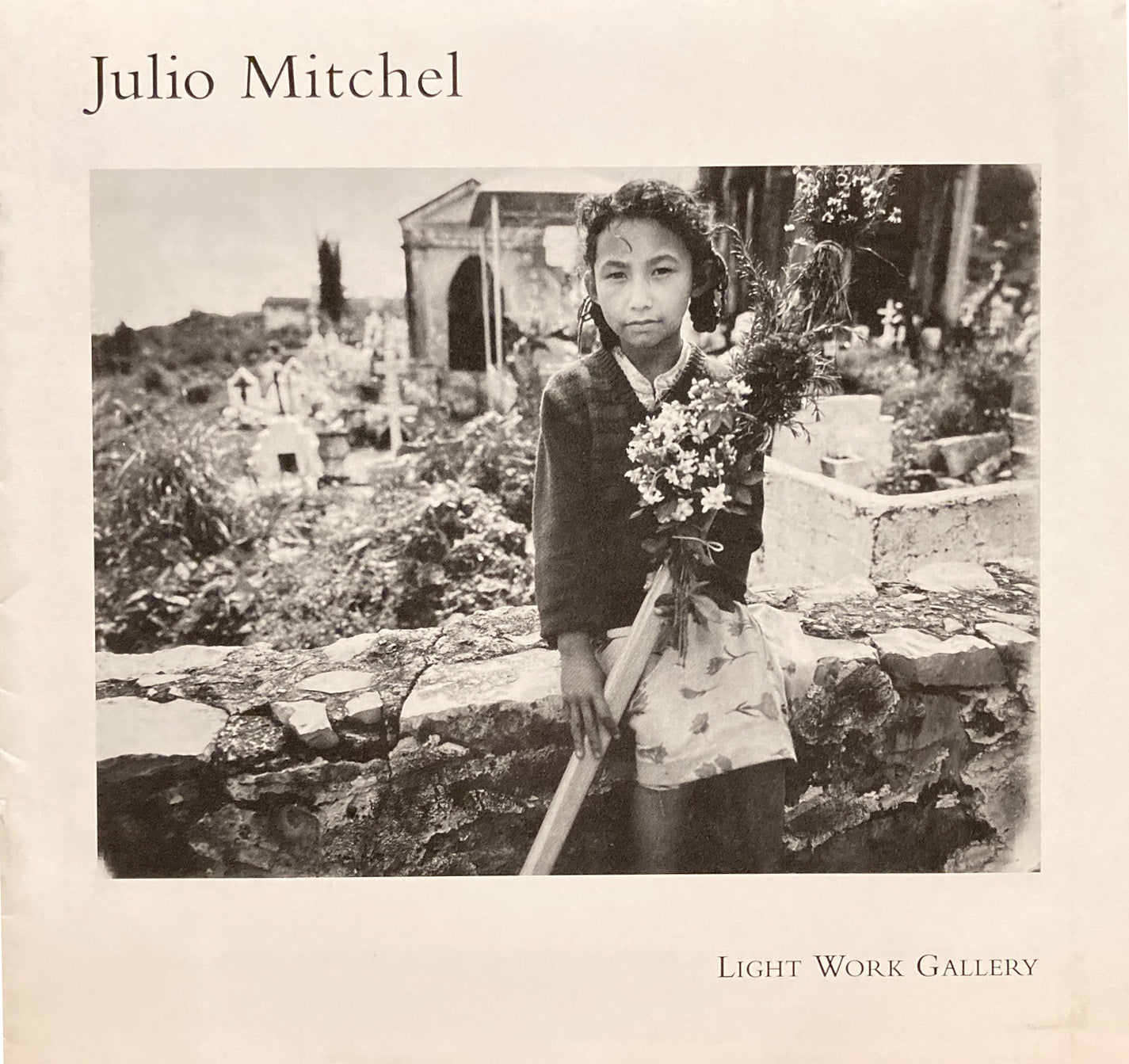
Light Work, Syracuse University, 1982. Exhibition catalog. Slim catalog in wraps reproducing 11 silver gelatin prints, mostly of Hispanic people, produced from Polaroid 665 Positive/Negative. Fine. Summary:
Julio Mitchel is an 8-page, slim exhibition catalog published in 1992 by Light Work, an artist-run non-profit photography organization housed at Syracuse University. The publication serves as a concise companion record for a solo exhibition of work by the American-based documentary photographer Julio Mitchel, which ran at the university's gallery space from January 15 through February 28, 1992.
Overview of the Catalog
-
The Photographer: Julio Mitchel is a celebrated street and documentary photographer renowned for his visceral, high-contrast, and deeply empathetic portrayals of urban subcultures, marginalization, and human vulnerability.
-
Structure & Format: Designed as a compact, stapled softcover booklet, this rare exhibition catalog features an introductory critical text alongside a curated collection of 11 high-quality black-and-white image reproductions.
-
Technical Approach: The showcased photographs are silver gelatin prints notable for their source material. Mitchel captured these images using Polaroid Type 665 positive/negative film, a medium favored by fine-art documentary photographers for its immediate physical proofing capability coupled with a high-resolution, reusable chemical negative that retains rich tonal nuances.
Core Visual and Thematic Focus
The catalog documents a tight, cohesive portfolio that centers on marginalized urban populations, capturing the psychological realities of its subjects with unfiltered intimacy.
-
Portraits of Hispanic Life: The majority of the 11 featured images focus intently on Hispanic individuals and families navigating daily life. Mitchel avoids sentimentalizing or exoticizing his subjects, choosing instead to lean into close-up framing and intense shadows to portray their environments.
-
The Texture of "Dead Time": The images explore themes of waiting, survival, and social community within modern cities. Through his lens, ordinary street corners, domestic interiors, and casual public interactions are elevated into complex visual narratives about cultural identity, resilience, and economic hardship.