Gary Saretzky Photo Books
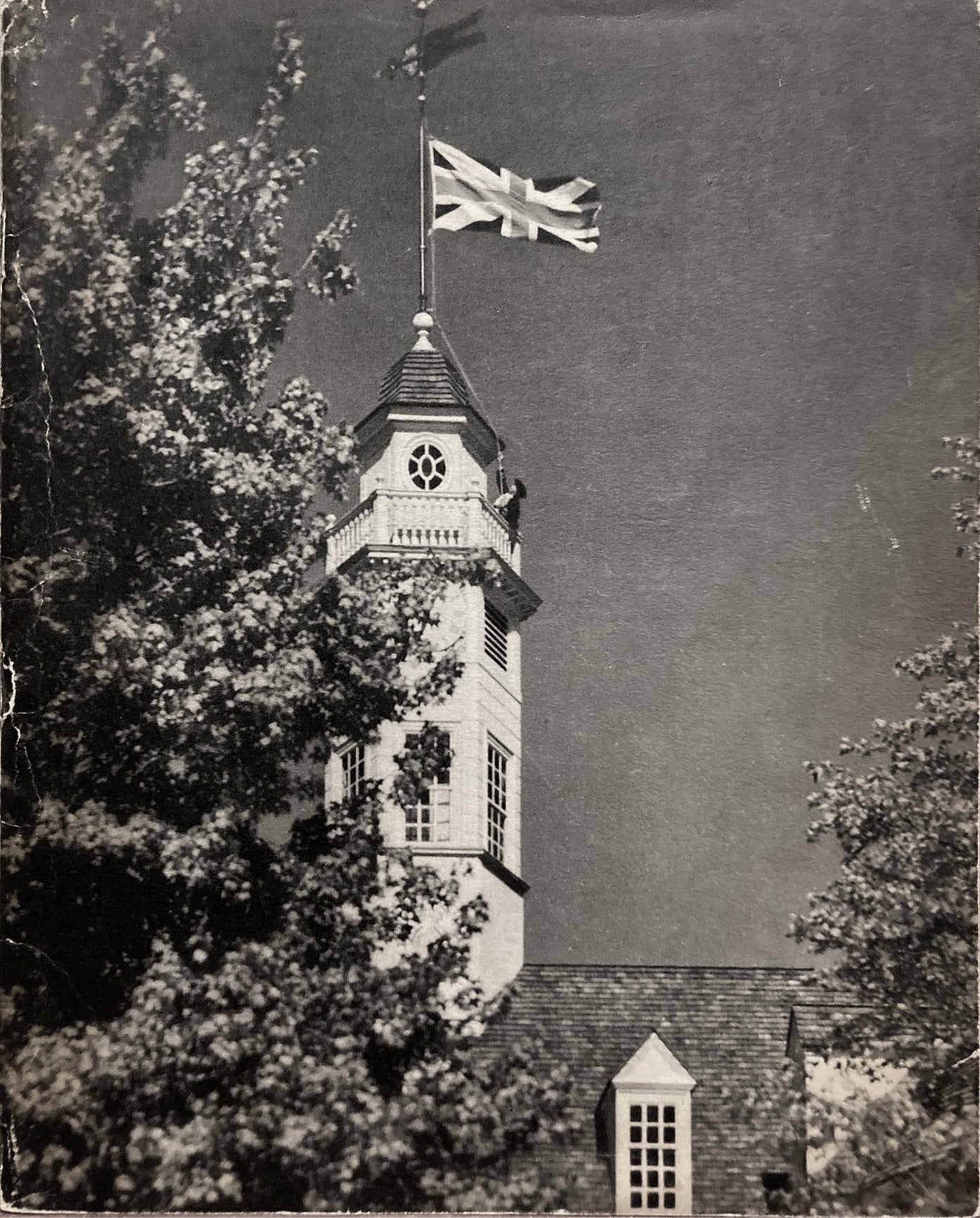
MacRae, Wendell. America's Williamsburg by Gerald Horton Bath with photos by Wendell MacRae.
MacRae, Wendell. America's Williamsburg by Gerald Horton Bath with photos by Wendell MacRae.
Couldn't load pickup availability
Colonial Williamsburg, 1946. Photographs by Wendell MacRae and from the Archives of Colonial Williamsburg. Softcover, 48 pages, profusely illustrated in black-and-white. Review copy slip laid in. Good with normal wear. Summary:
America's Williamsburg (1946) is an attractive, 48-page historical and promotional booklet written by Gerald Horton Bath that chronicles the monumental restoration of Virginia’s colonial capital. Published by Colonial Williamsburg, Inc., the volume explains the "why and how" behind John D. Rockefeller Jr.’s immense philanthropic effort to return the oldest and largest of England’s thirteen American colonies to its pristine 18th-century appearance. The publication functions as both an architectural record and a visitor souvenir, featuring detailed captions and a continuous narrative of the town's evolution up through the Revolutionary War. Enhancing nearly every page are the rich gravure photographs of Wendell MacRae alongside archival imagery, capturing the meticulous, painstaking research and design work that transformed Duke of Gloucester Street and its surrounding structures into a living museum of early American history.
Wendell MacRae (1896–1980) was an American photographer celebrated for his sharp-focus, geometric documentation of New York City's architectural and industrial landscape. After serving in World War I and working briefly in the motion picture industry, MacRae established himself as a prominent freelance commercial photographer in Manhattan during the late 1920s. He became a preferred photographer for Rockefeller Center's construction and publicity campaigns, creating a definitive visual record of the complex's rise during the Great Depression. His work was frequently featured in major periodicals like The New Yorker, Fortune, and Life, and he was recognized for his ability to find stark, abstract beauty in everyday urban environments. Later in his career, MacRae transitioned to institutional work, serving as the director of the photo library at Pennsylvania State University, leaving behind a legacy as a master of American industrial modernism.
