Gary Saretzky Photo Books
Lindbloom, Eric. Angels at the Arno by Eric Lindbloom.
Lindbloom, Eric. Angels at the Arno by Eric Lindbloom.
Couldn't load pickup availability
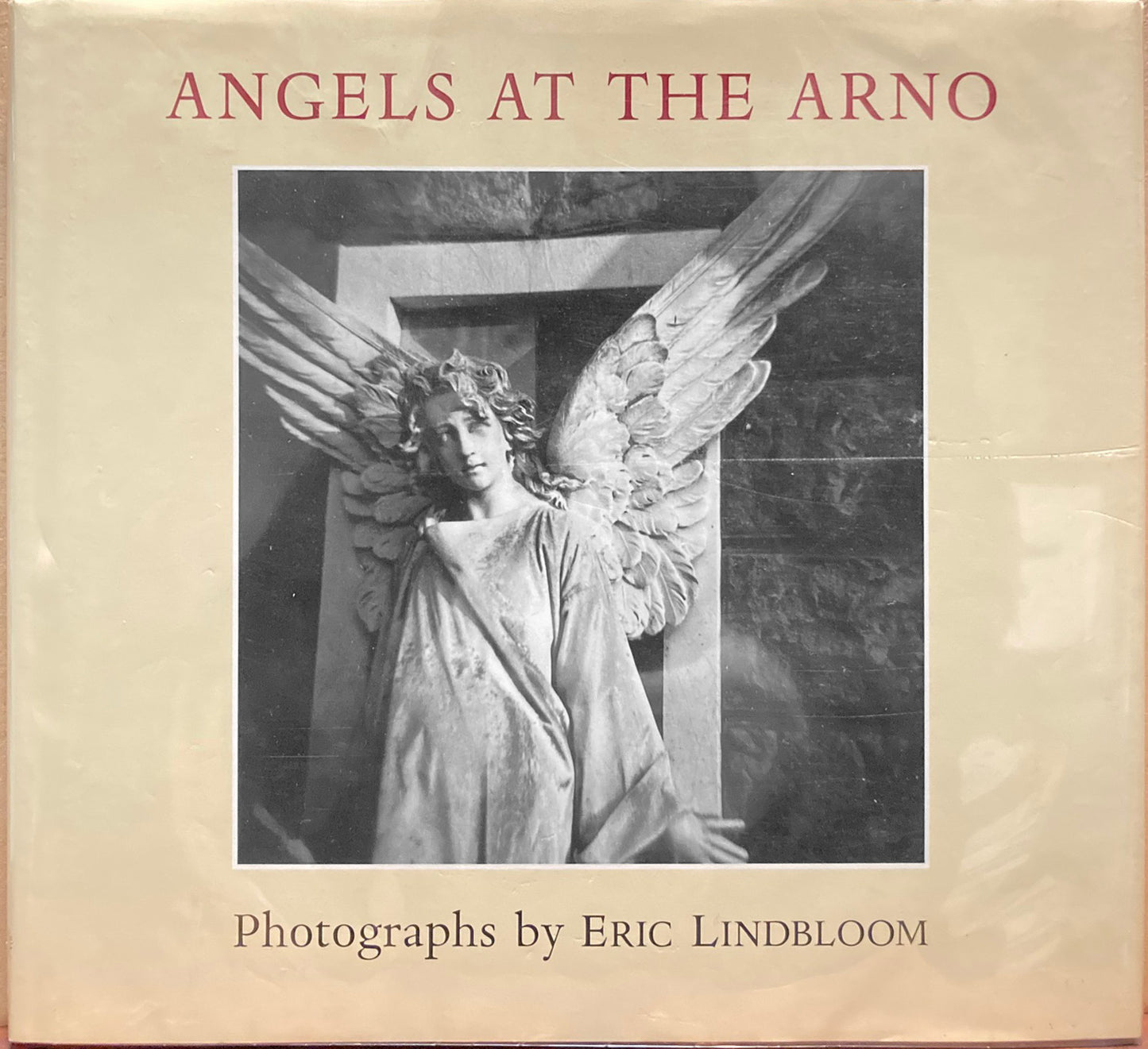
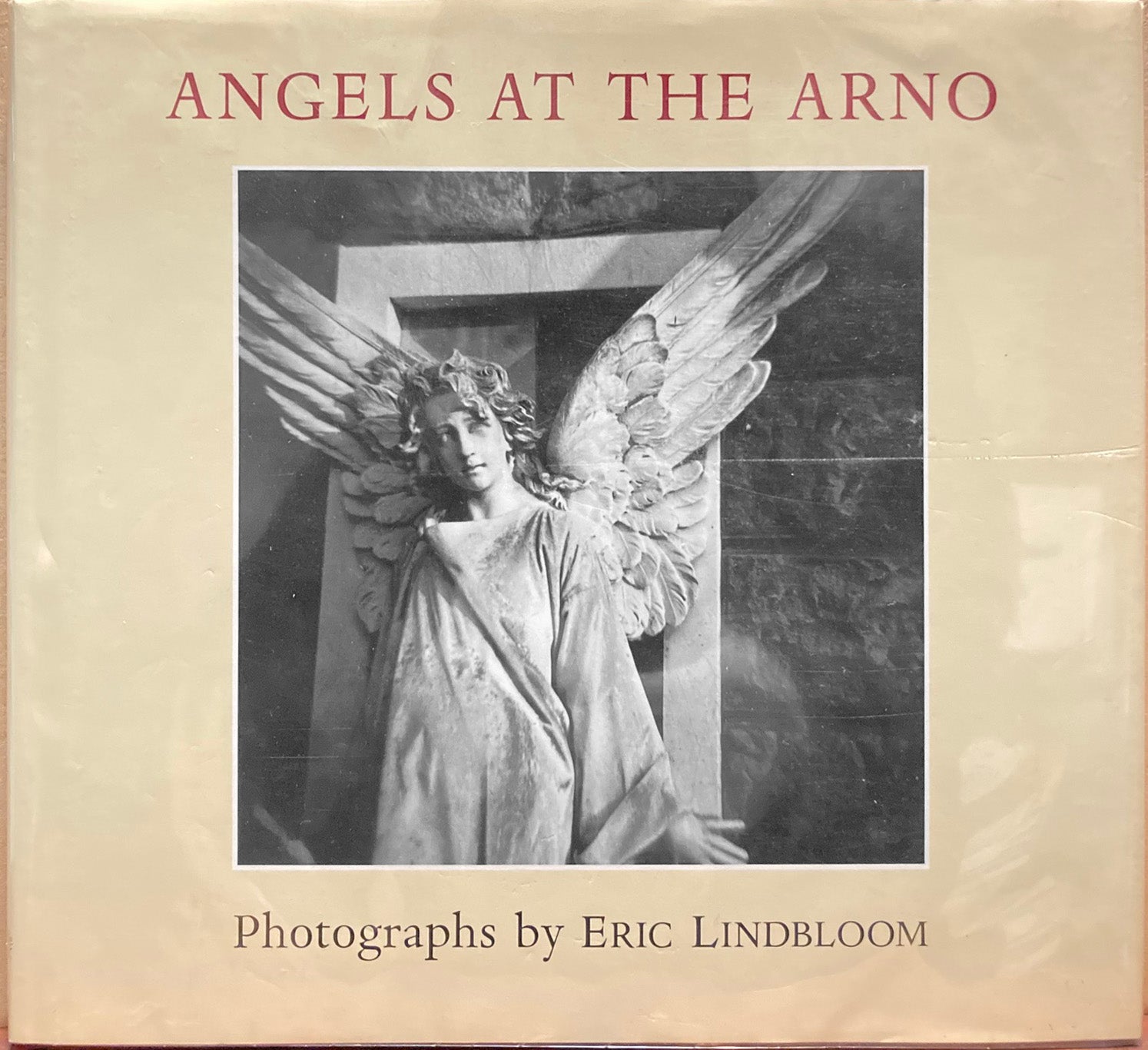
David R. Godine, 1994. Contributions by Linda Pastan, Preface; Ben Lifson, Introduction; Italo Zannier, Afterword. 1st edition, fine in red cloth with protected VG+ dust jacket. Dreamy black-and-white photographs of Florence, Italy, taken with a Diana camera, by one of the founders of the Center for Photography in Woodstock, New York.
Publisher: The Florence revealed in Eric Lindbloom's Angels at the Arno is almost startling in its intimacy and quiet solitude. Lindbloom's view of the city rendered exclusively through the plastic lens of a Diana camera, virtually a child's toy brings this venerable city to new life and light. With unabashed subjectivity and an offbeat, oneiric sensiblity, Lindbloom conveys his sense of an unveiled Florence, filled with views striking for the beauty they contain rather than for the history they suggest. This is a city not so much of paintings and trattorie as of mysterious, hidden sculptures, emerging from the ancient architecture like stone made flesh. As Linda Pastan writes in her preface, Lindbloom's Florence is "transformed from a city of blaring car horns and leather vendors, impressive piazzas and forbidding facades to a quiet place of small streets and courtyards, of homespun angels whose wings throw light and shadow over everything, even at high noon." Summary:
Angels at the Arno by Eric Lindbloom is an evocative photography book that presents a highly personal and dreamlike vision of Florence, Italy.
Core Themes and Content
-
The Diana Camera Aesthetic: The most defining characteristic of the book is that all of the photographs were taken exclusively using a Diana camera—a cheap, plastic toy camera from the 1960s known for its light leaks, soft focus, and unpredictable vignettes. Lindbloom used this rudimentary tool to bypass crisp, documentary-style architectural photography in favor of something far more impressionistic.
-
Intimacy and Solitude: Rather than capturing the bustling, tourist-heavy reality of Florence or focusing strictly on its grand historical significance, Lindbloom captures the city in moments of quiet isolation. The images offer a startlingly intimate look at empty streets, reflective waters, and deserted piazzas.
-
An "Oneiric" Sensibility: The book relies on a heavily subjective, dreamlike (oneiric) style. The soft-focus plastic lens transforms the solid stone architecture, classical statues, and the flowing Arno River into ethereal, ghostly shapes, making the entire city feel suspended in time.
-
Beauty Over History: Lindbloom's focus is squarely on the interaction of light, shadow, and texture rather than postcard-perfect landmarks. He reveals a hidden, reimagined Florence that values mood and visual poetry over historical documentation.
The collection is widely celebrated in fine-art photography for demonstrating how a low-tech, imperfect medium can be masterfully utilized to breathe new life and profound light into one of the world's most photographed cities.