Gary Saretzky Photo Books
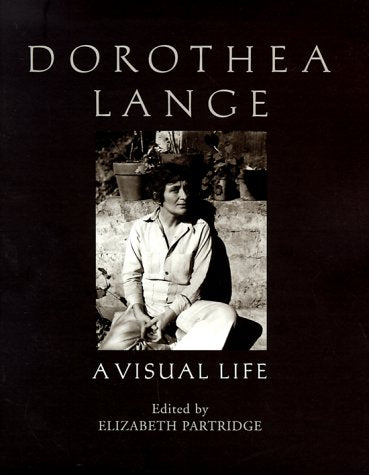
Lange, Dorothea. Dorothea Lange: A Visual Life, edited by Elizabeth Partridge. Signed.
Lange, Dorothea. Dorothea Lange: A Visual Life, edited by Elizabeth Partridge. Signed.
Couldn't load pickup availability
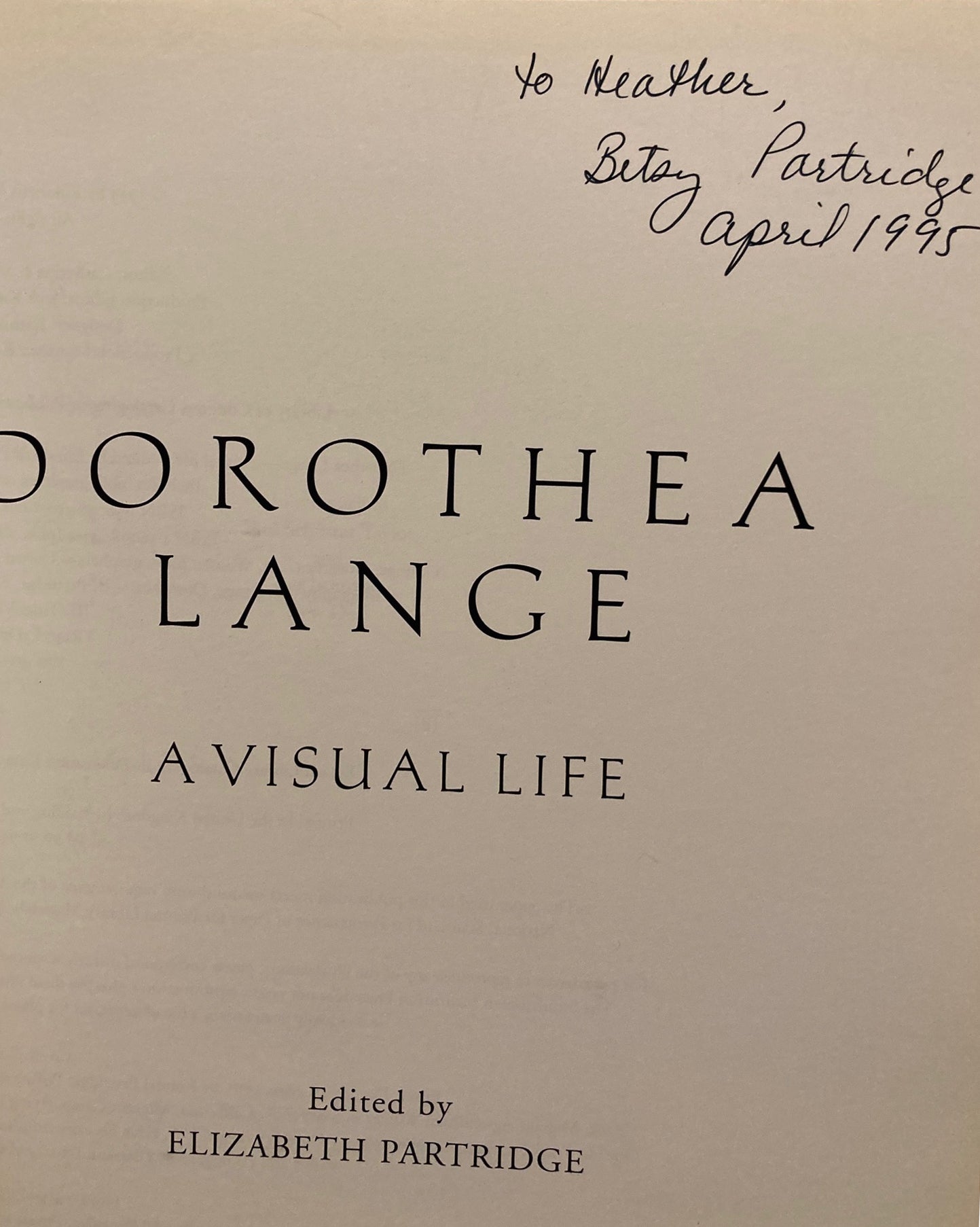
Smithsonian, 1994. 1st printing. Stiff illustrated wraps. [Chapters by Linda A. Morris, Clark Kerr, Roger Daniels, Sally Stein, interview of Ansel Adams by Therese Heyman, afterword by Daniel Dixon. Numerous illustrations.] SIGNED and inscribed by Partridge in April 1995. Very good. Summary:
Dorothea Lange: A Visual Life (published in 1994 by the Smithsonian Institution Press) is a comprehensive, 176-page companion volume to the documentary film of the same name. Edited by author and photo-historian Elizabeth Partridge, who grew up within Lange's extended family circle, this collection of essays, interviews, and letters serves as an intimate, multi-faceted look into the professional triumphs and private sacrifices of one of America's most revered documentary photographers.
Core Themes and Content
-
A Multi-Dimensional Portrait: The anthology moves beyond standard biographies by assessing Lange through several distinct roles: as an pioneering female artist, a political activist, a working mother, and a mentor. It combines personal excerpts from Lange’s own journals and private letters with insightful scholarship from seven distinct essayists to construct a holistic narrative of her character.
-
The Interplay of Personal and Historical Adversity: Several essays examine how Lange’s personal struggles directly informed her empathetic visual perspective. The text explores how her childhood battle with polio, which left her with a permanent limp and lifelong physical infirmities, deeply influenced her focus on the human body, resilience, and physical posture in her imagery.
-
Beyond the Dust Bowl Narrative: While the publication honors her iconic, state-sponsored Farm Security Administration (FSA) work during the Great Depression, it also expands significantly on her later, more controversial assignments. Scholars like Roger Daniels highlight her lesser-known work for the War Relocation Authority during World War II, where she boldly documented the unjust internment and displacement of Japanese-American citizens.
-
An Honest Look at Domestic Demands: The book addresses the complex domestic friction Lange faced while balancing her fierce devotion to her career with the demands of family life. It details the challenges of maintaining her artistic identity while raising a blended family alongside her second husband, the prominent agricultural economist Paul Taylor, who was also her close professional collaborator in the field.
By synthesizing raw personal correspondence with rigorous art history, Dorothea Lange: A Visual Life successfully elevates Lange from a monolithic historical icon to a complex human being, proving that her profound capacity for empathy was forged through her own lived experiences.
Dorothea Lange (1895–1965) was a pioneering American documentary photographer and photojournalist whose empathetic, unflinching images profoundly shaped the visual legacy of the Great Depression and redefined the field of social documentary art. Born in Hoboken, New Jersey, Lange survived a childhood bout with polio that left her with a permanent limp—a physical vulnerability she later credited with forging her deep capacity to connect with people on the margins of society. After studying photography at Columbia University under Clarence H. White, she moved to San Francisco, where she ran a highly successful portrait studio catering to the city’s elite. However, as the economic devastation of the 1930s unfolded outside her door, she abandoned studio work to document the streets, catching the attention of the state-sponsored Farm Security Administration (FSA). Working alongside her husband, agricultural economist Paul Taylor, Lange traveled across the American West and South, capturing iconic, humanistic masterpieces like Migrant Mother that put a poignant face on the plight of displaced migrant workers and dust bowl refugees. Beyond her famous Depression-era work, she bravely documented the forced internment of Japanese-Americans during World War II and chronicled global communities for Life magazine, cementing her enduring legacy as a courageous visual activist who wielded her camera not merely as an artistic tool, but as a powerful instrument for social justice and institutional reform.
