Gary Saretzky Photo Books
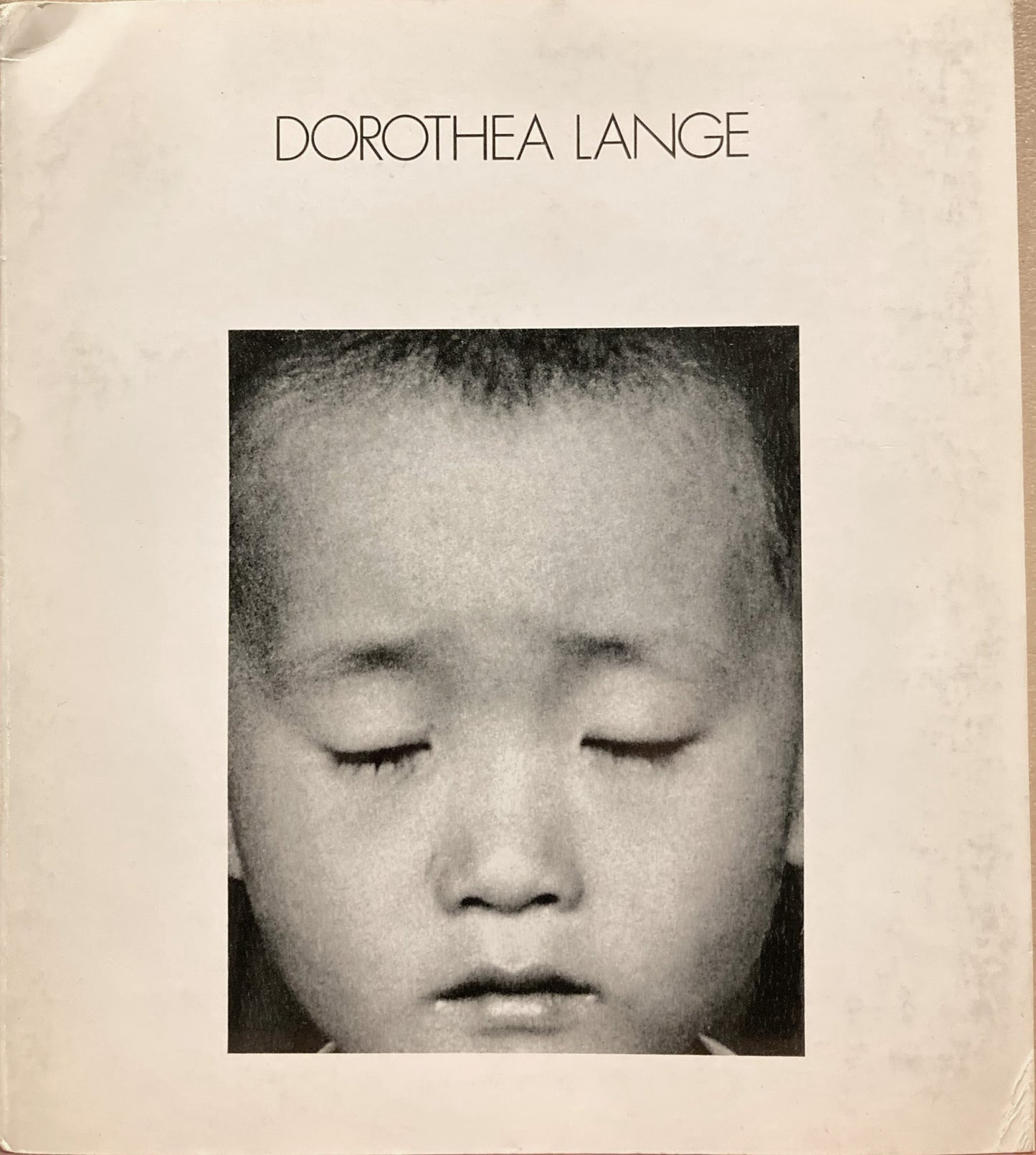
Lange, Dorothea. Dorothea Lange, Museum of Modern Art, 1966, 1968.
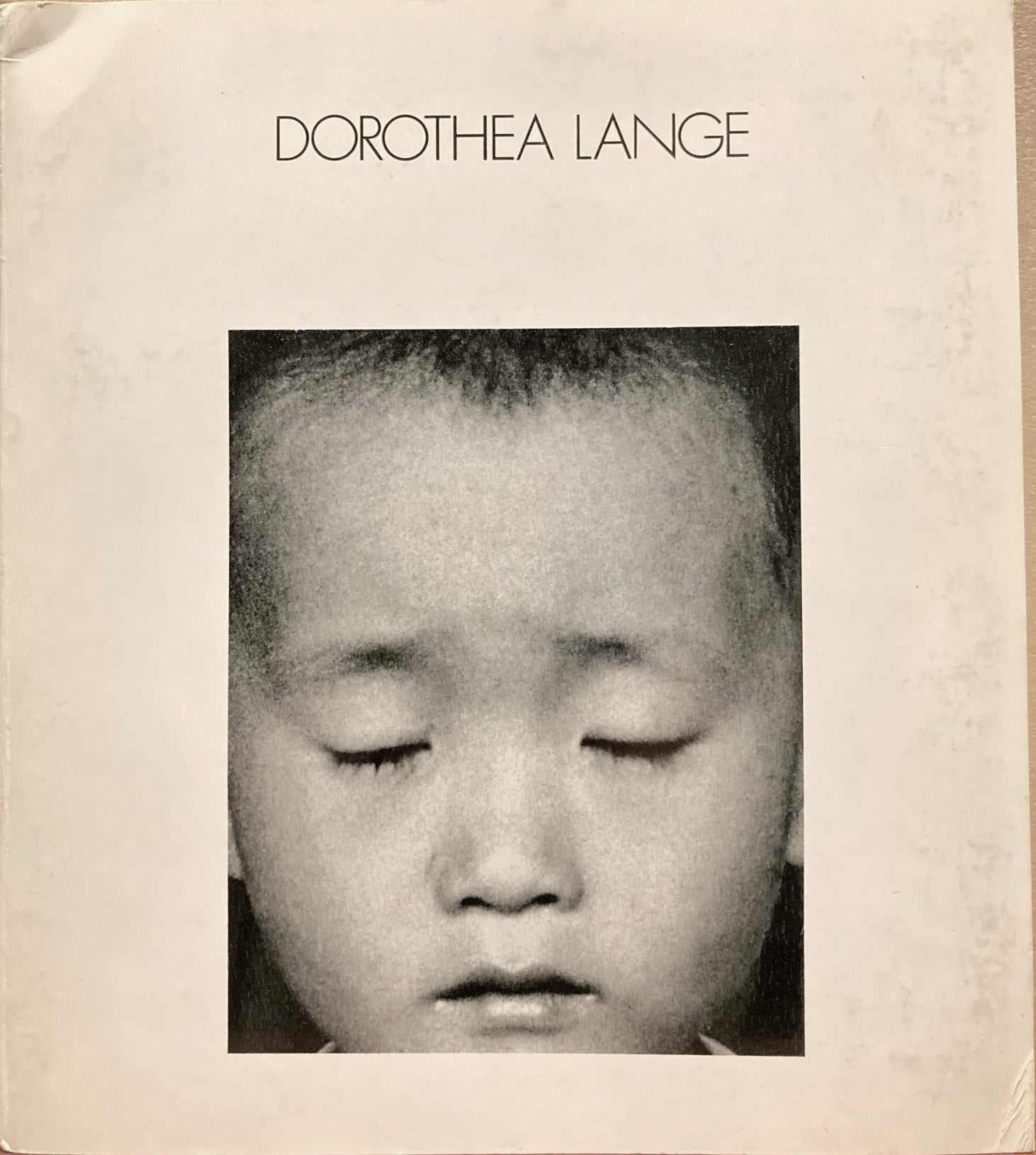
Lange, Dorothea. Dorothea Lange, Museum of Modern Art, 1966, 1968.
Couldn't load pickup availability
Second printing, wraps, Very good with bump at top of spine and corner crimp. [Lange spent her last efforts selecting prints for this show, which was held shortly after her death.] Includes bibliography, chronology, and essay by George P. Elliott. Summary:
Dorothea Lange (published in 1966 and reprinted in 1968 by the Museum of Modern Art) is a pivotal 112-page retrospective exhibition catalog dedicated to the career of the seminal American documentary photographer. Curated as a deeply collaborative effort between Lange and MoMA's Director of Photography, John Szarkowski, the project was finalized just before Lange’s death in October 1965, serving as both her first major posthumous monument and a definitive baseline for her artistic legacy.
Core Themes and Content
-
A Friendship's Perspective: The publication features a critical introductory essay by novelist, critic, and professor George P. Elliott, who was a close personal friend of Lange for over twenty years. Rather than offering a detached academic evaluation, Elliott recreates Lange's career through the framework of her deep personal integrity, examining her lyrical sensibility and her ultimate commitment to portraying ordinary people in ordinary circumstances.
-
Balancing Form and Humanitarian Substance: The catalog's 91 high-quality black-and-white plates illustrate Lange's unique mastery over the interaction between artistic form and social documentation. The imagery charts her historic departure from comfortable, formal studio portraiture in the early 1930s to confront the stark realities of the streets and rural labor.
-
Beyond the Farm Security Administration: While honoring her legendary, state-sponsored documentation of the Dust Bowl and Great Depression refugees, the book expands the public's understanding of her late-career output. It features extensive, lesser-known global photo-essays captured during the 1950s and 1960s across Ireland, Asia, and Egypt, alongside her intimate personal project, "The New California," which tracked domestic life and her own family.
-
Archival and Explanatory Supplements: To anchor the visual plates, the catalog provides an exhaustive exhibition checklist, a detailed biographical chronology, and a comprehensive bibliography. Crucially, it includes Lange’s own field notes and working observations for several of the photographs, capturing the exact dialogue, human context, and technical considerations that occurred behind the lens.
By showcasing a thirty-year trajectory that balanced a sophisticated aesthetic eye with a fierce social conscience, this historic MoMA catalog successfully codified Dorothea Lange's transition from a regional documentarian into an undisputed titan of 20th-century modern art.
Dorothea Lange (1895–1965) was a pioneering American documentary photographer and photojournalist whose empathetic, unflinching images profoundly shaped the visual legacy of the Great Depression and redefined the field of social documentary art. Born in Hoboken, New Jersey, Lange survived a childhood bout with polio that left her with a permanent limp—a physical vulnerability she later credited with forging her deep capacity to connect with people on the margins of society. After studying photography at Columbia University under Clarence H. White, she moved to San Francisco, where she ran a highly successful portrait studio catering to the city’s elite. However, as the economic devastation of the 1930s unfolded outside her door, she abandoned studio work to document the streets, catching the attention of the state-sponsored Farm Security Administration (FSA). Working alongside her husband, agricultural economist Paul Taylor, Lange traveled across the American West and South, capturing iconic, humanistic masterpieces like Migrant Mother that put a poignant face on the plight of displaced migrant workers and dust bowl refugees. Beyond her famous Depression-era work, she bravely documented the forced internment of Japanese-Americans during World War II and chronicled global communities for Life magazine, cementing her enduring legacy as a courageous visual activist who wielded her camera not merely as an artistic tool, but as a powerful instrument for social justice and institutional reform.