Gary Saretzky Photo Books
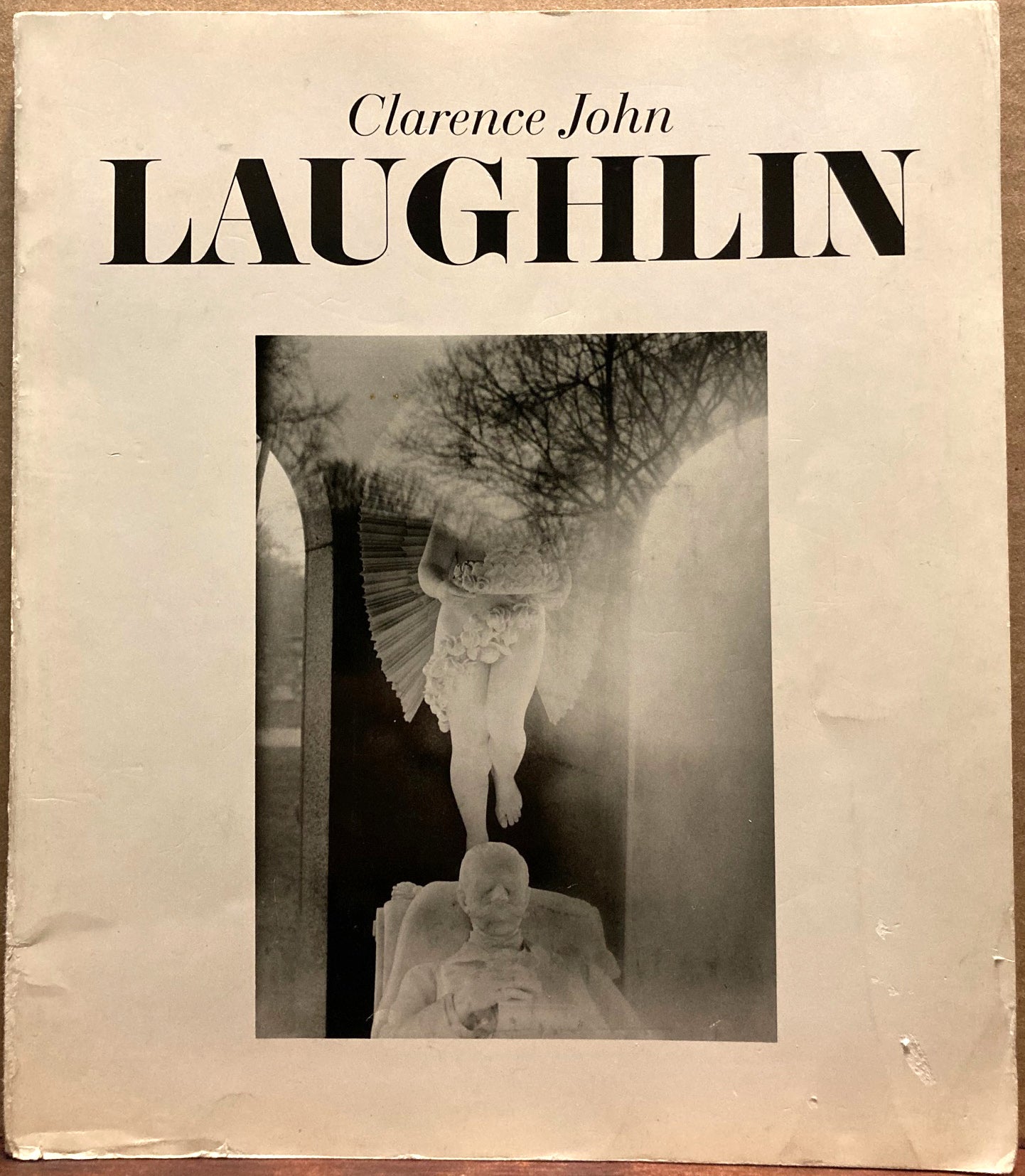
Laughlin, Clarence John. Clarence John Laughlin: The Personal Eye. Aperture, Vol. 17, No. 3-4.
Laughlin, Clarence John. Clarence John Laughlin: The Personal Eye. Aperture, Vol. 17, No. 3-4.
Couldn't load pickup availability
Aperture, 1973. Introduction by Jonathan Williams. Stories by Lafcadio Hearn. Captions by the photographer. Issued in conjunction with an exhibition at the Philadelphia Museum of Art, November 1973 to January 1974. Wraps, 132 pages. Good plus in wraps with two small scuffs to cover, name of previous owner inside front cover, small tape remnant inside front cover, and discreetly closed tear at base of spine. Summary:
Clarence John Laughlin: The Personal Eye (published in 1973 as a combined double-issue of Aperture, Vol. 17, Nos. 3 & 4) is a seminal 132-page monograph and exhibition catalog. Produced by Aperture in conjunction with a major retrospective at the Philadelphia Museum of Art, this volume serves as the definitive mid-career exploration of Laughlin, the pioneering New Orleans artist widely considered America's first true surrealist photographer.
Core Themes and Content
-
The Visionary Surrealist Portfolio: The heart of the monograph is a beautifully printed collection of high-contrast, black-and-white images that span Laughlin's vast, avant-garde body of work. Moving past straightforward documentary styles, the volume displays his highly staged, psychological tableaus—utilizing double exposures, spectral figures draped in fabrics, intentionally distorted reflections, and stark compositions that transform everyday architectural elements into haunting, poetic dreamscapes.
-
The Gothic American South: The issue heavily reflects Laughlin's obsession with the decay, memory, and mythology of his native Louisiana. It features selections from his landmark projects, capturing Victorian ruins, ironwork, and crumbling antebellum structures not merely as historical records, but as psychological manifestations of human anxiety, nostalgia, and death.
-
Laughlin's "Cyclopic Eye" Philosophy: Uniquely, the monograph includes extensive, highly detailed captions written by Laughlin himself. These texts provide critical insight into his creative intent, detailing his belief in the camera as a "third eye" capable of uncovering the hidden reality beneath the surface of objects, while explicitly tying his visual themes to the "Metaphysical" paintings of Giorgio de Chirico.
-
Literary Contextualization: To frame Laughlin's distinct visual romanticism, the publication features a comprehensive introduction by poet and publisher Jonathan Williams. It also intentionally weaves in atmospheric stories by the 19th-century writer Lafcadio Hearn, whose macabre, exotic literary sketches of New Orleans perfectly mirror the uncanny, gothic atmosphere of Laughlin’s imagery.
This double issue of Aperture remains a prized asset for art historians and collectors, cementing Clarence John Laughlin's legacy as a brilliant, eccentric dissenter who broke away from the dominant American documentary tradition to champion photography as a deeply personal, subconscious art form.
Born in Lake Charles in 1905, Clarence John Laughlin grew up and made his home in New Orleans, although he photographed widely during his career. The photographer is best known for his surrealistic photographs of the American South and for his book, Ghosts Along the Mississippi: The Magic of the Old Houses of Louisiana (1948). Although he dropped out of high school after one year, Laughlin was highly literate and wrote extensive captions for his photos. His personal library of 30,000 books was purchased by Louisiana State University after his death on January 2, 1985. A major collection of his work is at the Historic New Orleans Collection.