Gary Saretzky Photo Books
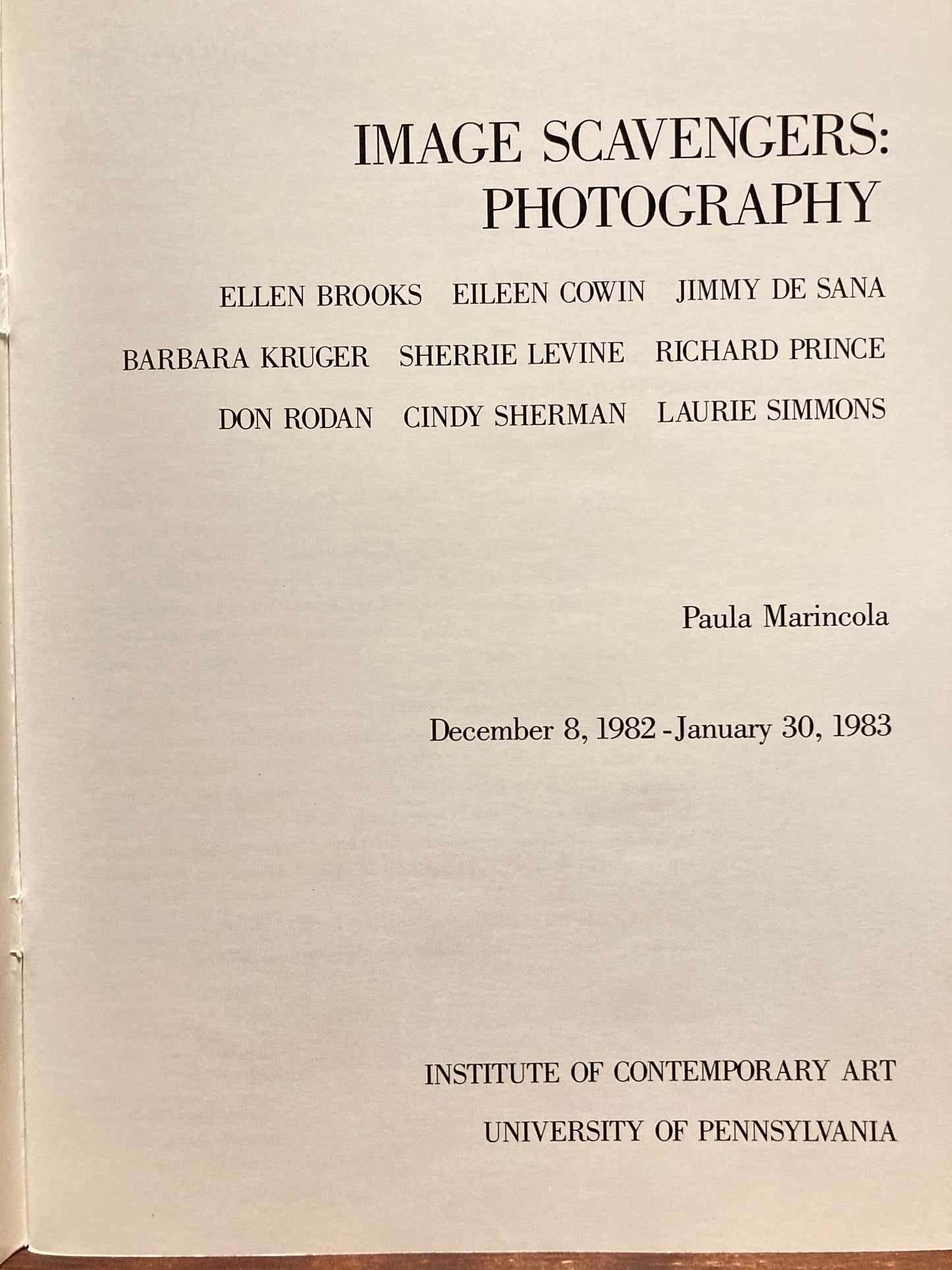
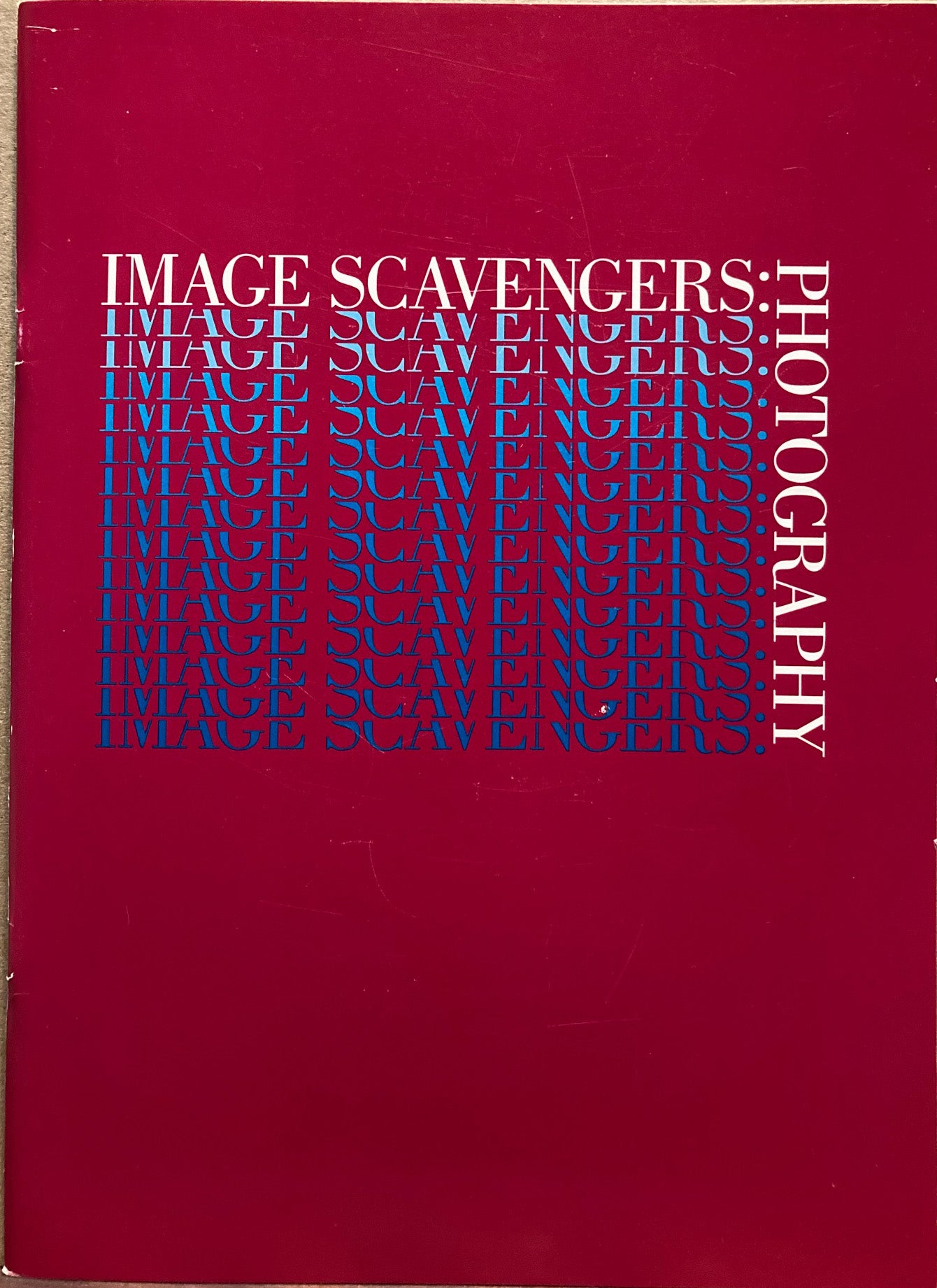
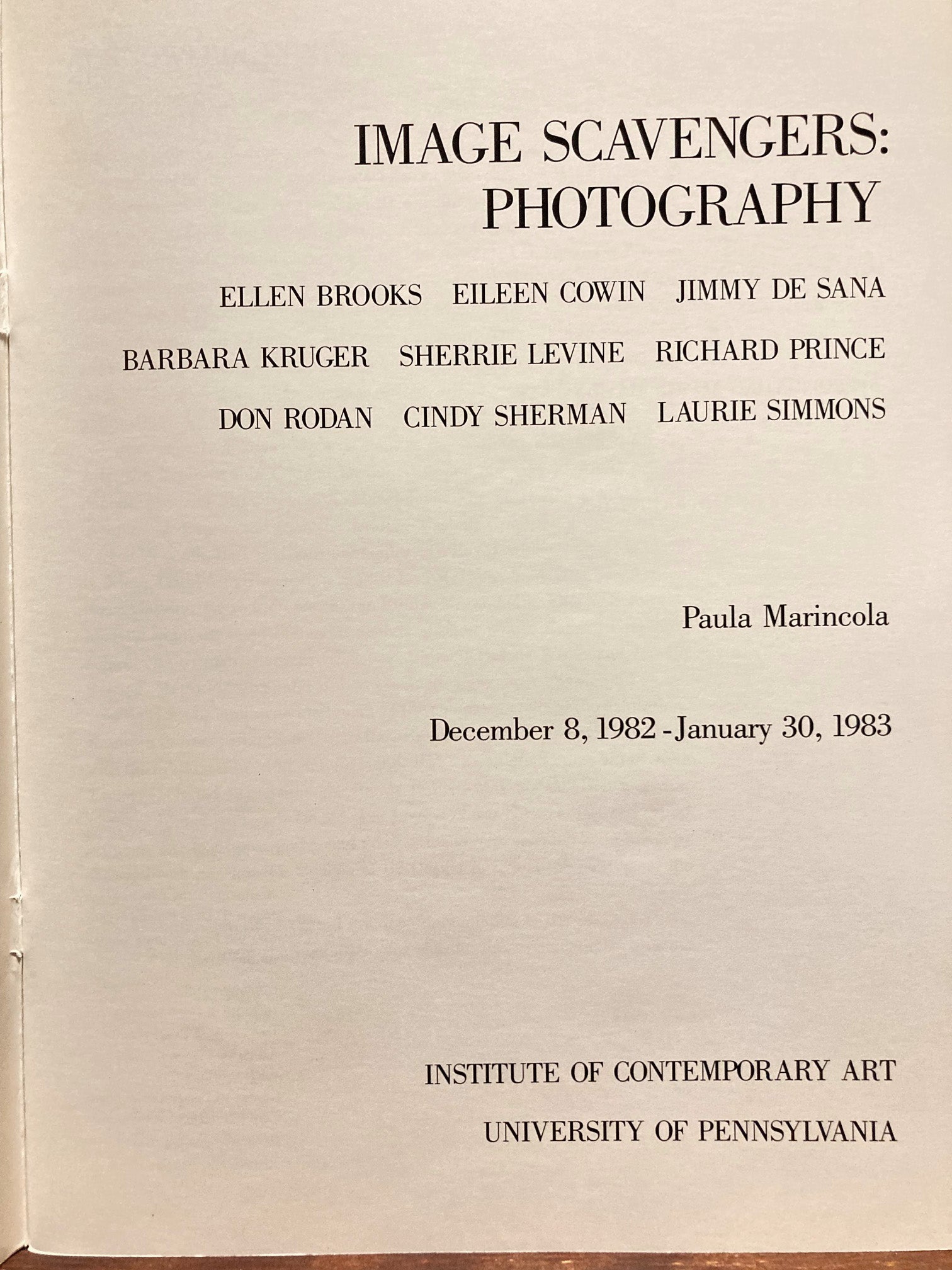
Postmodernism. Image Scavengers: Photography. December 8, 1982 - January 30, 1983.
Postmodernism. Image Scavengers: Photography. December 8, 1982 - January 30, 1983.
Couldn't load pickup availability
Institute of Contemporary Art, University of Pennsylvania, 1982. Text by Paula Marincola with an additional essay, "Appropriating Appropriation" by Douglas Crimp. Includes exhibition checklist and selected bibliography. Artists: Ellen Brooks; Eileen Cowin; Jimmy De Sana; Barbara Kruger; Sherrie Levine; Richard Prince; Don Rodan; Cindy Sherman; and Laurie Simmons. [A landmark exhibition in the history of Postmodernism in photography.] Wraps, 40 pages, well illustrated in black-and-white and color, near fine with a few tiny nicks on cover, stored in plastic sleeve since new. Summary:
Image Scavengers: Photography (1982) is an influential, 40-page exhibition catalog published by the Institute of Contemporary Art (ICA) at the University of Pennsylvania. It accompanied a landmark exhibition running from December 8, 1982, to January 30, 1983, that targeted the burgeoning postmodern movement. Featuring work by pivotal "Pictures Generation" figures—including Barbara Kruger, Cindy Sherman, Sherrie Levine, Richard Prince, Ellen Brooks, Eileen Cowin, Jimmy De Sana, and Don Rodan—the publication codifies the era's shift toward image appropriation. The volume features a primary text by Paula Marincola and a vital theoretical essay, "Appropriating Appropriation," by the renowned art critic Douglas Crimp.
Core Content & Theoretical Framework
1. The Photographer as Consumer and Raider
Paula Marincola’s central essay frames a new breed of contemporary artists not as traditional creators of original pictures, but as "scavengers" of the existing visual landscape. The text analyzes how these photographers actively raid the vast archives of mass media, advertising, television, and art history. Rather than capturing unmediated reality, their work acknowledges that late-twentieth-century human experience is entirely filtered through preexisting imagery.
2. Douglas Crimp’s "Appropriating Appropriation"
A major intellectual anchor of the catalog is Douglas Crimp's critical essay, which expands upon his foundational work regarding postmodernism and the institutional spaces of art. Crimp examines the mechanics, politics, and subversions inherent to the act of copying. He unpacks how artists like Sherrie Levine and Richard Prince challenge traditional modernist shibboleths—such as individual authorship, the aura of the original masterpiece, and copyright—by deliberately presenting duplicated imagery to expose the underlying power structures of representation.
3. Deconstructing Mass-Media Mythologies
The catalog outlines the specific visual strategies used by the exhibition's artists to dismantle consumer culture. It highlights how the juxtaposition of bold text and hijacked graphics (as seen in Kruger's work) or the staging of cinematic, fictional identities (exemplified by Sherman's photographs) functions to disrupt passive media consumption. By isolating and recontextualizing commercial tropes, the "scavenged" images reveal the manufactured desires, gender roles, and political ideologies embedded within everyday visual culture.
Image Scavengers: Photography stands as a crucial primary document that helped institutionalize appropriation art in the early 1980s. Published alongside a companion volume dedicated to painting, this catalog successfully bridged the gap between complex post-structuralist theory and the physical gallery space, documenting a seismic moment when photography completely rejected modernist purity in favor of simulation, pastiche, and critical irony.