Gary Saretzky Photo Books
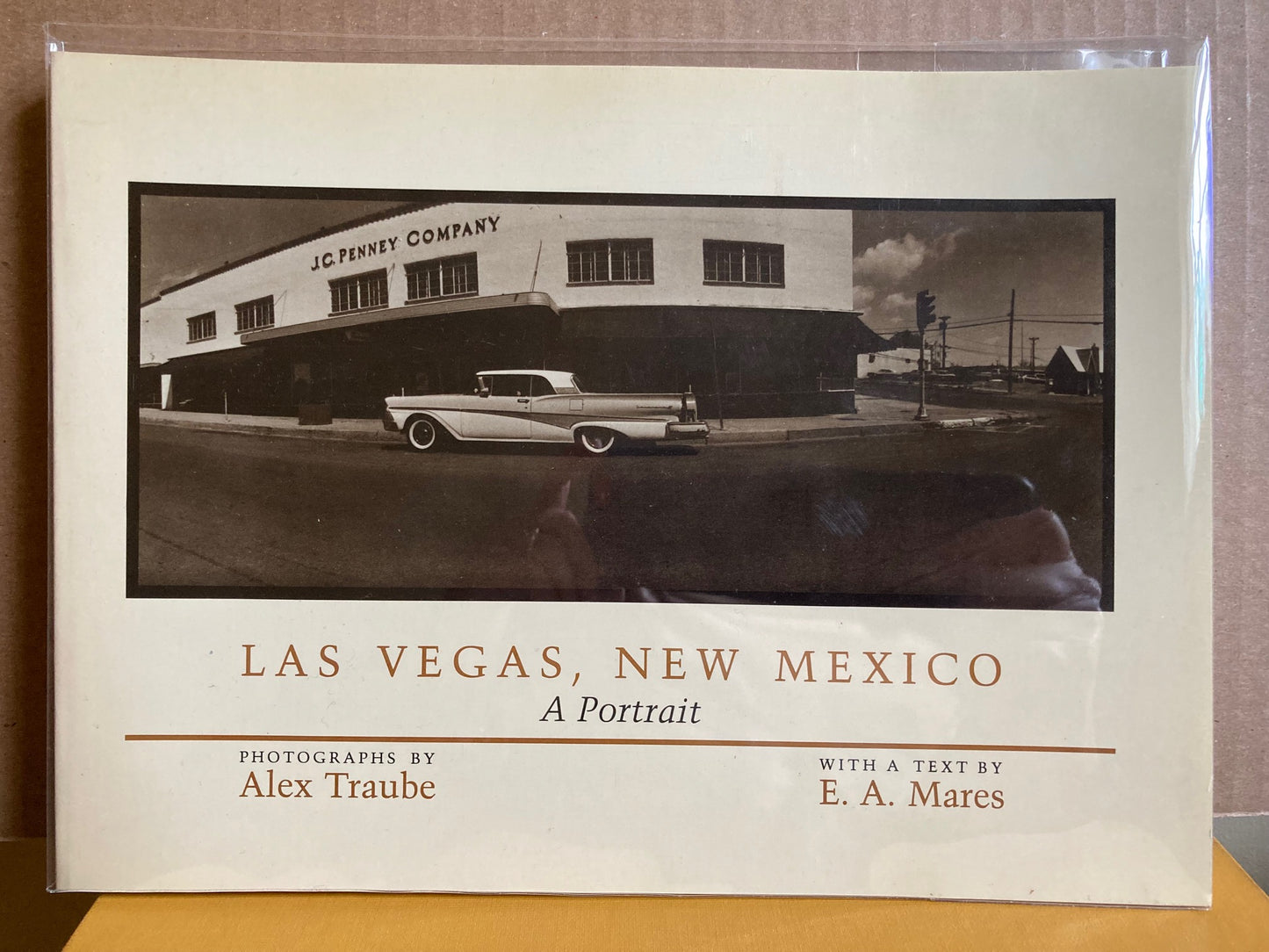
Traube, Alex. Las Vegas, New Mexico: A Portrait. Photographs by Alex Traube. Text by E.A. Mares.
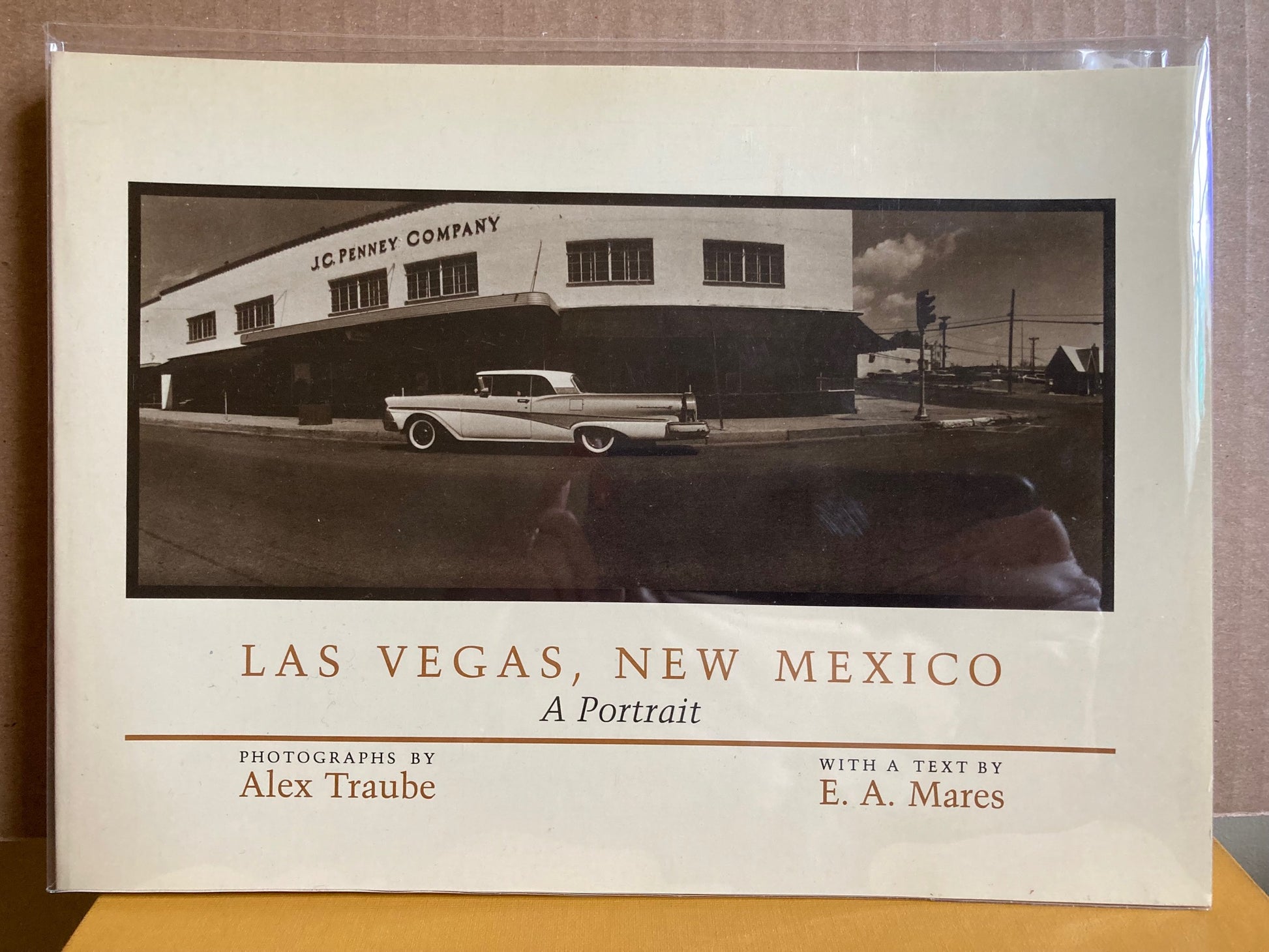
Traube, Alex. Las Vegas, New Mexico: A Portrait. Photographs by Alex Traube. Text by E.A. Mares.
受取状況を読み込めませんでした
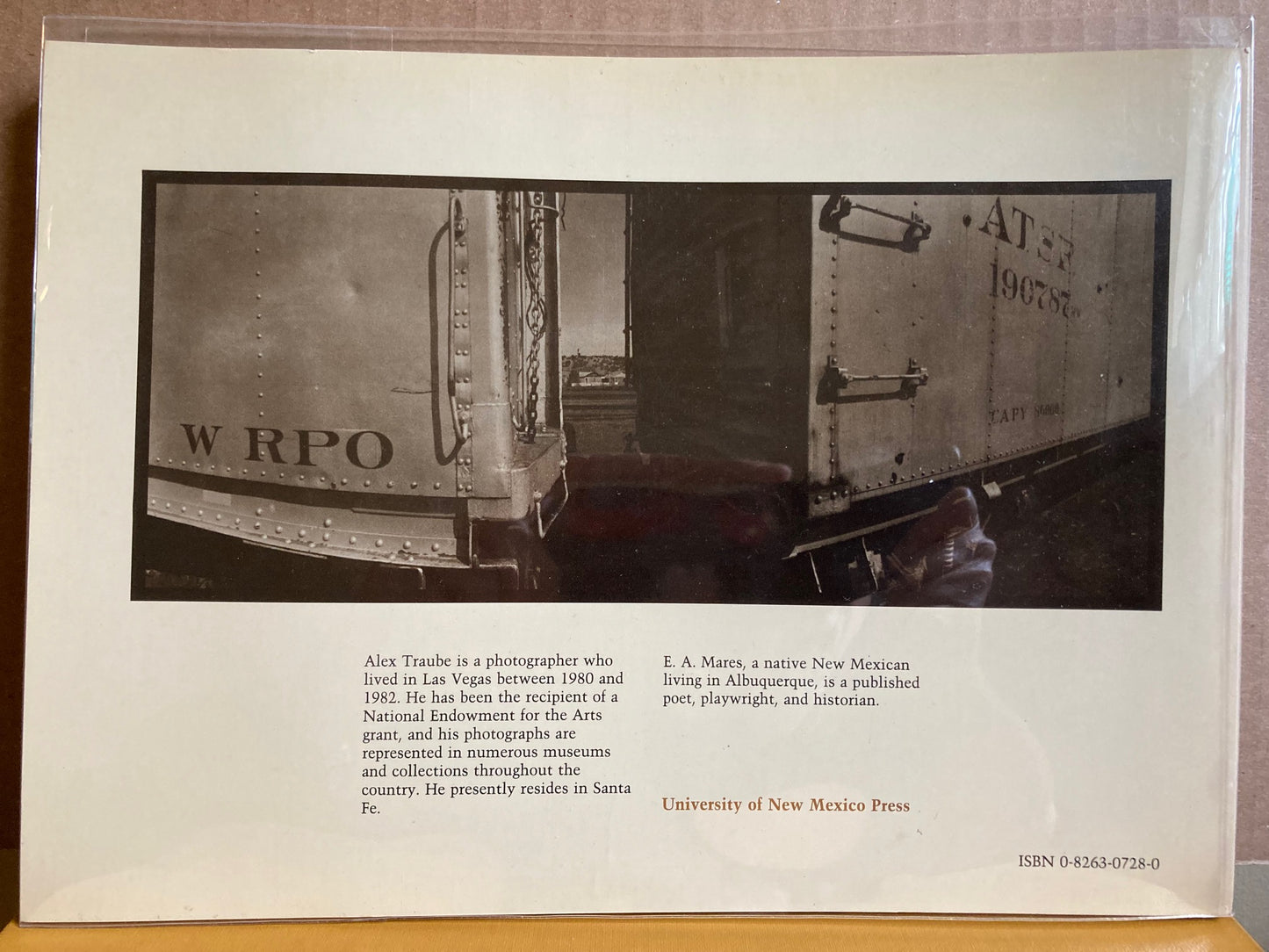
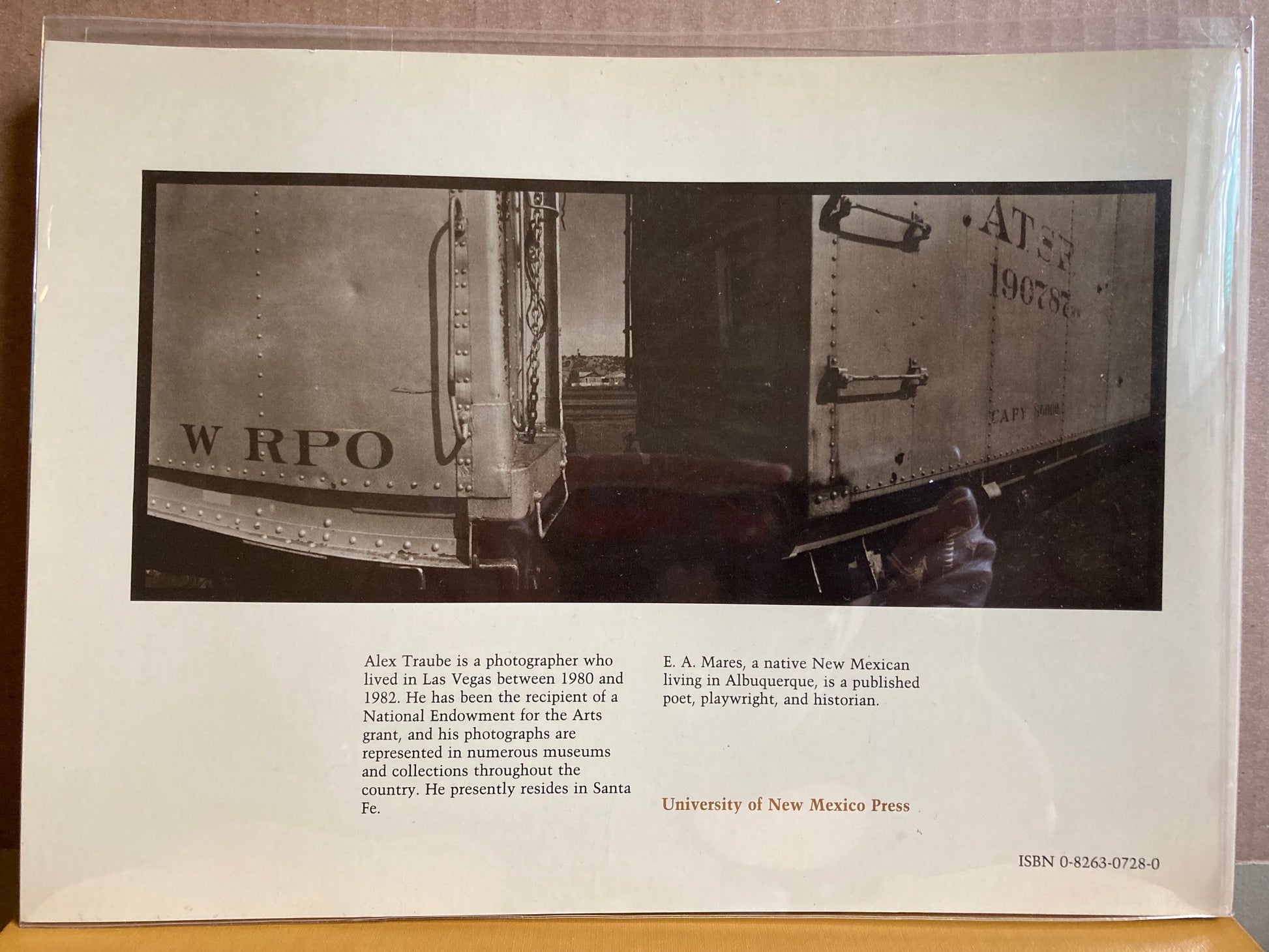
University of New Mexico Press, 1983. First Edition stated. Wraps, fine, like new in custom-made 4-mil polyester jacket. 183 pages. According to the introduction, "The essay that accompanies this book is intended as a docu-drama, using the written word as one form of imaginative resonance to the photographs." The photographs are printed in a deep violet brown tone and are in panoramic format, possibly taken with a Widelux camera. Summary:
Las Vegas, New Mexico: A Portrait (1986) is a collaborative "biography of a place" that juxtaposes the evocative, minimalist photography of Alex Traube with the lyrical, historical essays of E.A. Mares. The book captures the unique, often haunted atmosphere of a town that once rivaled Denver and El Paso in importance, but ultimately became a "time capsule" of New Mexican cultural convergence.
Core Themes and Narrative
-
The Layered Identity: Mares’s text explores the "Triple Culture" of Las Vegas—Native American, Spanish Colonial, and Anglo-American. He frames the town not as a relic, but as a living palimpsest where Victorian mansions stand alongside adobe ruins.
-
The Architecture of Memory: Traube’s photographs focus on the "bones" of the town. He ignores the neon of the "New" Las Vegas in favor of the quiet plazas and weathered storefronts of the old, capturing the tension between past glory and contemporary stagnation.
-
The Persistence of Place: A major theme is "Querencia"—the deep, almost spiritual attachment to a specific landscape. The book argues that despite economic decline, the character of Las Vegas remains unshakeable due to its residents’ refusal to abandon their history.
Visual and Technical Notes, Bio
-
Aesthetics: Alex Traube utilizes a "Quiet Aesthetic." His black-and-white images are characterized by a sense of profound stillness, often devoid of people, allowing the textures of stone, wood, and shadow to speak.
-
Subtle Tonalities: The style is elegant and restrained. Unlike the aggressive contrast of some street photography, Traube employs a "Soft-Focus Clarity" that gives the buildings a ghostly, monumental presence, as if they are emerging from a dream.
- Alex Traube (born 1946) is an American fine-art photographer, educator, and cultural advocate whose work seamlessly integrates narrative writing, personal memory, and documentary studies of Southwestern culture. Born in New York City, Traube studied under renowned photographer Minor White before receiving an M.A. in photography from Ohio University in 1970 and later a Master of Design from the Institute of Design in Chicago. After serving as Associate Director at the Center for Photographic Studies in Louisville, he relocated to Santa Fe, New Mexico, in 1974, where he began pioneering autobiographical, text-and-image compositions. His acclaimed 1976 memoirist series, Letters to My Father, incorporated handwritten narrative inscriptions alongside silver-gelatin prints, earning him a National Endowment for the Arts Fellowship. Traube expanded his scope to local documentary projects, capturing black-and-white panoramic streetscapes and portraiture in his landmark 1983 monograph Las Vegas, New Mexico: A Portrait. Beyond his artistic practice, Traube founded New Mexico CultureNet in 1997 to support statewide arts education and community storytelling, cementing a decades-long legacy as both a pivotal narrative photographer and an active preserver of Southwestern community heritage.