Gary Saretzky Photo Books
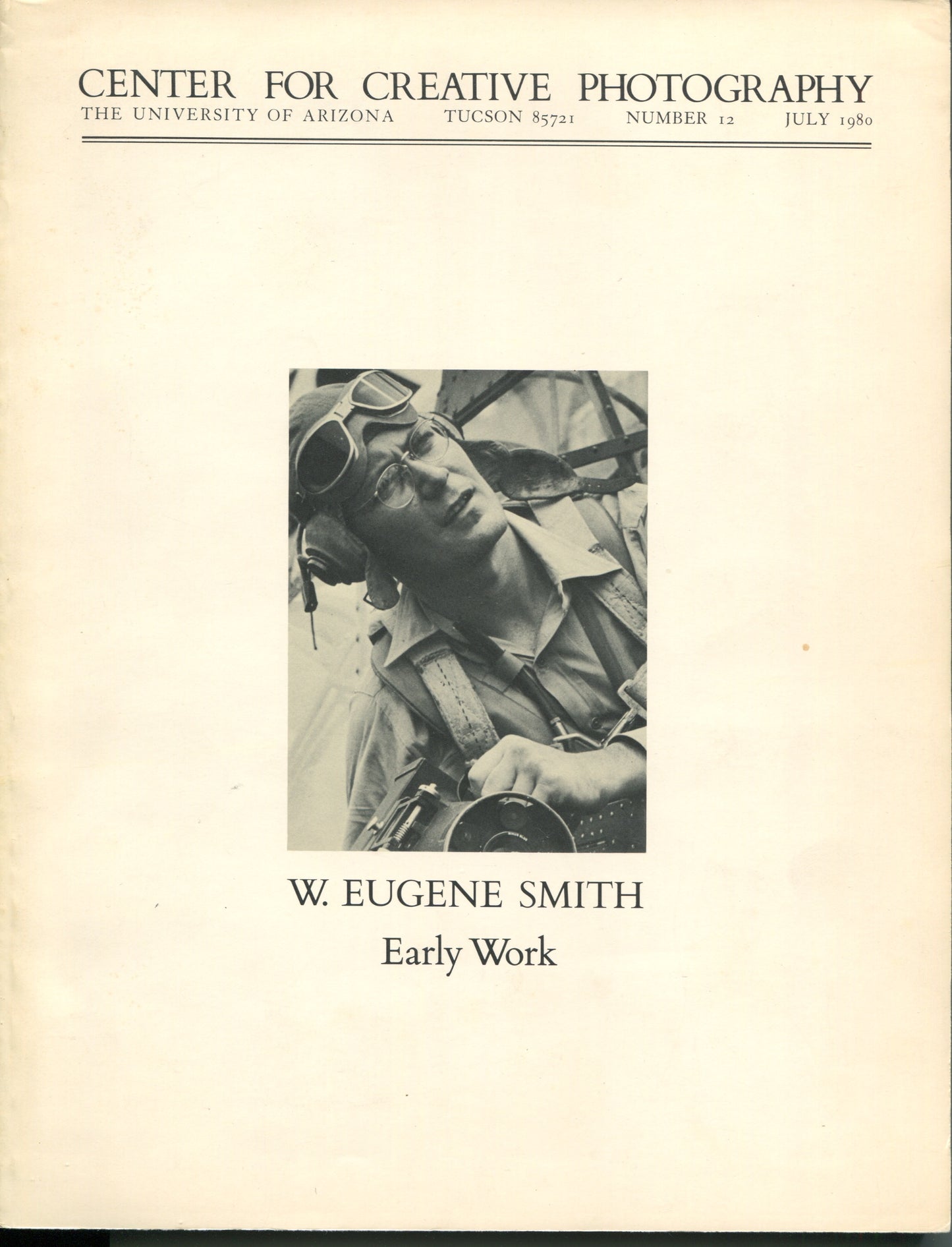
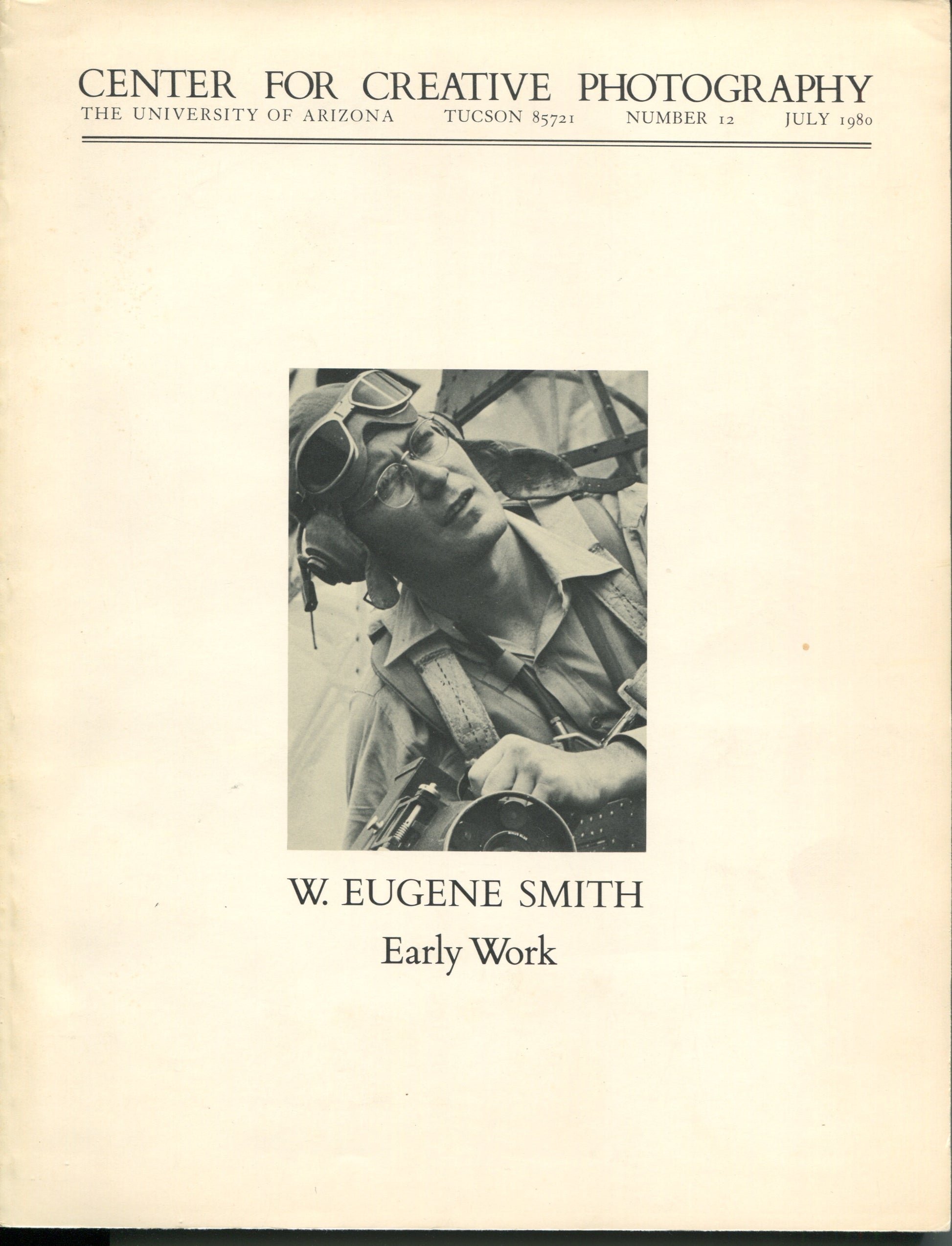
Smith, W. Eugene. W. Eugene Smith: Early Work. Center for Creative Photography Research Series Number 12, July 1980.
Smith, W. Eugene. W. Eugene Smith: Early Work. Center for Creative Photography Research Series Number 12, July 1980.
受取状況を読み込めませんでした
University of Arizona, 1980. By William Johnson, John Morris, et al. Very good in wraps with edge wear top right corner and small spot on cover. 144 pages. 99 plates with work by Smith. Also 3 by Robert Frank. Includes part one of Smith bibliography; part two issued separately. Summary:
W. Eugene Smith: Early Work, published in July 1980 as part of the Center for Creative Photography Research Series (Number 12), is a critical scholarly examination of the formative years of one of the most celebrated photojournalists in history.
Unlike retrospective collections that focus on his famous LIFE magazine essays, this research monograph delves into the development of Smith’s aesthetic and moral philosophy between 1937 and 1948.
Focus and Content
The volume serves as a catalog and analytical text for the Smith archive housed at the University of Arizona's Center for Creative Photography (CCP). It covers:
-
The Pre-War Years: His early freelance work for Newsweek and The New York Times, where he began experimenting with the dramatic lighting and "chiaroscuro" style that would later become his trademark.
-
The Pacific Theater: His harrowing documentation of World War II, specifically his time with the Marines on Saipan, Iwo Jima, and Okinawa. The book highlights his shift from patriotic reportage to a deeply personal, anti-war humanist perspective.
-
The Emergence of the "Photo Essay": It traces the seeds of his perfectionism and his growing insistence on having editorial control over how his images were laid out and sequenced.
Editorial and Scholarly Contributions
-
William Johnson: Edited and curated by scholar William Johnson, the book provides meticulous biographical data and a detailed chronology that clears up many myths surrounding Smith’s early career.
-
Rare Imagery: It features 101 reproductions, many of which were previously unpublished or "outtakes" from his famous assignments, offering a rare look at Smith’s process and his obsessive search for the "perfect" frame.
-
Technical Evolution: The text analyzes Smith’s transition from a fast-paced news photographer to a methodical artist who viewed the darkroom process as an essential part of the narrative.
Significance
This specific issue of the Research Series is essential for understanding the psychological and professional toll of Smith’s early career. It documents the moment Smith realized that photography could be more than just "the news"—it could be a powerful tool for social change and a deeply personal form of moral expression.
W. Eugene Smith (1918–1978) was an acclaimed American photojournalist widely regarded as a master of the photographic essay, celebrated for his intense humanism, dramatic high-contrast printing, and uncompromising dedication to artistic integrity. Born in Wichita, Kansas, he began his professional career taking news photographs before serving as a World War II correspondent for Life magazine, where he documented the Pacific Theater until being severely wounded on Okinawa in 1945. Returning to photography after a long recovery, Smith created a series of landmark photo essays for Life—including "Country Doctor" (1948), "Spanish Village" (1951), and "Nurse Midwife" (1951)—that elevated photojournalism into a deeply poetic, narrative art form. Driven by a fiercely independent philosophy that often led to clashes with magazine editors over editorial control, he resigned from Life in 1955, joined Magnum Photos, and devoted years to monumental independent projects, most notably his exhaustive document of Pittsburgh and his final, harrowing body of work in Minamata, Japan, revealing the tragic effects of industrial mercury poisoning. His legacy as a compassionate crusader lives on through the W. Eugene Smith Grant in Humanistic Photography, established in his honor after his death.
"I am a dreamer. I am on a crusade. I am a man of the camera and I am a man of the mind." — W. Eugene Smith