Gary Saretzky Photo Books
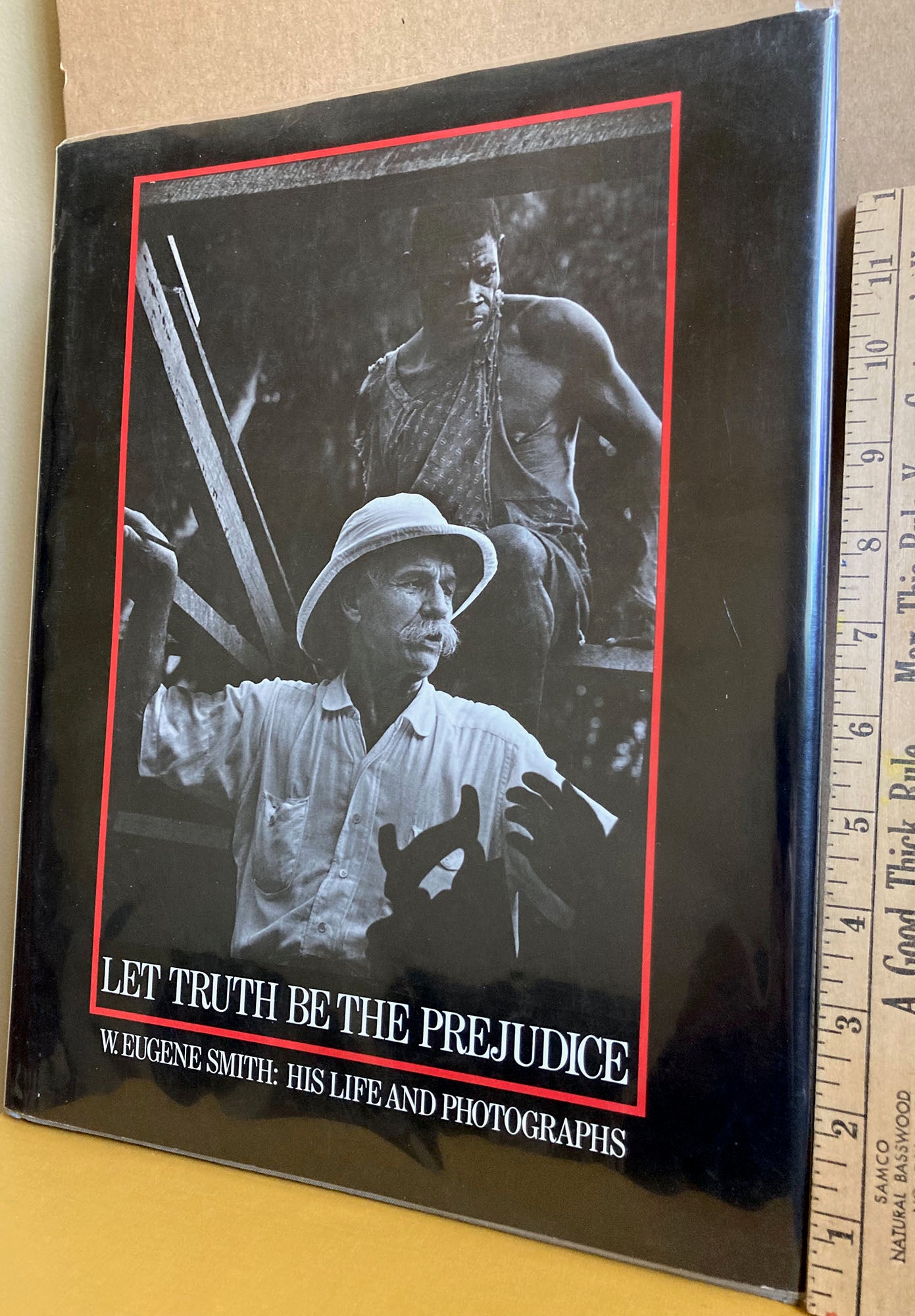
Smith, W. Eugene. Let Truth Be the Prejudice. W. Eugene Smith: His Life and Photographs by Ben Maddow.
Smith, W. Eugene. Let Truth Be the Prejudice. W. Eugene Smith: His Life and Photographs by Ben Maddow.
受取状況を読み込めませんでした
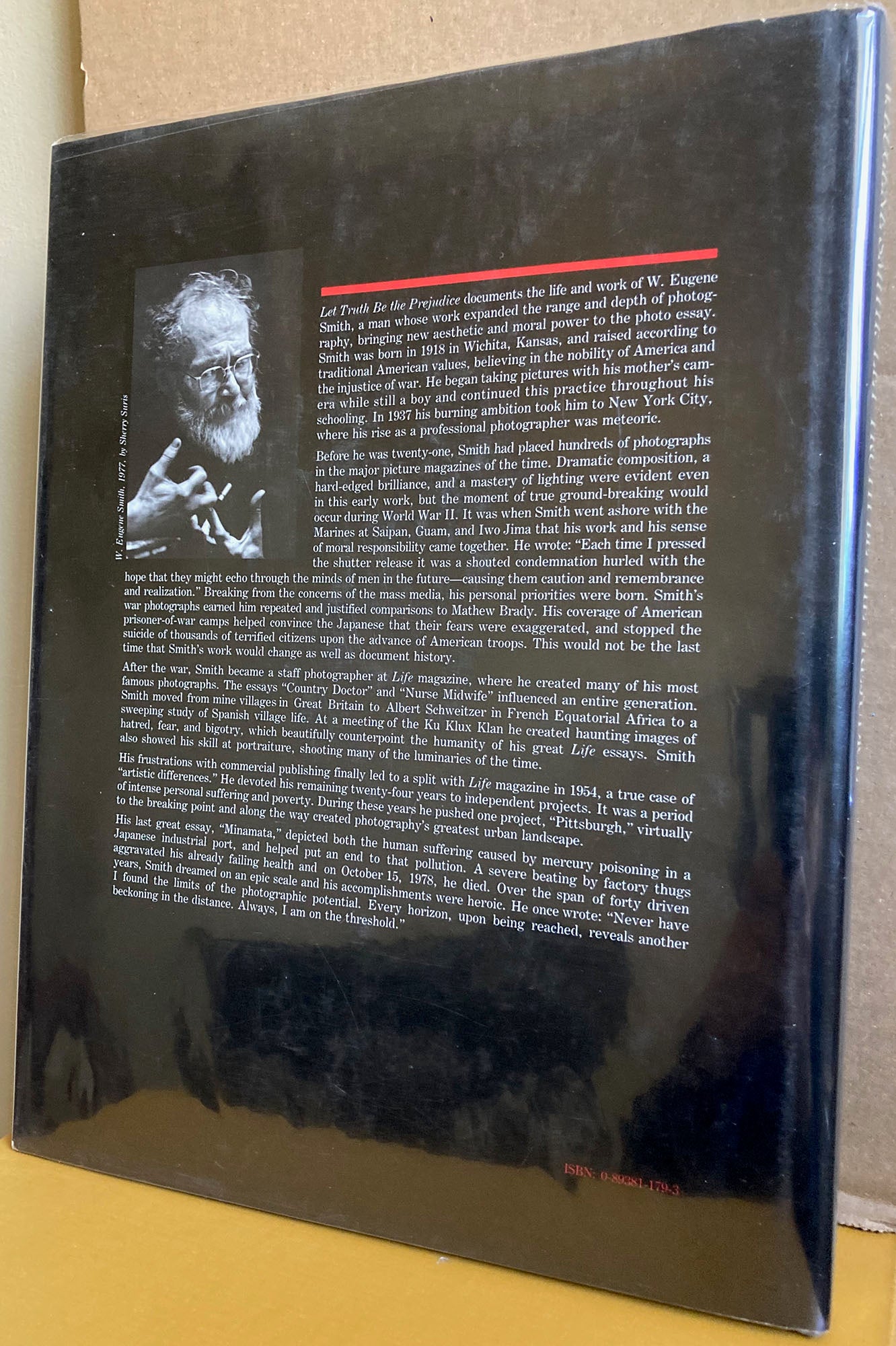
First edition, oversize hardcover, fine with near fine protected dust jacket that has a few tiny nicks. 240 pages. First chapter is an illustrated biography by Ben Maddow. Numerous reproductions of Smith’s photographs. Afterword by John G. Morris. Described as “the definitive book on Smith’s live and work,” covering all phases of his lengthy career. In better condition than most available copies. Summary:
Let Truth Be the Prejudice: W. Eugene Smith, His Life and Photographs by Ben Maddow is an illustrated biographical study of the American photojournalist W. Eugene Smith that was published in 1985 to accompany a major retrospective exhibition of Smith’s work.
📘 Summary
Life and Career:
The book traces Smith’s life from his birth in Wichita, Kansas in 1918, through his formative years taking photographs as a teenager, to his rise as a freelance and magazine photographer in New York City. It details his early work for publications like Newsweek and Life, where his dedication to authentic, emotionally resonant imagery set him apart.
Photographic Philosophy:
Maddow portrays Smith as a photographer driven by a profound moral commitment — a desire to reveal deeper human truths rather than simply document surface events. The book explores how Smith’s belief that “truth” should guide photographic practice shaped both his distinctive style and his often contentious relationships with editors and institutions. His work, Maddow argues, expanded the expressive and ethical boundaries of the photo essay as an art form.
Major Works and Themes:
The narrative highlights Smith’s most influential projects, including his powerful wartime photography from the Pacific theater during World War II, his intimate postwar essays such as Country Doctor and Nurse Midwife, and his long-term projects abroad. His capacity to immerse himself in his subjects — forging empathy and personal connection — is a recurring theme.
Minamata and Later Years:
A significant section is devoted to Smith’s work on the Minamata photo essay in Japan, documenting the devastating effects of mercury poisoning on local residents. These images are presented as exemplars of Smith’s commitment to social justice and the power of photography to effect awareness and change.
W. Eugene Smith (1918–1978) was a legendary American photojournalist celebrated for his mastery of the photographic essay, unyielding humanism, and uncompromising artistic integrity. Born in Wichita, Kansas, Smith began his professional career taking news photos for local papers before moving to New York to attend Notre Dame and later shoot for Newsweek and Life magazine. As a World War II correspondent embedded with U.S. forces in the Pacific, he produced harrowing, visceral images of combat before suffering severe injuries on Okinawa that sidelined him for two years. Returning to Life in 1947, Smith revolutionized picture journalism through deeply emotional, meticulously crafted photo-essays—including Country Doctor (1948), Spanish Village (1951), and Nurse Midwife (1951)—spending weeks developing intense personal relationships with his subjects and spending grueling hours in the darkroom to achieve dramatic, chiaroscuro contrast prints. Renowned for his fierce clashes with editors over layout and thematic control, he resigned from Life in 1955 to join Magnum Photos, embarking on an obsessive, three-year documentation of Pittsburgh. In his final major project alongside his wife Aileen, he spent years in Japan documenting victims of mercury poisoning for his landmark 1975 book Minamata (featuring the iconic Tomoko and Mother in the Bath), cementing his legacy as a titan of social documentary photography whose passionate, ethical vision reshaped 20th-century photojournalism.
Legacy:
Maddow’s biography emphasizes Smith’s enduring influence on both documentary photography and the photojournalistic tradition. His relentless pursuit of truth through the lens — even at great personal cost — positions him as a central figure in 20th-century photography.
Overall, Let Truth Be the Prejudice interweaves Smith’s life story with generous selections of his work, presenting a comprehensive portrait of a photographer whose artistic and ethical vision reshaped how we understand the medium.
