Gary Saretzky Photo Books
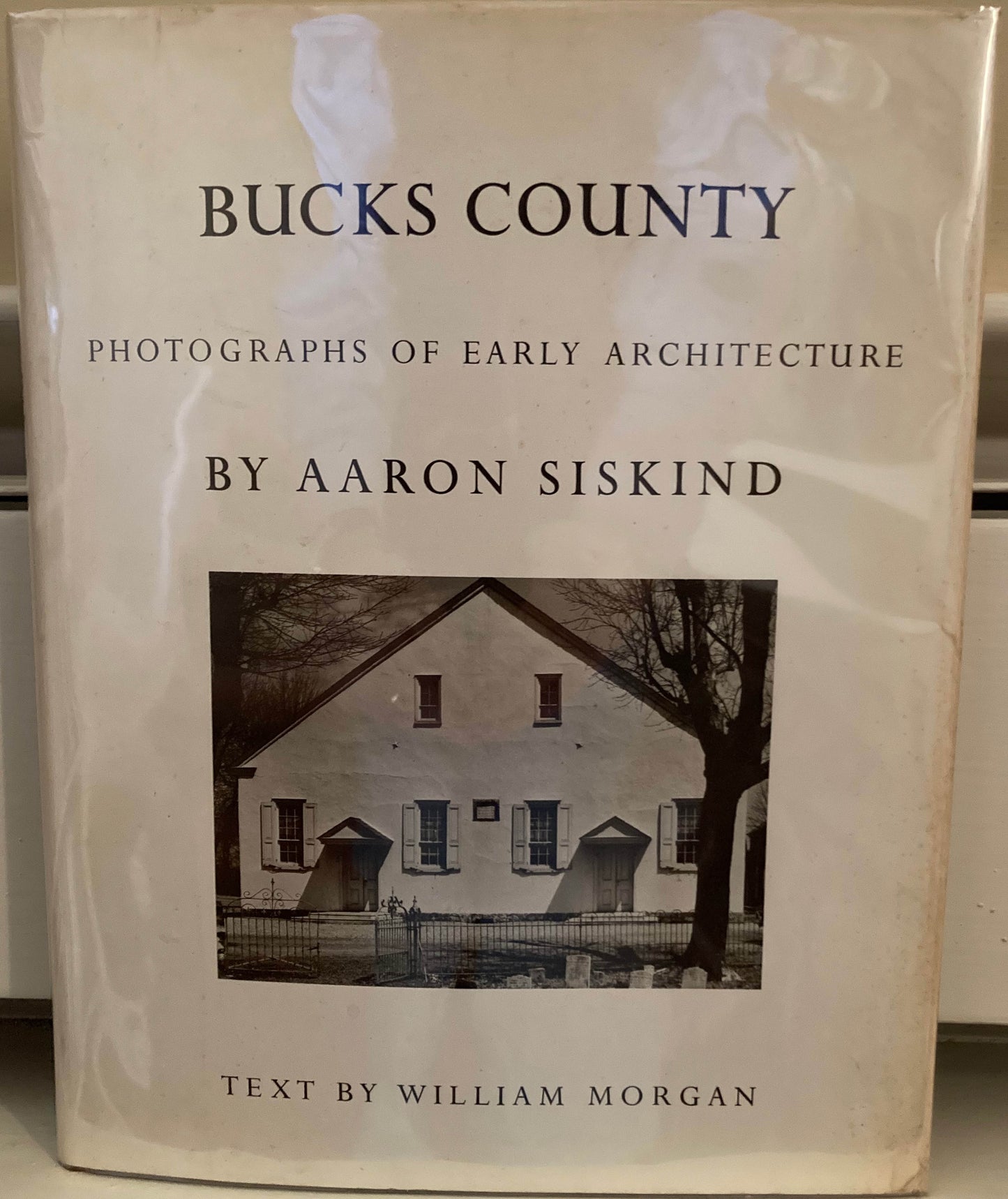
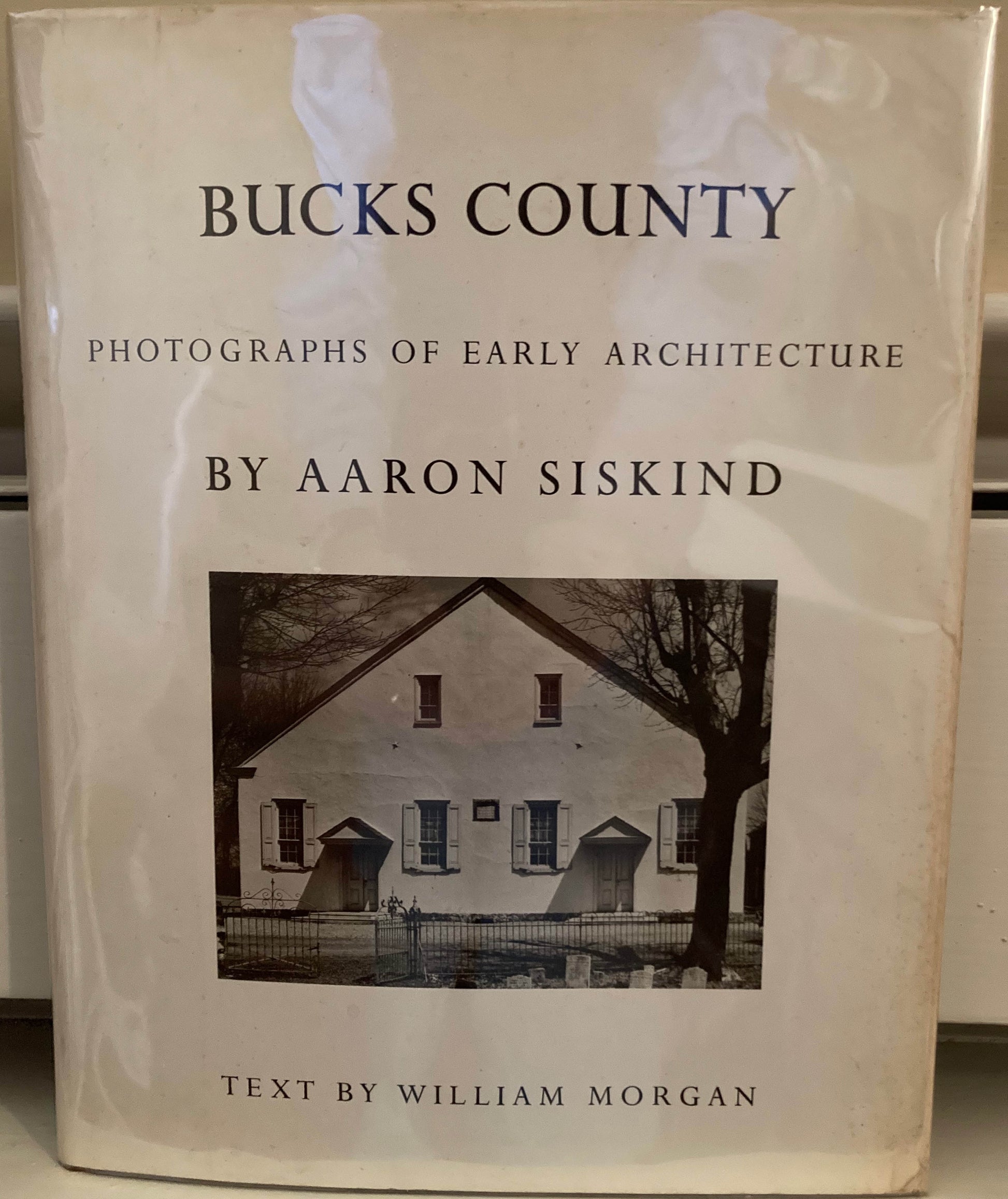
Siskind, Aaron. Bucks County: Photographs of Early Architecture by Aaron Siskind with text by William Morgan.
Siskind, Aaron. Bucks County: Photographs of Early Architecture by Aaron Siskind with text by William Morgan.
受取状況を読み込めませんでした
Published for The Bucks County Historical Society by Horizon Press, 1974. Hardcover in brown cloth, fine with very good protected dust jacket that has short tear at top of front panel, wear at bottom tips, and light browning on fore edges. 112 pages with numerous black-and-white photographs by Siskind. Summary:
Bucks County: Photographs of Early Architecture (1974) is a sophisticated architectural study that captures the vernacular stone buildings of Southeastern Pennsylvania. While Aaron Siskind is primarily known as a giant of Abstract Expressionist photography, this book reveals his disciplined, formalist approach to documenting the 18th and 19th-century structures of Bucks County.
Core Themes and Content
-
The "Stone Tradition": The book focuses on the unique masonry of the region—the fieldstone houses, barns, and "bank barns" built by early English, Welsh, and German settlers. It emphasizes how these structures were born of the earth, utilizing local limestone and sandstone.
-
Siskind’s Abstract Eye: Although these are documentary photographs, Siskind’s penchant for abstraction is evident. He focuses on the rhythm of windows, the textures of weathered pointing, and the stark geometry of gable ends. He treats a stone wall not just as a barrier, but as a complex "canvas" of light and shadow.
-
Morgan’s Context: William Morgan provides a scholarly narrative that places these buildings within the broader history of American colonial architecture, explaining how the "Bucks County Style" influenced the modern residential aesthetic.
Visual and Technical Style
-
Stark Realism: Siskind avoids the "sentimental" or "picturesque" tropes of some New England or Mid-Atlantic photography of historic structures. His black-and-white images are high-contrast and razor-sharp, favoring a flat, frontal perspective that forces the viewer to confront the physicality of the stone.
-
The "Stillness" of History: There are no people in these frames. The architecture is presented as a silent, enduring monument to the labor of the early American agrarian class.
- Aaron Siskind (1903–1991) was an influential American photographer, educator, and central figure in bridging documentary photography with the Abstract Expressionist movement. Born in New York City, Siskind began his career in the 1930s as a member of the New York Photo League, leading social documentary projects like The Harlem Document(1932–1940). However, by the early 1940s, his visual style evolved dramatically toward abstraction, focusing his large-format camera on close-up, flattened details of peeling paint, weathered graffiti, chipped plaster, and urban decay. Close friends with painters like Franz Kline and Mark Rothko, Siskind treated the photographic frame as an autonomous, expressive surface rather than a mere window to reality, transforming mundane textures into powerful graphic gestures. An influential educator, he taught alongside Harry Callahan at the Institute of Design in Chicago and later at the Rhode Island School of Design (RISD), leaving behind a profound legacy that redefined photography's relationship to modern abstract art.