Gary Saretzky Photo Books
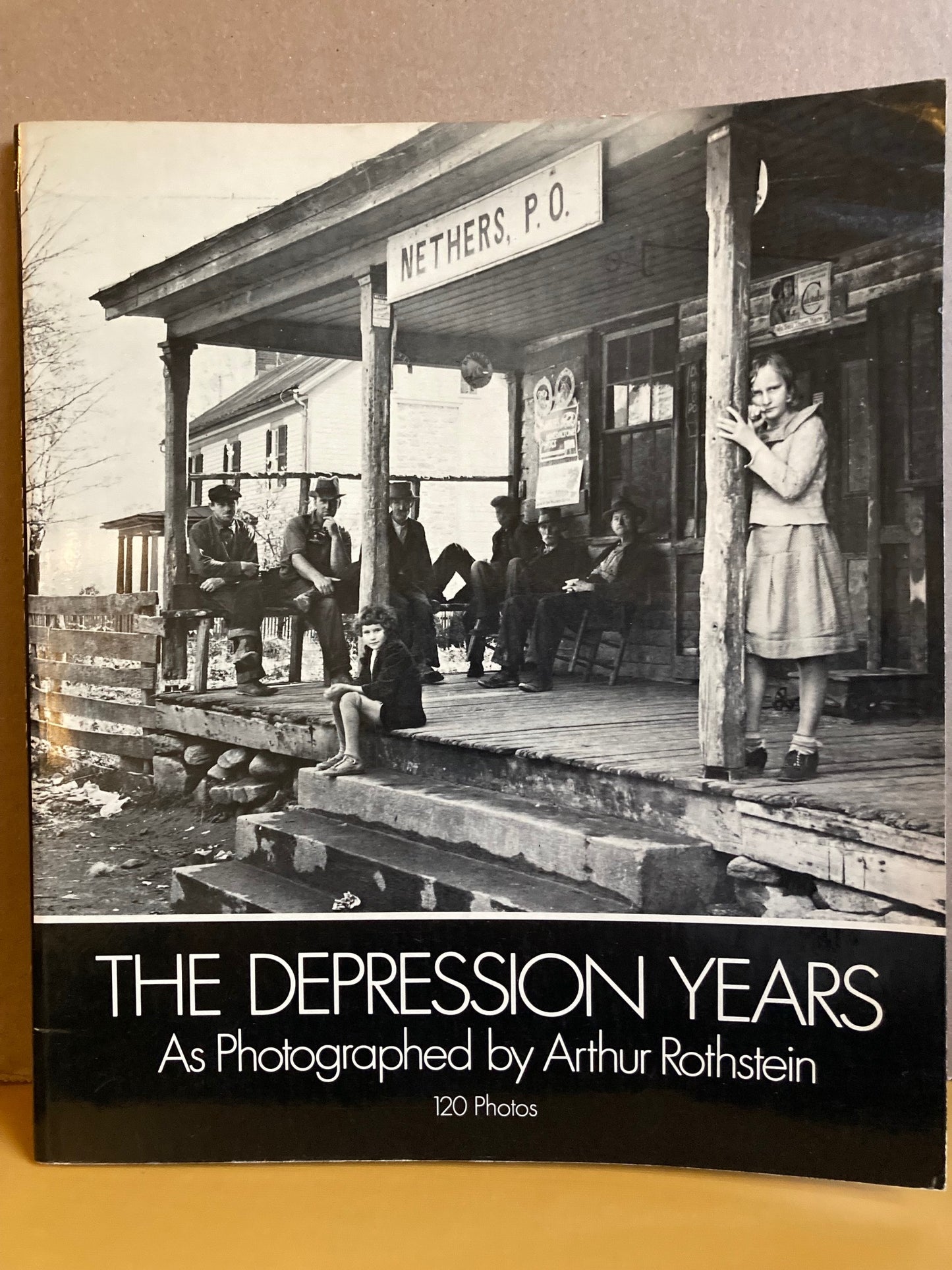
Rothstein, Arthur. The Depression Years As Photographed by Arthur Rothstein. 120 Photos.
Rothstein, Arthur. The Depression Years As Photographed by Arthur Rothstein. 120 Photos.
受取状況を読み込めませんでした
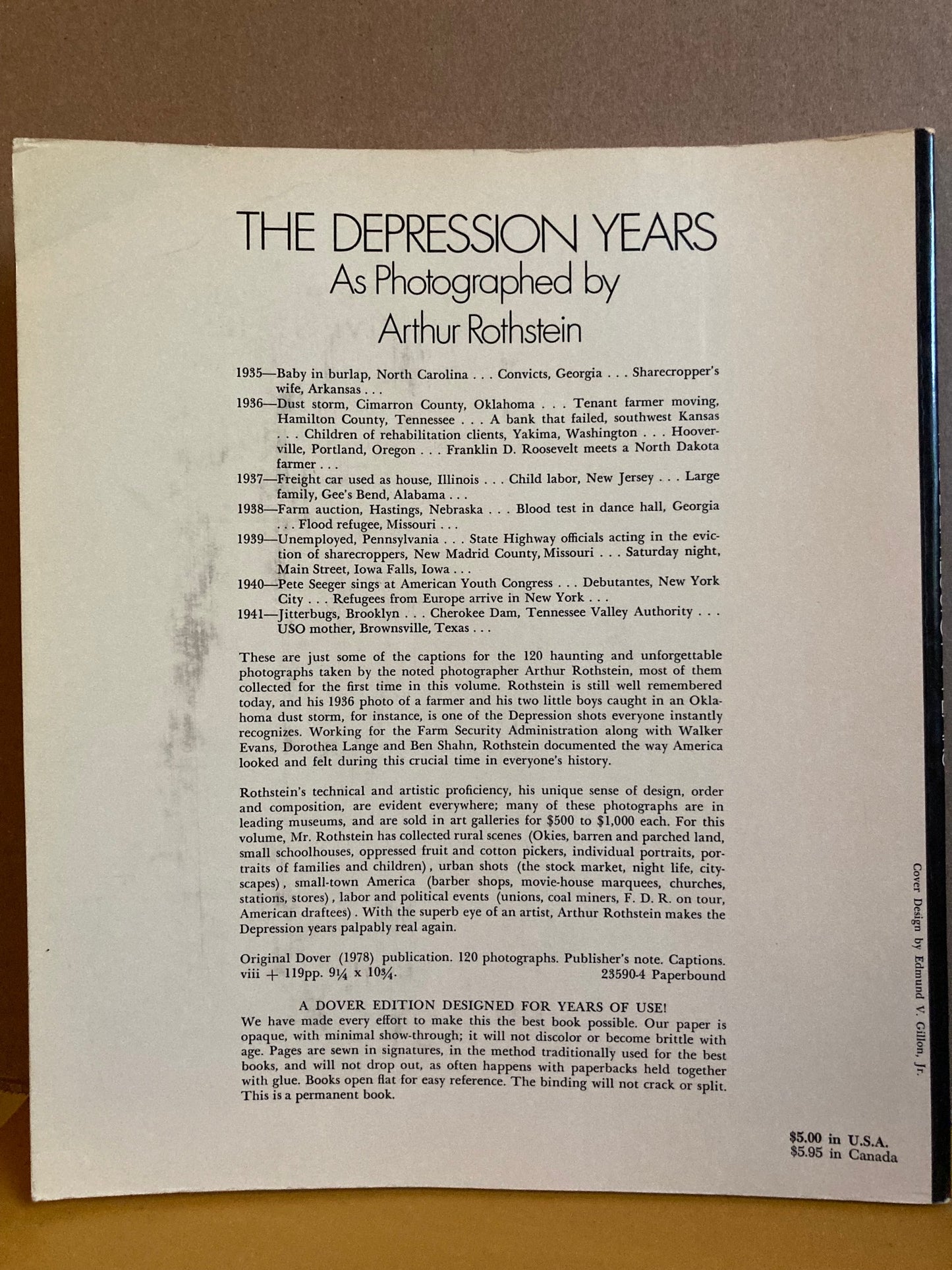
Dover, 1978. Glossy illustrated wraps. Good with corner crimp in upper right corner throughout. Photographs made by Rothstein between 1935 and 1940 for the Historical Section of the Resettlement Administration, renamed the Farm Security Administration. Photographs taken widely in the United States, including Texas, New Mexico, Kansas, Georgia, Tennessee, Oklahoma, Nebraska, Vermont, Wyoming, Arkansas, Maine, Maryland, New Jersey, Pennsylvania, Illinois, et al. An excellent source for documentary photography during the Great Depression in the 1930s.
Arthur Rothstein (1915–1985) was an influential American photojournalist, educator, and technical innovator, best known as one of the premier photographers of the Farm Security Administration (FSA) during the Great Depression. Raised in New York City, Rothstein studied at Columbia University, where he founded the university camera club under the mentorship of Roy Stryker; when Stryker was appointed to lead the historical section of the Resettlement Administration (later the FSA) in 1935, Rothstein became his first hired photographer. Operating primarily with medium-format graphics cameras and 35mm Leicas, Rothstein traversed the American heartland to capture some of the most enduring visual icons of the era, including his famous 1936 photograph Fleeing a Dust Storm in Cimarron County, Oklahoma, and poignant portraiture of displaced tenant farmers in Cimarron and the Shenandoah Valley. During World War II, he served as a photographer in the U.S. Army Signal Corps in China, Burma, and India, subsequently joining Lookmagazine in 1946, where he spent two decades as Director of Photography pioneering technical advancements in color photojournalism, Xograph 3D printing, and high-speed lighting. Later serving as Director of Photography for Parademagazine and a founding faculty member at the Columbia University Graduate School of Journalism, Rothstein authored several influential texts on visual communication—including Photojournalism (1956) and Documentary Photography(1986)—and his vast body of work is preserved in major institutional archives, including the Library of Congress and the International Center of Photography.
The Depression Years As Photographed by Arthur Rothstein (1978) is a seminal collection of documentary photography that chronicles one of the most tumultuous decades in American history. Published by Dover Publications, the book features 120 iconic images curated by Rothstein himself, representing his most significant work for the Farm Security Administration (FSA) between 1935 and 1943.
Core Content and Themes
The book serves as a visual history of the Great Depression, moving across the United States to document the human cost of economic collapse and environmental disaster.
-
The Dust Bowl: The collection includes Rothstein’s most famous images of the Oklahoma and Texas panhandles, documenting the "black blizzards" and the displacement of farm families.
-
Rural and Urban Poverty: From the sharecroppers of the Deep South to the breadlines in major cities, the photographs capture the stark reality of survival during the 1930s.
-
The "Human Spirit": Despite the grim subject matter, Rothstein’s work emphasizes the dignity, resilience, and perseverance of the American people under duress.
Technical and Artistic Significance
Arthur Rothstein was the first photographer hired by Roy Stryker for the FSA, and this volume showcases his mastery of the "documentary aesthetic."
-
Storytelling through Detail: Rothstein was known for his ability to find a single, powerful symbol—such as a parched cow’s skull or a wind-blown farmer—to represent an entire national crisis.
-
Cinematic Composition: His work often utilized dramatic angles and deep shadows to create a sense of monumental scale, elevating everyday struggles to the level of epic history.
-
Historical Record: The book includes Rothstein's own commentary and captions, providing invaluable first-hand context on how these images were made and the controversies they sometimes sparked (such as the "faked" skull incident).
Key Information
-
Published: 1978 by Dover Publications.
-
Format: Large-format softcover featuring high-quality monochrome reproductions.
-
Legacy: This volume is considered a primary resource for students of American history and photography alike, distilling thousands of FSA negatives into a definitive "greatest hits" of the era.
Summary: The Depression Years is more than a photography book; it is a profound social document. It captures a nation at its lowest ebb, immortalizing the faces and landscapes of an era that defined the modern American identity.