Gary Saretzky Photo Books
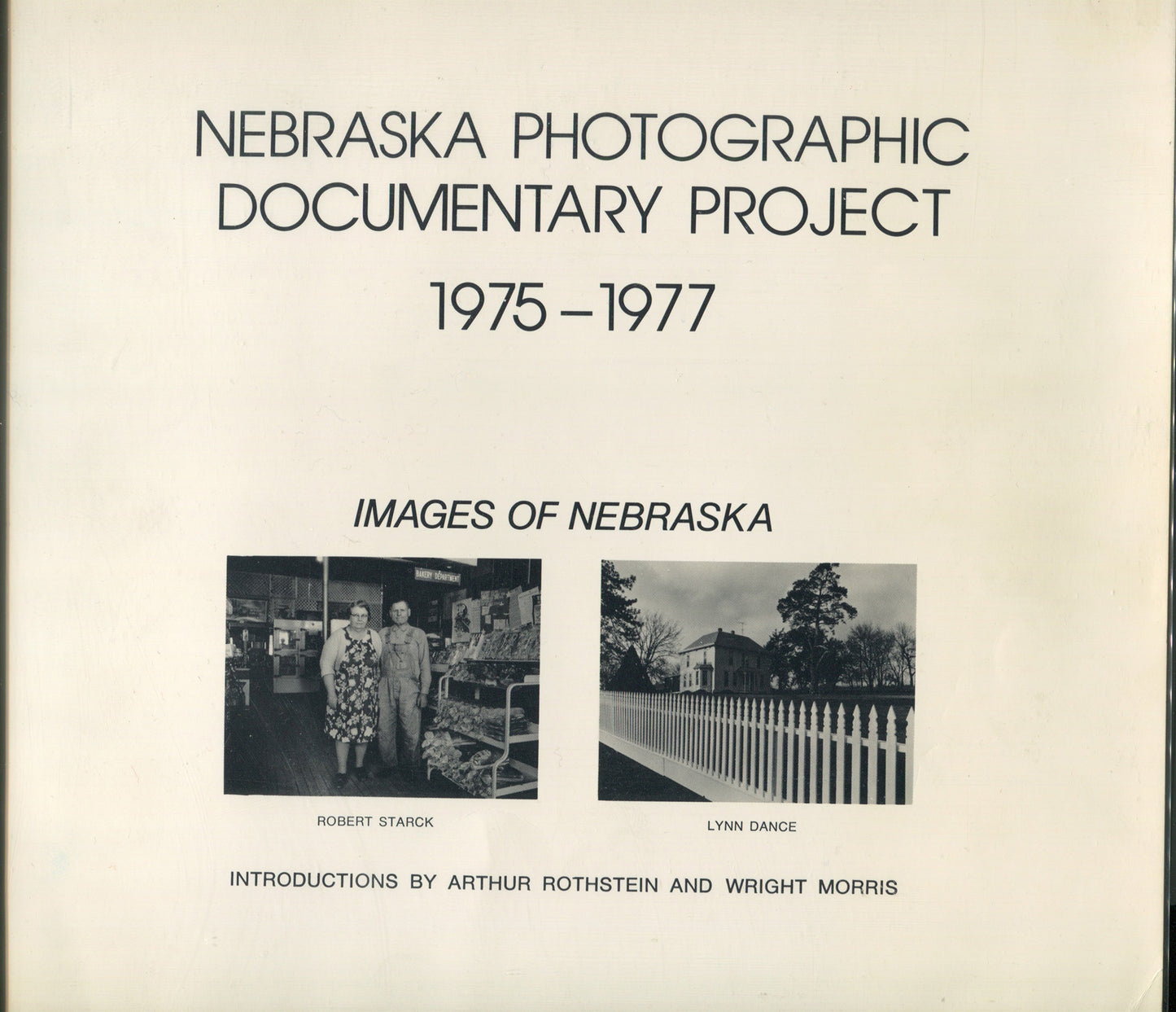
Nebraska Photographic Documentary Project, 1975-1977 by Robert Starck and Lynne Dance.
Nebraska Photographic Documentary Project, 1975-1977 by Robert Starck and Lynne Dance.
受取状況を読み込めませんでした
University of Nebraska, 1977. Introductions by Arthur Rothstein and Wright Morris. Wraps, only edition, with custom made 4-mil polyester jacket, very good plus with crimp bottom right front corner, otherwise fine. Reproduces 110 black and white photographs, most one to a page, by Robert Starck and Lynne Dance that were exhibited at the Sheldon Memorial Art Gallery in March 1977, taken from 1975 to 1977 during travels all over Nebraska, documenting the life, landscape and architecture. Summary: Nebraska Photographic Documentary Project, 1975–1977: Images of Nebraska presents a visual record of the Midwestern state during a period of social and economic transition in the mid-1970s. Created as part of a publicly funded documentary effort, the book brings together photographs that capture everyday life across Nebraska’s rural towns, farms, cities, and landscapes. The images emphasize ordinary people, work, architecture, and community spaces, revealing both continuity and change in a state shaped by agriculture, modernization, and shifting demographics. Rather than romanticizing the past, the project offers a candid, respectful portrait of Nebraska as it was lived and experienced, preserving a moment in time through photography as historical and cultural evidence. Summary:
The Nebraska Photographic Documentary Project, 1975-1977 is a seminal visual record of Nebraska’s landscape, people, and culture during the American Bicentennial era. Created by photographers Robert Starck and Lynne Dance, the project was inspired by the 1930s Farm Security Administration (FSA) and sought to create a comprehensive "time capsule" of the state.
Origin and Scope
1. A Bicentennial Mission
Launched with support from the National Endowment for the Arts and the Nebraska Bicentennial Commission, the project aimed to document the state's identity at a historical crossroads. Starck and Dance traveled thousands of miles across Nebraska's 93 counties, capturing the transition between traditional rural life and modernizing forces.
2. The Artistic Partnership
The two photographers divided their focus to ensure a holistic view of the state:
-
Robert Starck: Often focused on the grit and character of the people, capturing candid moments at county fairs, main streets, and local hangouts.
-
Lynne Dance: Frequently explored the architecture, domestic spaces, and the quiet, expansive beauty of the Nebraska plains.
Core Themes and Style
1. The "Everyday" as History
The project intentionally avoided "tourist" landmarks. Instead, it focused on:
-
Social Rituals: Parades, high school reunions, livestock auctions, and family dinners.
-
The Built Environment: Fading storefronts, grain elevators, classic diners, and the stark geometry of Midwestern homes.
-
Labor: Farmers, mechanics, and small-town entrepreneurs at work.
2. Documentary Realism
The photographs are primarily black-and-white, utilizing a straightforward, unsentimental style. This "straight photography" approach lends the work an air of authenticity, allowing the subjects—from weathered farmers to teenagers on the street—to speak for themselves without heavy-handed artistic manipulation.
3. Regional Identity
The book captures the specific "Nebraskan" spirit—a mix of stoic independence, community reliance, and a deep, inextricable connection to the land and the weather.
Historical Significance
-
A Changing Landscape: The work documented a specific era of small-town life just before the radical shifts brought by the digital age and the consolidation of corporate farming.
-
Archival Legacy: The project resulted in thousands of negatives, with a curated selection becoming a traveling exhibition and this definitive book. It remains one of the most significant photographic surveys ever conducted of a single American state.
Summary Takeaway
The Nebraska Photographic Documentary Project is a profoundly human portrait of the Great Plains. It stands as both an artistic achievement and a vital historical archive, capturing the quiet dignity of Nebraska life in the mid-1970s with clarity, empathy, and unflinching honesty.