Gary Saretzky Photo Books
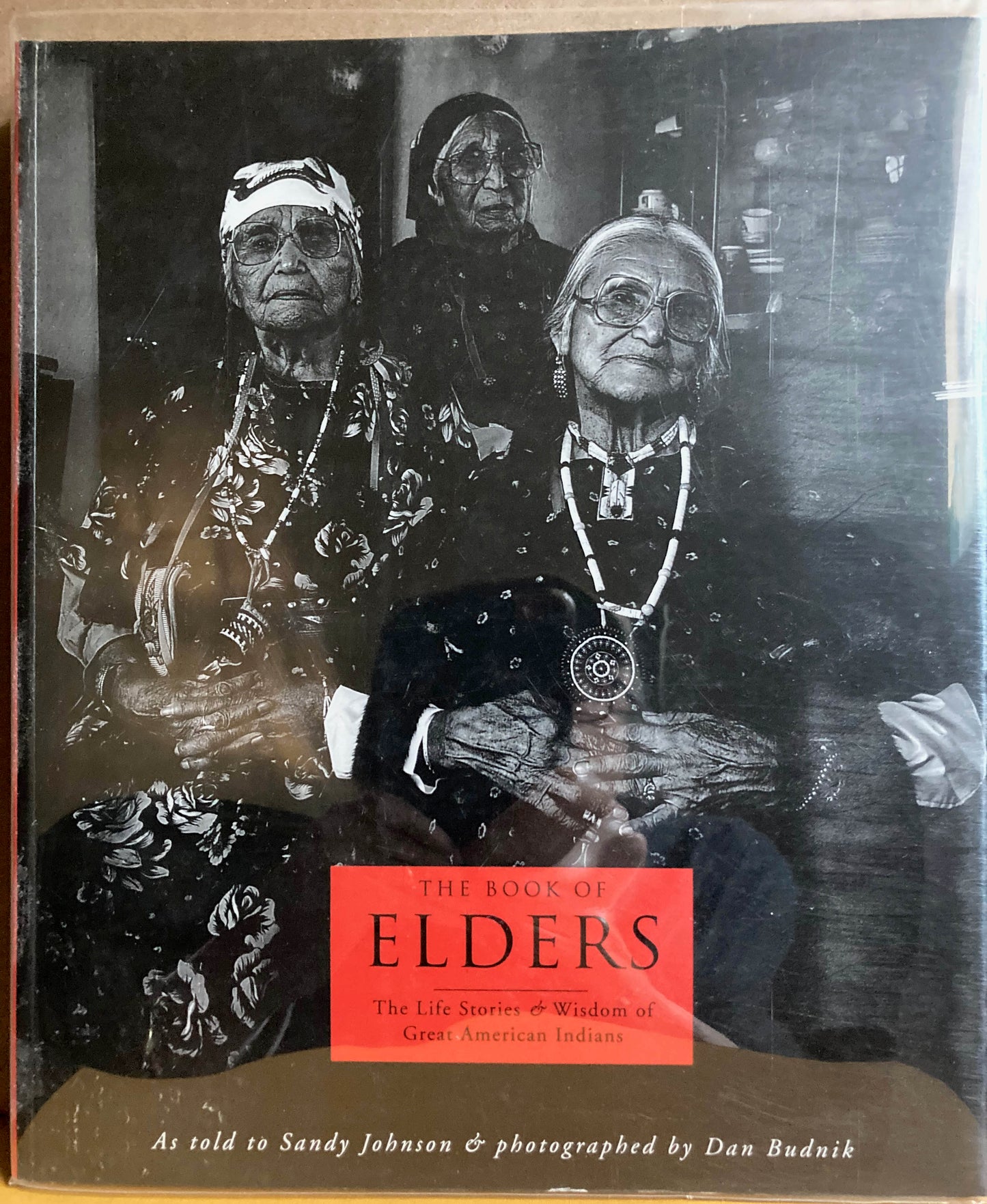
Native Americans. The Book of Elders: The Life Stories & Wisdom of Great American Indians, as told to Sandy Johnson & photographed by Dan Budnik.
Native Americans. The Book of Elders: The Life Stories & Wisdom of Great American Indians, as told to Sandy Johnson & photographed by Dan Budnik.
受取状況を読み込めませんでした
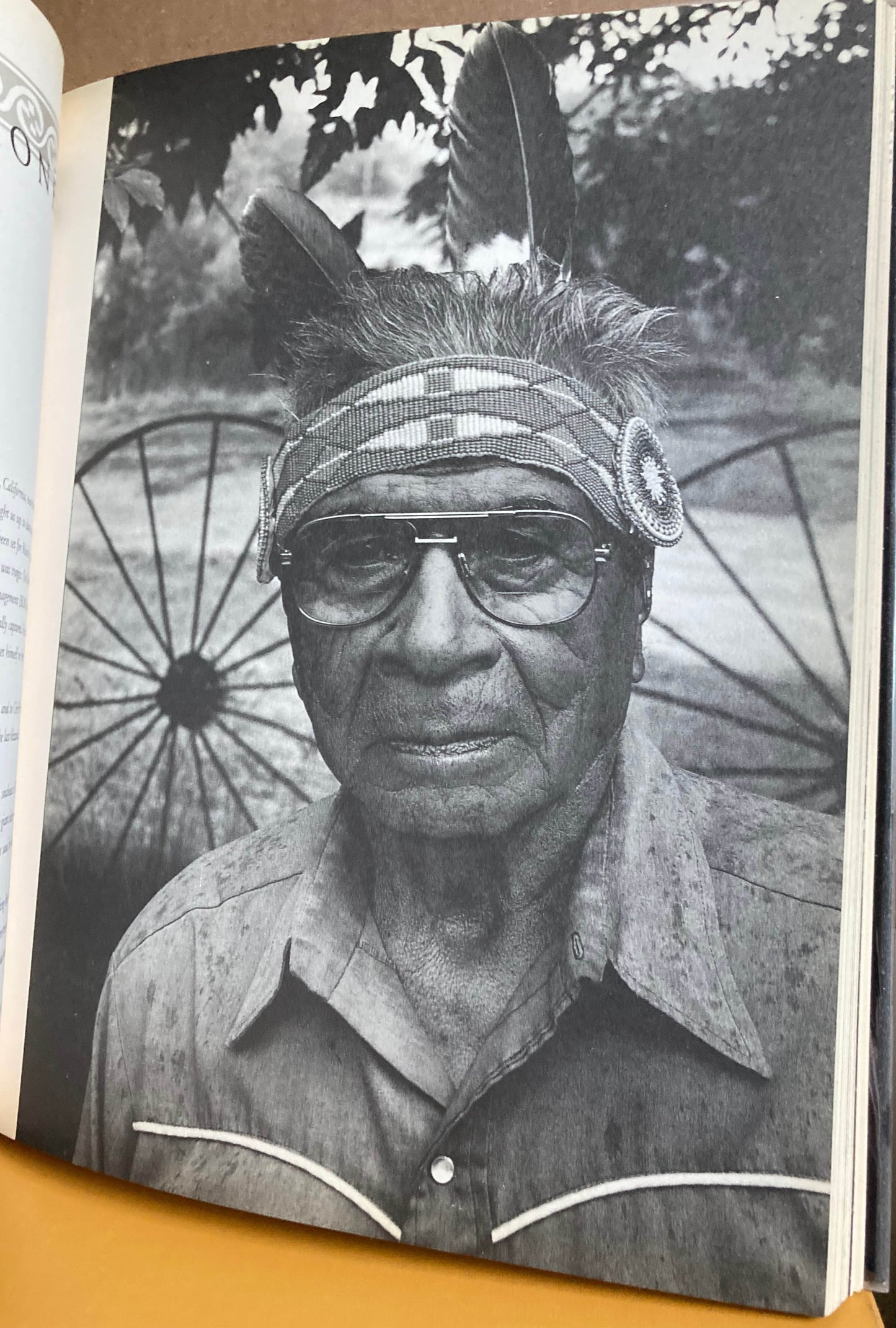
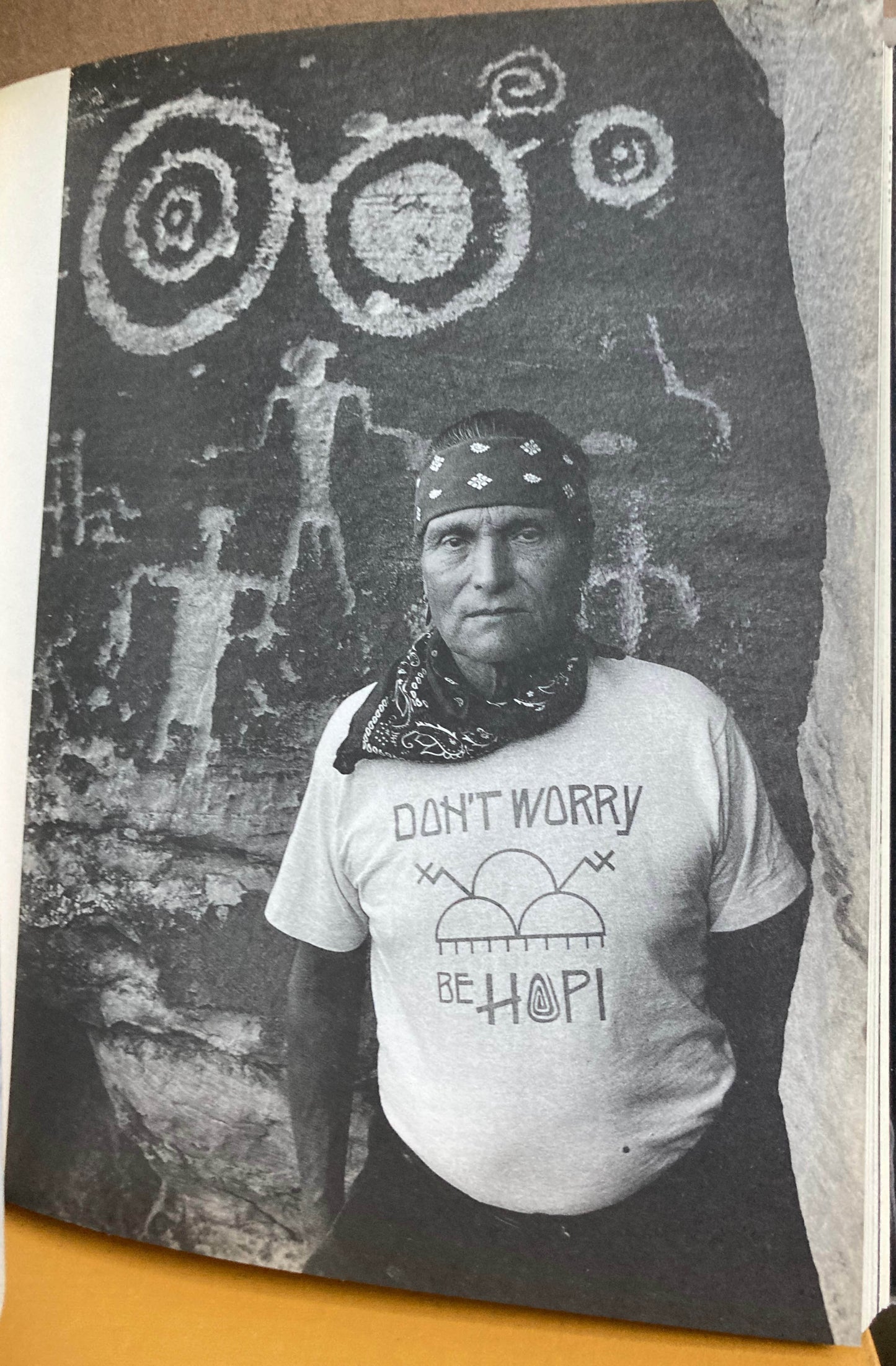
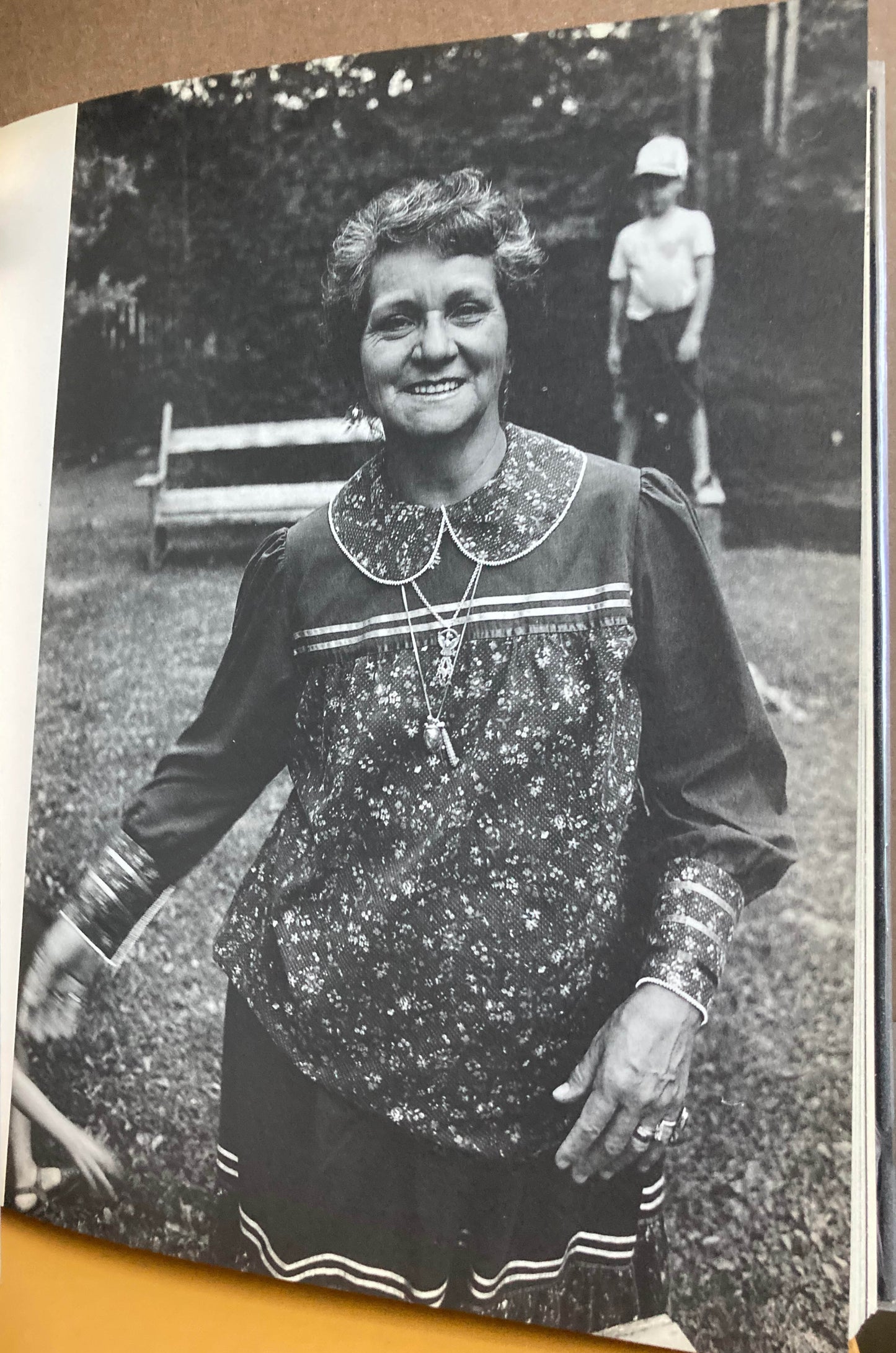
HarperSanFrancisco, 1994. First edition, 1st printing. 237 pages. Stiff illustrated wraps, as issued; front cover split two inches at top at spine hinge closed with archival tissue; remainder mark at bottom of text block. Custom-made 4-mil clear polyester jacket houses this attractive copy. Chapters with interviews of elders by tribe, some chapters with multiple interviews, which are presented as edited first person narratives without the questions posed by Johnson, the oral history interviewer. Johnson provides an introduction to each subject, providing the circumstances under which the interview took place. Black-and-white portrait photo of each narrator by Dan Budnik. Tribes include Sioux, Hopi, Dineh, Tulalip, Onandaga, Six Nations, Mohawk, Pit River, Shoshone, Cree, Warm Springs, Ute, Seminole, Apache, Haida, Bella Bella, Kiowa, Yurok, Pueblo, and Lakota/Seminole. Summary:
The Book of Elders, by Sandy Johnson and photographed by Dan Budnik, is a collection of stories from Native American elders from many different tribes. Published in 1994, the book shares the life experiences, beliefs, struggles, and wisdom of about thirty Native American men and women. The elders include spiritual leaders, medicine people, community leaders, and activists.
The book explains that an elder is not simply an older person. An elder is someone who carries the knowledge and traditions of their people and shares that wisdom with others. The stories describe how Native Americans worked to protect their cultures, traditions, spiritual beliefs, languages, and connections to their ancestral lands. Many of the elders also discuss difficult experiences involving discrimination, government policies, and struggles for Native rights.
One important theme is the relationship between Native American people and the natural world. Several elders describe the importance of respecting the Earth and understanding that people have a responsibility to care for the land. Others talk about traditional healing, ceremonies, prophecies, and spiritual beliefs. The book also includes stories about activism and efforts to protect Native American rights, including fishing rights and tribal sovereignty.
Sandy Johnson presents the stories largely through the elders’ own words, while Dan Budnik’s black-and-white photographs show the people whose stories are being told. Together, the words and photographs give readers a personal look at Native American history and culture. The main message of the book is that the knowledge of Native American elders is important because it helps preserve traditions and teaches future generations about courage, community, spirituality, and respect for the Earth.
Significance
The Book of Elders serves as both a spiritual guide and a historical archive. It is highly regarded for its humility and authenticity, allowing the elders to speak for themselves. By providing a platform for voices like Pete Catches (Oglala Lakota) and Janet McCloud (Tulalip), the book offers readers a rare opportunity to engage with a worldview centered on the "wisdom of the heart" and the interconnectedness of all life.
Dan Budnik (1933–2020) was an American photojournalist, social documentary photographer, and fine-art chronicler renowned for his intimate visual archives of the Civil Rights Movement, mid-century fine artists, and Native American land rights struggles. Born in Long Island, New York, Budnik studied painting under Charles Alston at the Art Students League of New York, where he was encouraged to apply his compositional sensitivity to photography, subsequently joining the Magnum Photos agency as an associate in 1957. Throughout the 1950s and 1960s, he embedded himself in pivotal socio-political events, producing monumental photojournalistic records of the 1963 March on Washington—where he captured iconic images of Martin Luther King Jr.—and the 1965 Selma to Montgomery march, later collected in his landmark photobook Marching for Freedom (2014). Parallel to his activist documentary work, Budnik cultivated trusted access to leading figures of the New York art world, creating candid, candidly lit studio portraits of prominent Abstract Expressionist and Pop artists, including Willem de Kooning, Mark Rothko, Georgia O'Keeffe, and Jasper Johns. In his later decades, Budnik relocated to the American Southwest, dedicating decades to documenting the displacement and environmental challenges faced by the Hopi and Navajo nations—work honored with the 1998 Honor Roll Award from the American Society of Media Photographers—securing his stature as a deeply principled photographer whose camera bore witness to human rights, cultural creativity, and social justice.