Gary Saretzky Photo Books
McDarrah, Fred W. New York Scenes. Photos by Fred W. McDarrah. Introduction by Sean Wilentz.
McDarrah, Fred W. New York Scenes. Photos by Fred W. McDarrah. Introduction by Sean Wilentz.
受取状況を読み込めませんでした
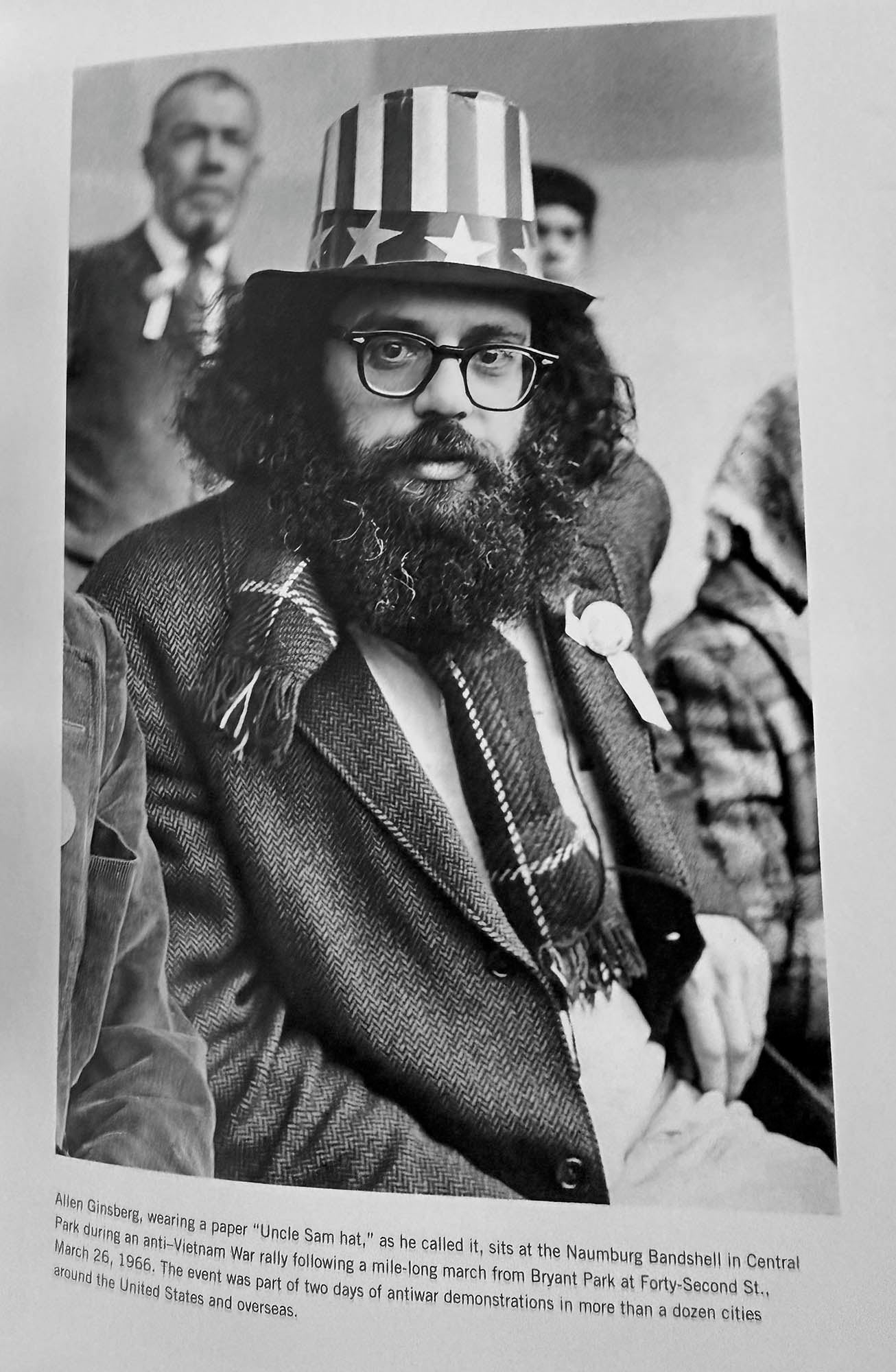
Abrams, 2018. First edition, first printing. Hardcover, illustrated boards, lacks dust jacket. Fine with small black dot at top of text block. 248 pages. During his 50-year association with the Village Voice, Fred W. McDarrah (1926–2007) covered the city’s downtown scenes, producing an unmatched and encyclopedic visual record of people, movements, and events. McDarrah frequented the bars, cafés, and galleries where writers, artists, and musicians gathered, and he was welcome in the apartments and lofts of the city’s avant-garde cultural aristocracy. He captured every vital moment, from Jack Kerouac reading poetry, to Bob Dylan hanging out in Sheridan Square, to Andy Warhol filming in the Factory. People who appear in these images include Alan Ginsberg; Andy Warhol; Bob Dylan; JackKerouac; Jerry Rubin; Eva Hesse; Paul Krassner; Julian Beck; Judith Malina; Bill Graham; John Cage; David Vaughan; Joan Baez; Ad Rinehart; Ed Koch; Susan Sontag; Tiny Tim; Moondog; LeRoi Jones; James Baldwin; William Giles; Robert Rauschenberg; Tennessee Williams; Robert Mapplethorpe; Willem de Kooning; Christo; Truman Capote; Norman Mailer; Herman Nitsch; Jim Fourratt; Charlotte Moorman; Timothy Leary; Marisol; David Smith; Robert Smithson; Paul Thek; Kate Millett; Jerry Garcia; Abbie Hoffman; Robert F.Kennedy; Leonard Cohen; Jimmy Breslin; Clay Felker; Pete Hamill; Valerie Solanas; Muhammed Ali, et al. Summary:
New York Scenes (originally published in 2018 by Abrams Image) is a definitive photographic monograph that archives the raw, kinetic social and cultural landscape of mid-to-late 20th-century New York City. The volume compiles the iconic street photography and photojournalism of Fred W. McDarrah—the legendary, first staff photographer for The Village Voice—with an insightful historical introduction by Sean Wilentz, an award-winning historian and Princeton University professor.
Key Elements of the Work
-
The Voice of the Village: The core of the book features McDarrah’s unvarnished, black-and-white documentary photographs captured across decades of continuous beat reporting. It serves as a visual diary of downtown Manhattan, specifically Greenwich Village, the East Village, and SoHo, tracking their evolution from gritty artist enclaves into global cultural epicenters.
-
The Counterculture and Avant-Garde: The plates catalog the definitive figures and movements of the American underground. McDarrah’s lens captures the Beat Generation (Jack Kerouac, Allen Ginsberg), the emergence of the 1960s folk rock scene (Bob Dylan at the Gaslight Cafe), Andy Warhol's Factory circle, the Abstract Expressionist painters at the Cedar Tavern, and radical experimental theater groups.
-
Civil Rights and Political Flashpoints: Beyond the art world, the book documents New York City as a crucible for political upheaval and social justice. The curated images provide frontline coverage of anti-Vietnam War protests, early gay liberation milestones (including the immediate aftermath of the 1969 Stonewall Riots), Black Panther rallies, and local municipal battles led by community activists.
-
Wilentz’s Historical Contextualization: In his introductory essay, historian Sean Wilentz anchors McDarrah’s imagery within the broader political and social history of modern New York. Wilentz analyzes how McDarrah was uniquely positioned not just as a passive observer, but as an active participant embedded within the very subcultures that permanently reshaped global art, politics, and lifestyle.
Narrative Intent
The volume functions as a monument to vernacular photojournalism and a preservation of a lost New York. By pairing McDarrah's exhaustive visual archive with Wilentz's historical analysis, New York Scenes demonstrates that the post-WWII downtown counterculture was a vital crucible of American democracy, proving that the local, daily hustle of artists and activists ultimately redefined the broader national identity.
Fred W. McDarrah (1926–2007) was an American photojournalist and author celebrated as the primary visual chronicler of New York City’s counterculture, arts scene, and political activism. Born in Brooklyn, he bought his first camera at the 1939 New York World's Fair and honed his craft as a U.S. Army paratrooper in occupied Japan before earning a journalism degree from New York University. In 1959, McDarrah joined The Village Voice, where he served as its first staff photographer and long-time picture editor for over four decades. Stationed in Greenwich Village, he compiled an unmatched archive documenting the Beat Generation, Pop Art, the civil rights and anti-war movements, the Stonewall Uprising, and early Gay Liberation activism. Capturing candid portraits of figures ranging from Bob Dylan and Jack Kerouac to Andy Warhol and Marsha P. Johnson, McDarrah authored more than a dozen books—including The Beat Scene (1960) and Gay Pride (1994)—and received a Guggenheim Fellowship in 1972 for his essential contribution to 20th-century American photojournalism.