Gary Saretzky Photo Books
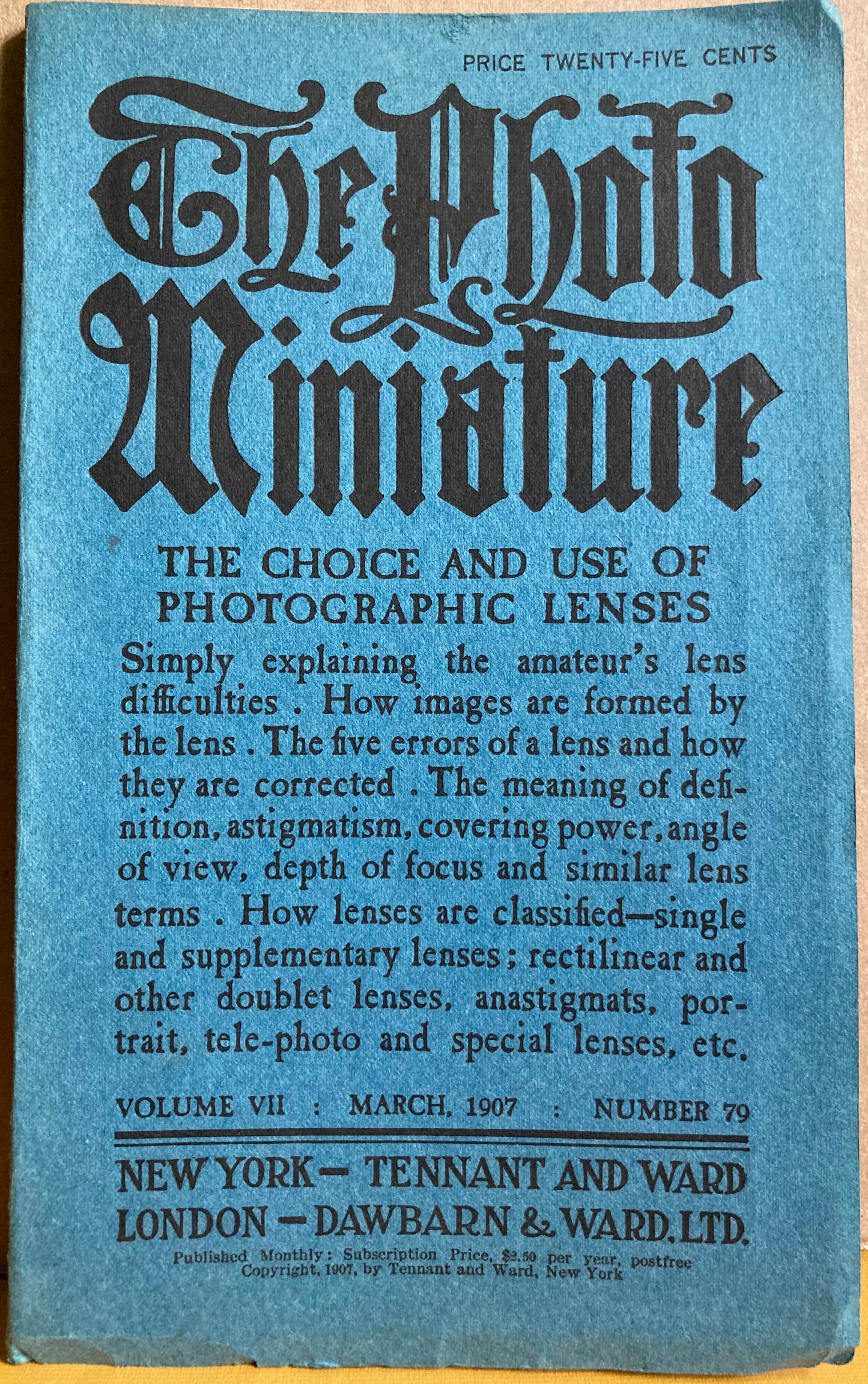
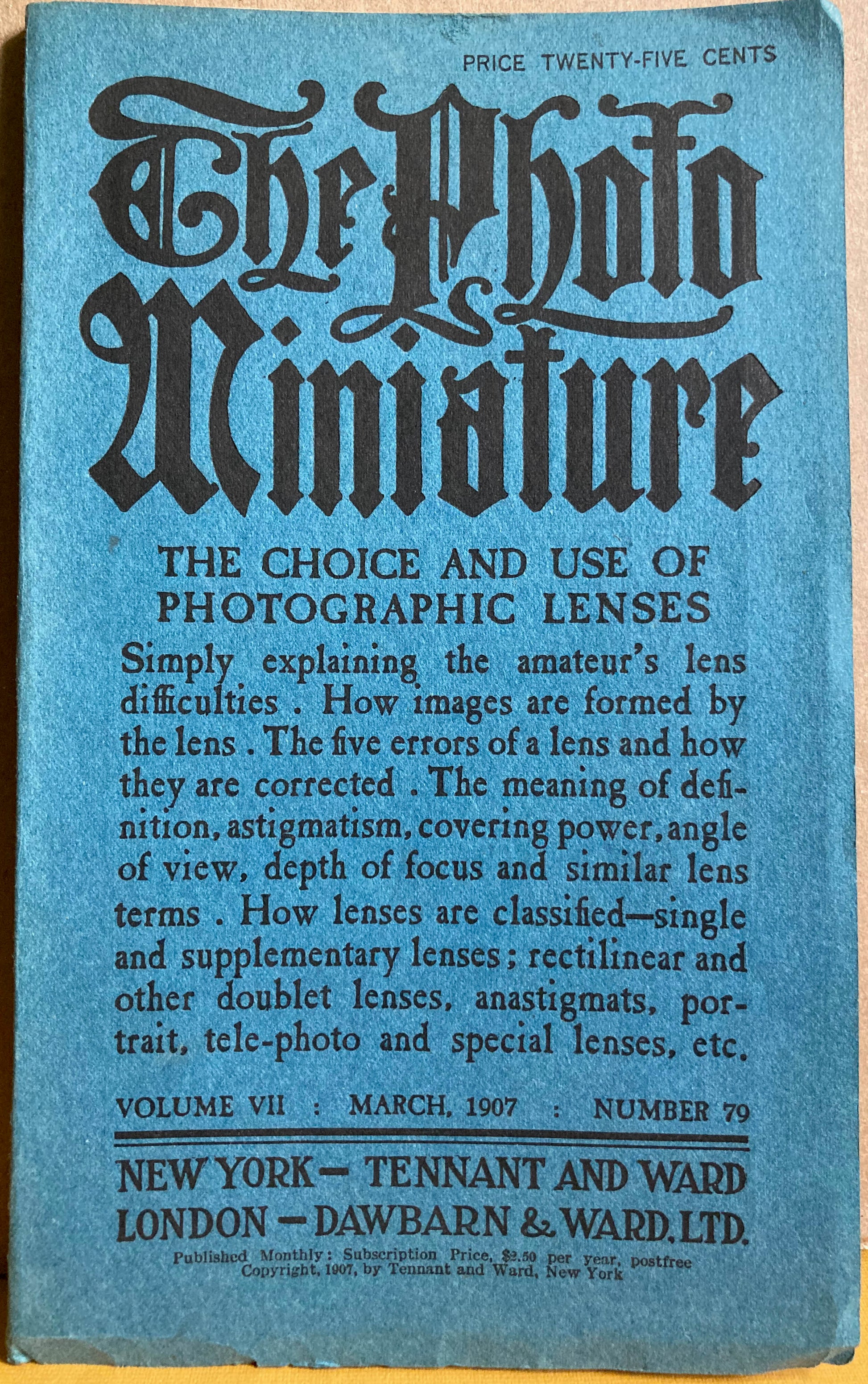
Lenses. The Photo Miniature. The Choice and Use of Photographic Lenses. Volume VII, March 1907, Number 79.
Lenses. The Photo Miniature. The Choice and Use of Photographic Lenses. Volume VII, March 1907, Number 79.
受取状況を読み込めませんでした
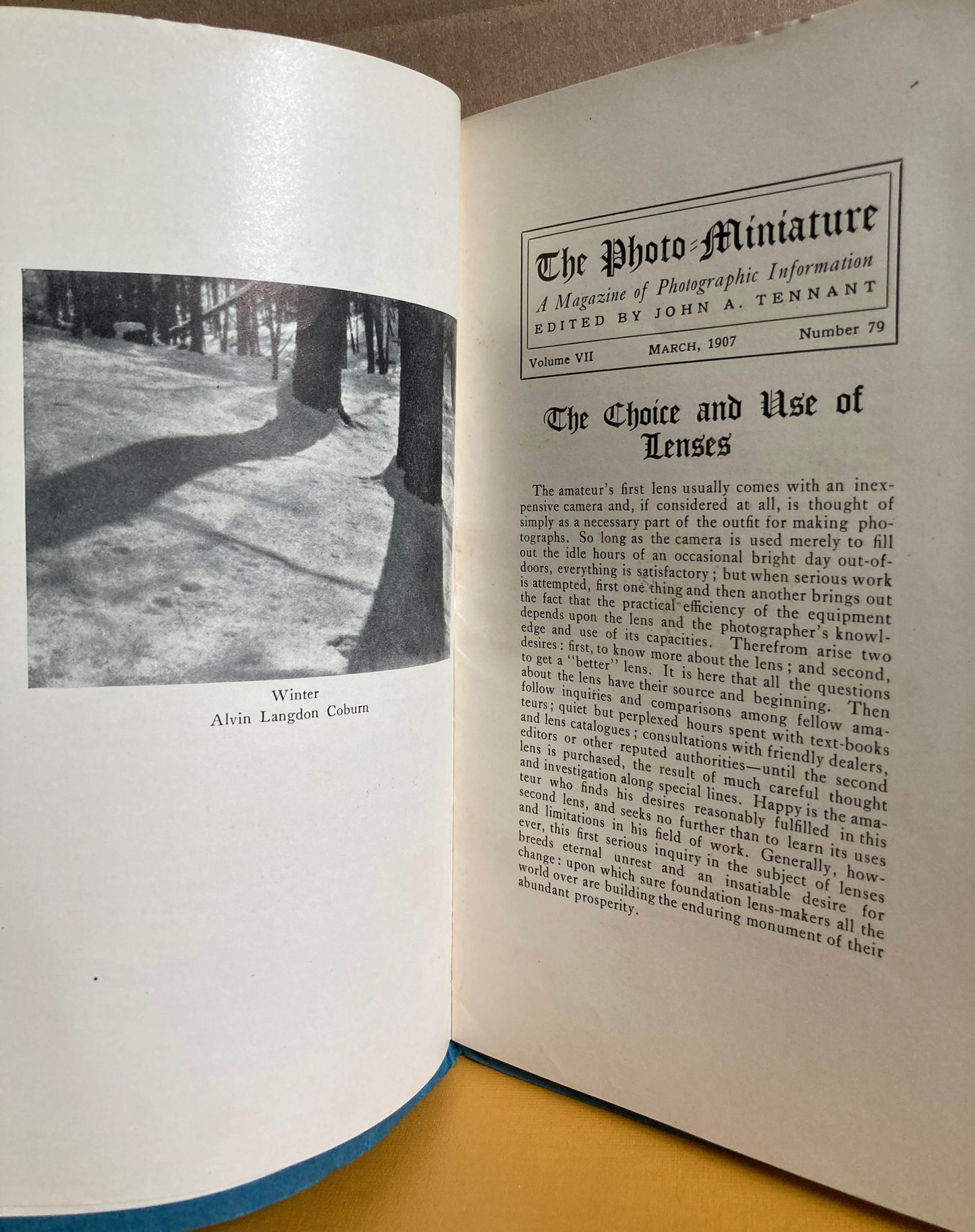
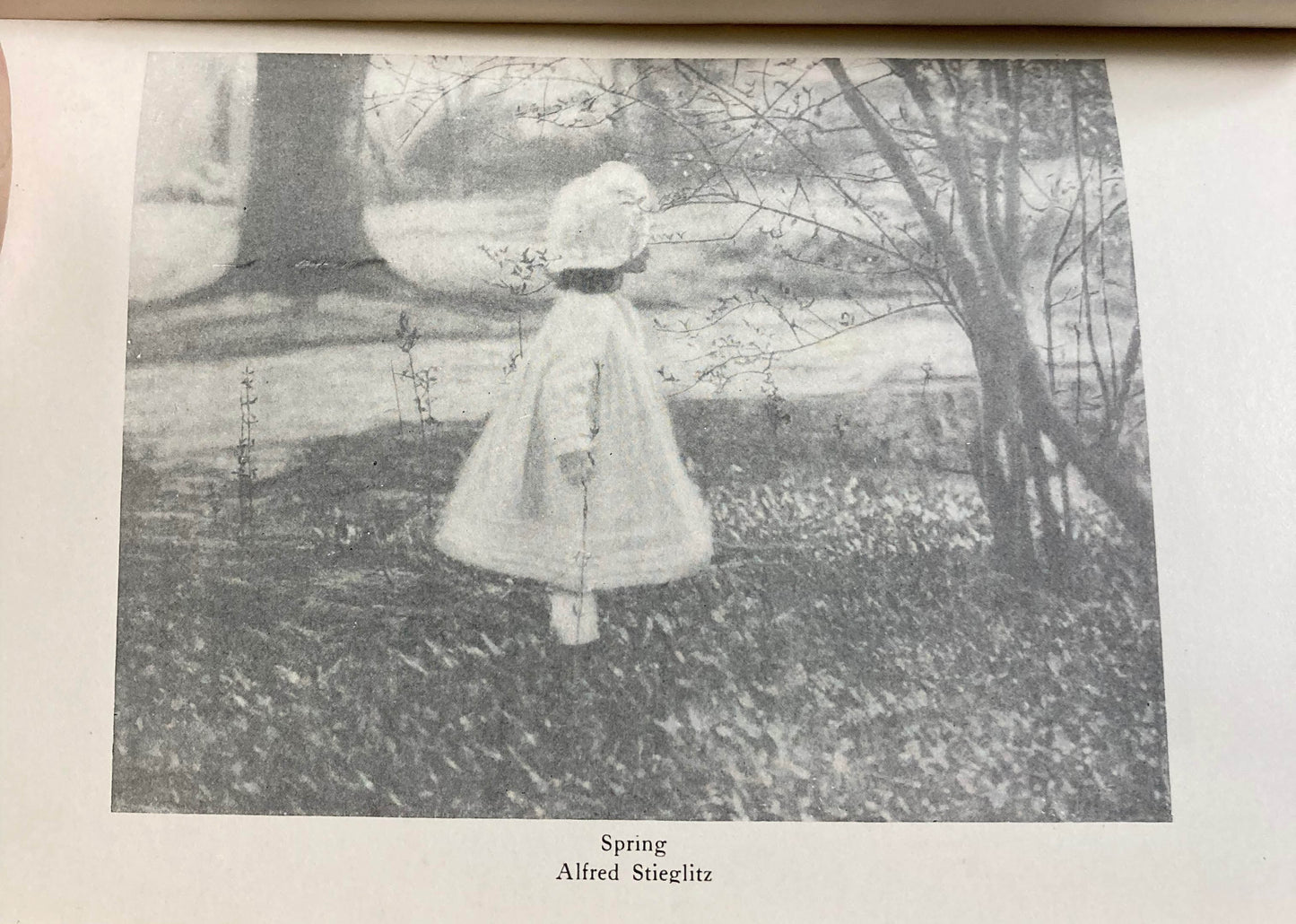
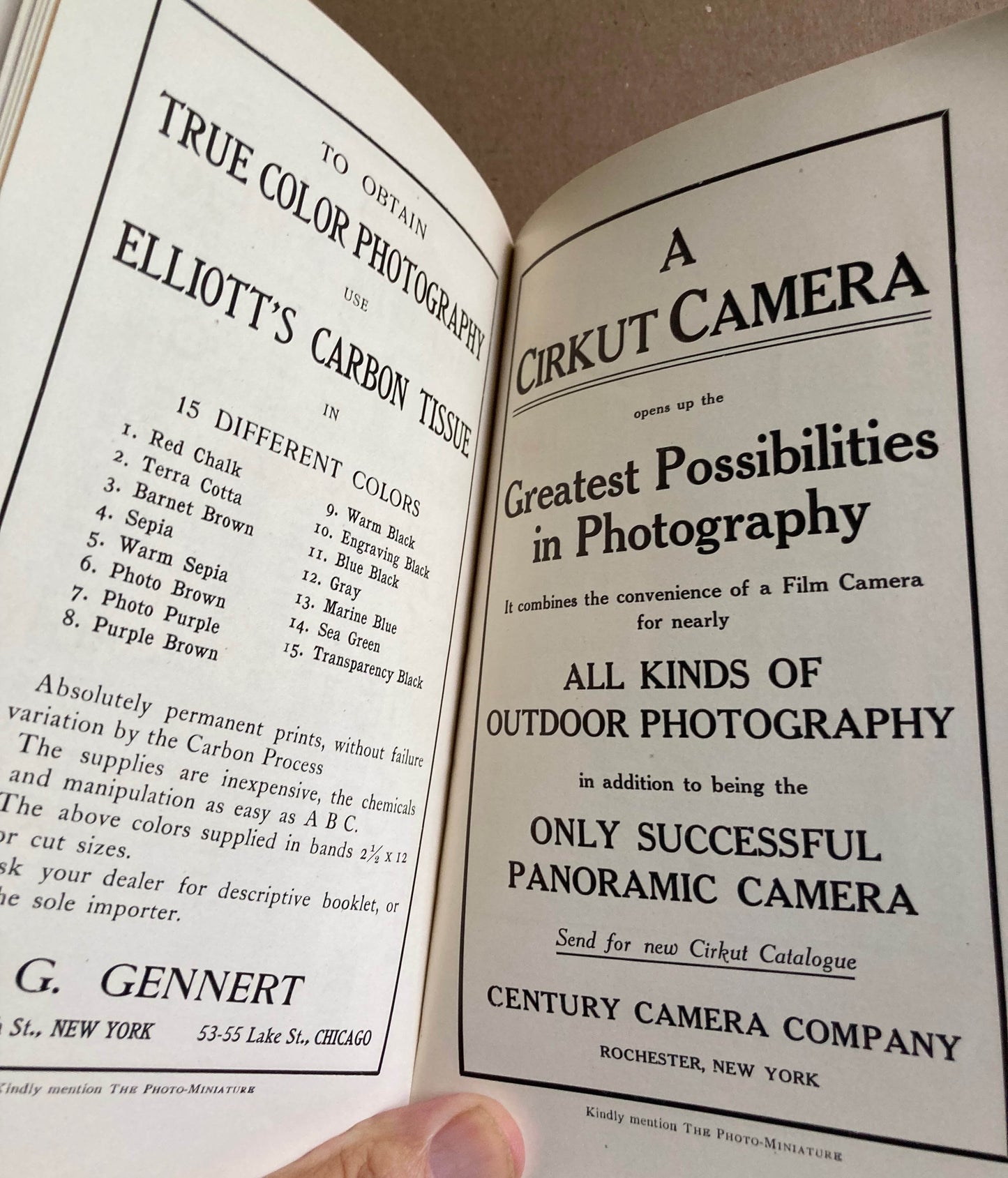
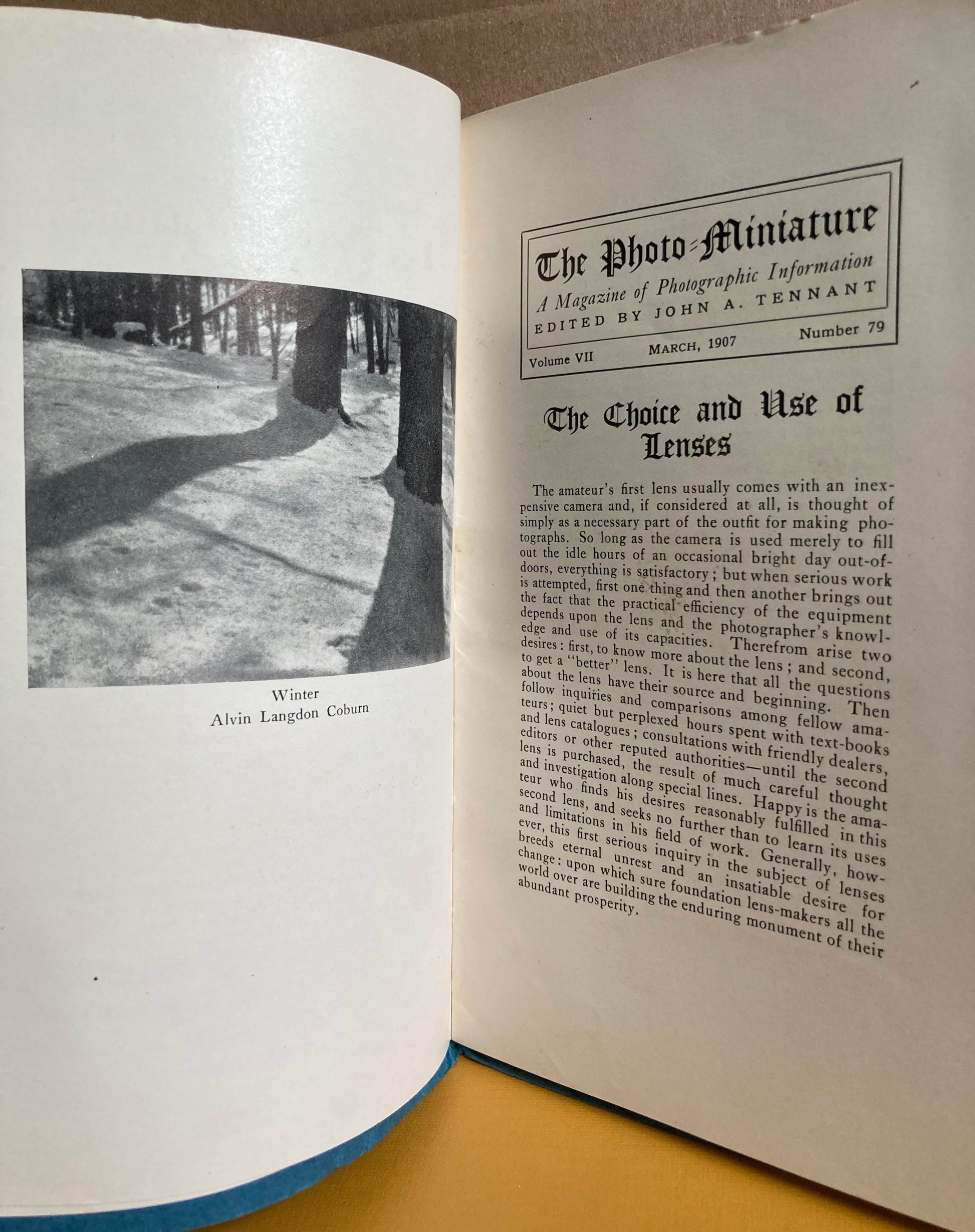
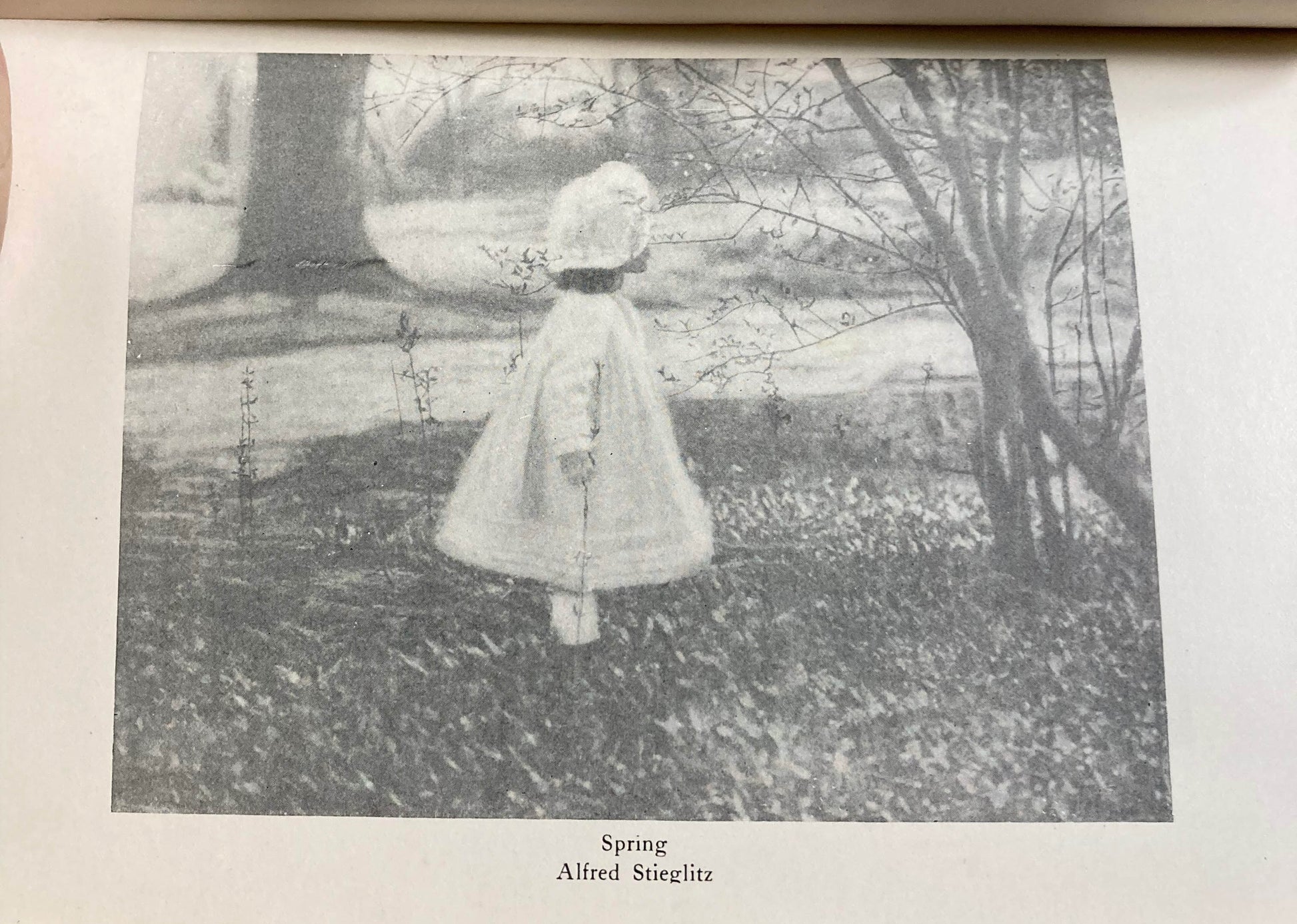
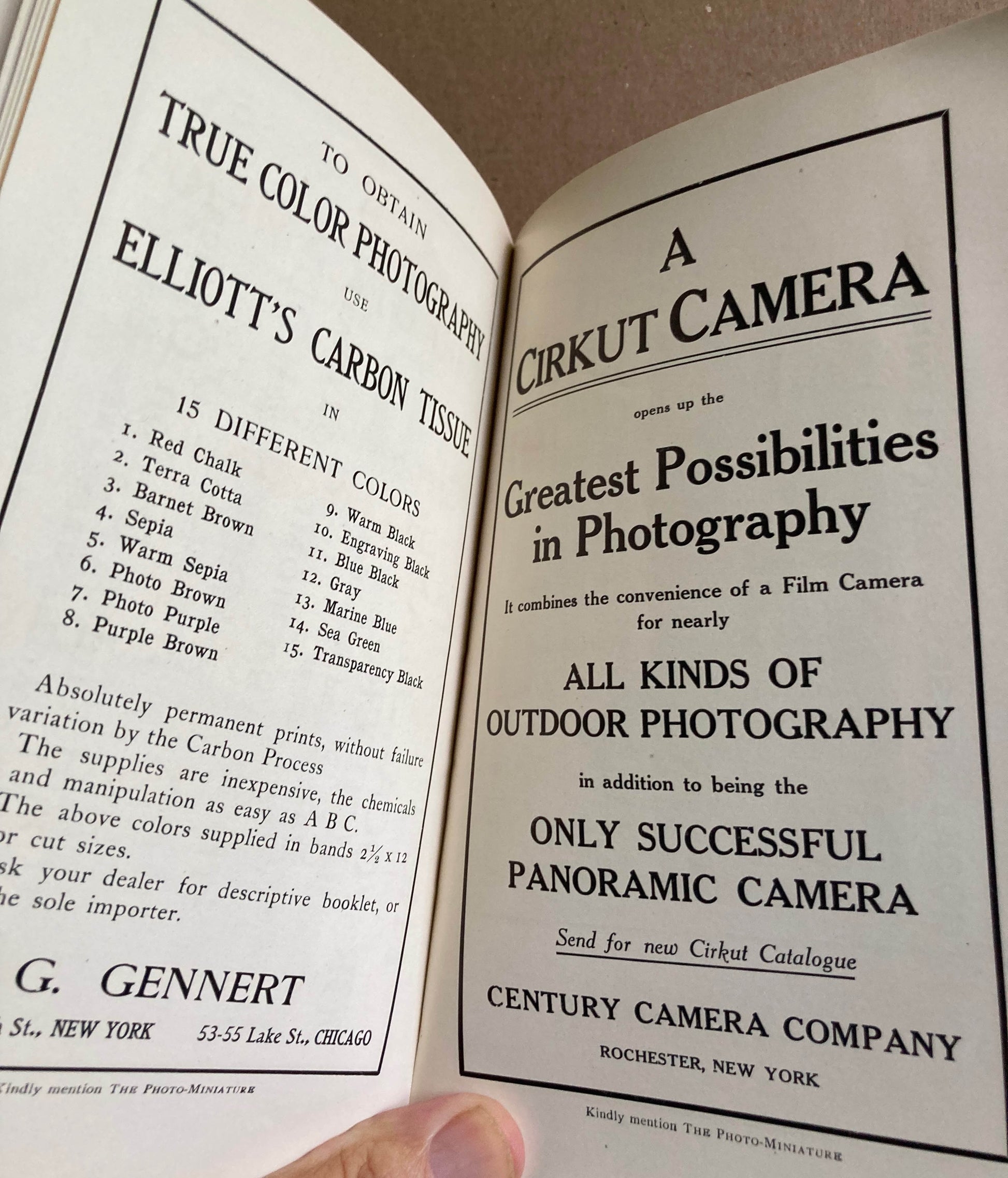
Edited by John A. Tennant. Very good with corner creases on back cover. Illustrations by Alfred Stieglitz, Jean M. Hutchinson, Walter Burke, and Alvin Langdon Coburn. Interesting ads for photographic equipment and supplies. Includes list of the Photo Miniature series up to No. 79. Summary:
The Photo-Miniature: The Choice and Use of Photographic Lenses (Vol. VII, No. 79, March 1907) is a specialized technical monograph from the influential monthly series edited by John A. Tennant. Designed as a "miniature" textbook, it aimed to demystify the rapidly advancing optical technology of the early 20th century for the serious amateur and professional photographer.
Core Focus & Objective
In 1907, the transition from simple "view lenses" to complex anastigmats (lenses corrected for astigmatism) was in full swing. This issue serves as a practical consumer and technical guide to optics, moving away from dense mathematical formulas to focus on how different lens designs actually behave in the field.
Key Themes & Topics
-
The "Plain English" Approach: The text explains optical properties—focal length, aperture (f-stops), circle of illumination, and depth of field—in accessible terms, emphasizing their impact on the final image rather than their physics.
-
Lens Categorization: It breaks down the specific uses for various lens types of the era, such as:
-
Single Meniscus: For landscape and "soft" pictorial work.
-
Rapid Rectilinears: The workhorse of the late 19th century.
-
Modern Anastigmats: The cutting-edge high-speed lenses of 1907 (like the Zeiss Protar or Goerz Dagor).
-
-
Application-Based Selection: A significant portion is dedicated to matching the lens to the task, providing advice on the best optics for portraiture, architectural photography, wide-angle views, and telephoto work.
-
Understanding "Speed": It clarifies the then-confusing relationship between lens speed and "definition" (sharpness), helping photographers understand why a faster lens isn't always better for every situation.
Illustrations & Features
True to the series' style, this number is enriched with:
-
Pictorial Examples: High-quality plates featuring work by renowned photographers of the time (including Alfred Stieglitz and Alvin Langdon Coburn), used to demonstrate the "drawing" qualities of different lenses.
-
Vintage Advertisements: The back of the book serves as a historical record of the 1907 photographic market, featuring ads for the latest gear from companies like Eastman Kodak and Bausch & Lomb.
Historical Significance
Number 79 was a critical "update" for photographers caught between the old world of slow, heavy glass and the new world of high-performance optics. It remains a primary source for historians studying the technical evolution that allowed for the "Hand Camera" revolution and the rise of modern photojournalism.