Gary Saretzky Photo Books
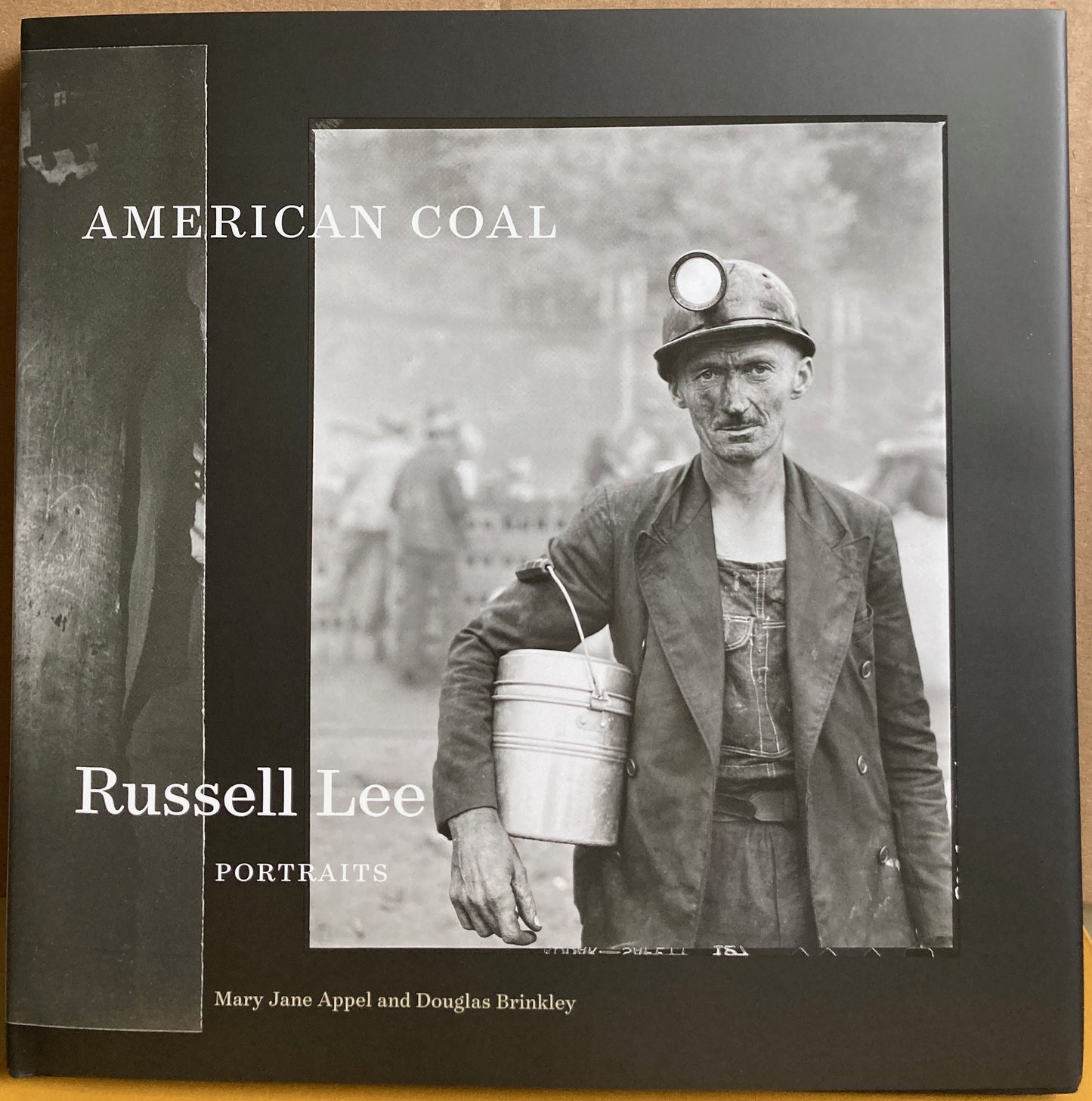
Lee, Russell. American Coal: Russell Lee Portraits by Mary Jane Appel and Douglas Brinkley.
Lee, Russell. American Coal: Russell Lee Portraits by Mary Jane Appel and Douglas Brinkley.
受取状況を読み込めませんでした
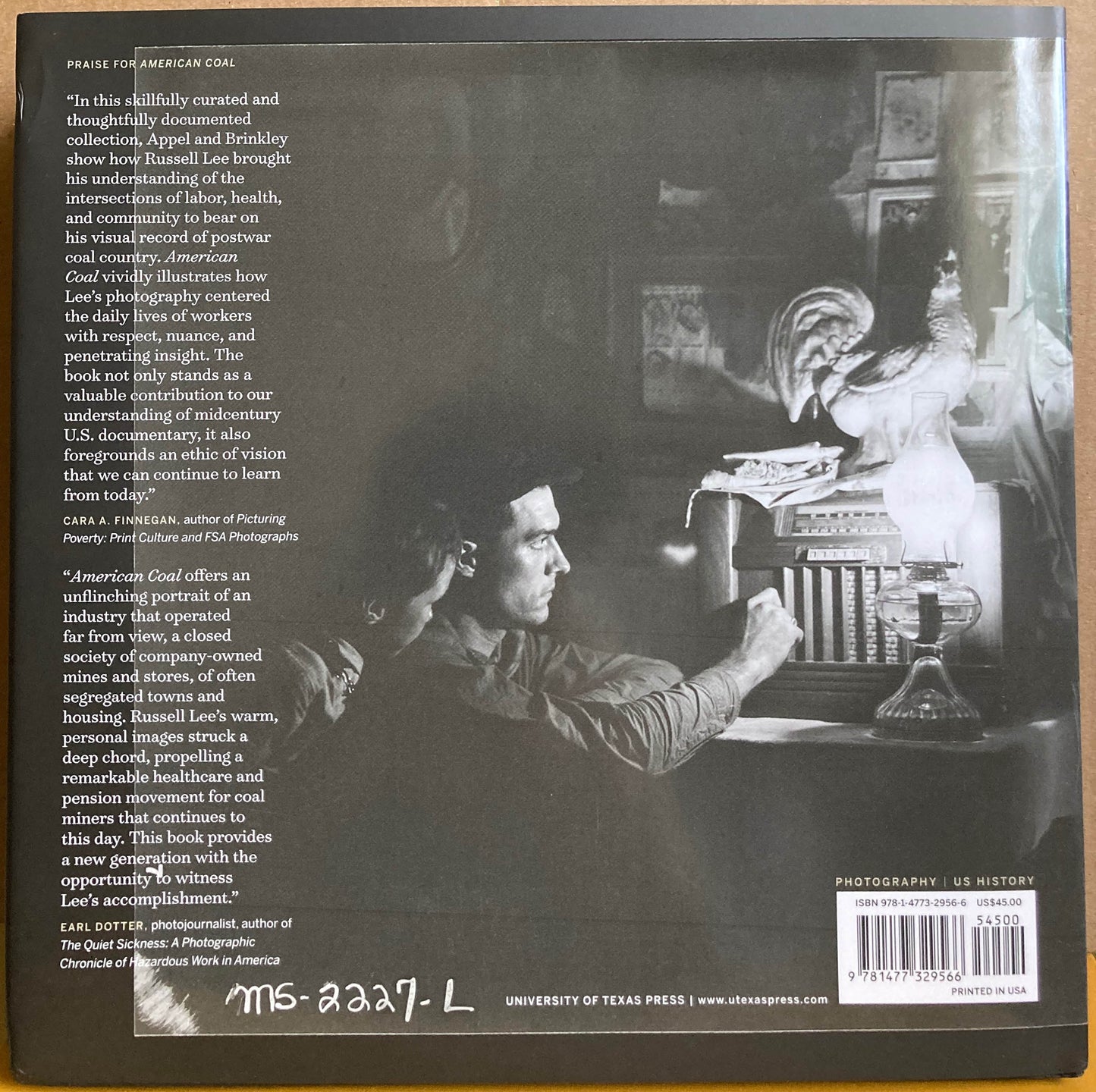
University of Texas Press, 2024. First edition. Hardcover with dust jacket, new in original shrink wrap. 175 pages with 112 plates. This book focuses on Lee's travels in 1946-1947, similar to the work he did in the 1930s for the Farm Security Administration (FSA) in documentary photography.Here he photographed the coal industry and coal miners, at work, at recreation, and at home, in the United States, including in Pennsylvania, West Virginia, Illinois, Indiana, Colorado, Utah, Wyoming, Missouri, Arkansas, Oklahoma, Alabama, and Kentucky. Summary:
American Coal (2011), featuring the work of Russell Lee with essays by Mary Jane Appel and Douglas Brinkley, is a powerful archival recovery of the 1946 Medical Survey of the Bituminous Coal Industry. Commissioned by the U.S. Department of the Interior, Lee—a veteran of the Farm Security Administration (FSA)—captured over 4,000 images of miners and their families, creating an unvarnished "biography" of an industry that powered the nation but exacted a heavy human toll.
Core Themes and Social Narrative
-
The "Total" Portrait: Lee didn't just photograph the mines; he documented the entire ecosystem of coal. The book showcases miners deep underground, but it also captures the "Company Town"—the cramped housing, the company stores, the healthcare (or lack thereof), and the domestic labor of the miners' wives.
-
A Forensic Humanism: Unlike some of his peers who sought "theatrical" drama, Lee was a master of the candid-technical style. He used his camera as a neutral observer to document the grit, the soot-stained faces, and the physical exhaustion with a precision that made the social injustice undeniable.
-
The Post-War Pivot: Appel and Brinkley contextualize these photos as part of a crucial moment in American labor history. The survey was part of a government agreement to end a massive strike, and Lee's photos were intended as "visual evidence" to argue for better safety and welfare standards.
Visual and Technical Style
-
The Mastery of Flash: Lee was a pioneer in the use of multiple-flash setups in dark environments. This book highlights his ability to illuminate the "Abyss"—creating a crisp, detailed image of the pitch-black interiors of the mines without losing the moody atmosphere.
-
The "Russell Lee Style": His images are noted for their edge-to-edge sharpness and democratic focus. Every detail—from the grease on a miner’s lunch pail to the pattern on a kitchen tablecloth—is rendered with forensic clarity.
- Russell Lee (1903–1986) was an acclaimed American photographer and photojournalist best known for his prolific, empathetic documentary work for the Farm Security Administration (FSA) during the Great Depression. Born in Ottawa, Illinois, Lee originally trained as a chemical engineer at Lehigh University before turning to painting and ultimately photography in 1935 to document social causes. Joining Roy Stryker's legendary FSA historical section in 1936 alongside Dorothea Lange and Walker Evans, Lee became one of its most industrious members, pioneering the technical use of mounted flash equipment to illuminate indoor, low-light living conditions of migrant workers, sharecroppers, and rural families across the American West, South, and Midwest. His extensive visual cataloging—including famous series in Pie Town, New Mexico, and San Augustine, Texas—captured the resilience and dignity of everyday Americans with meticulous detail. During World War II, he served in the Air Transport Command photographing supply routes, and in 1946 he produced a landmark documentary study on health conditions in American coal mining communities for the United States Department of the Interior. Lee later became the first professor of photography at the University of Texas at Austin in 1965, where he taught until 1973, leaving a monumental photographic archive preserved at the Library of Congress and the Wittliff Collections.