Gary Saretzky Photo Books
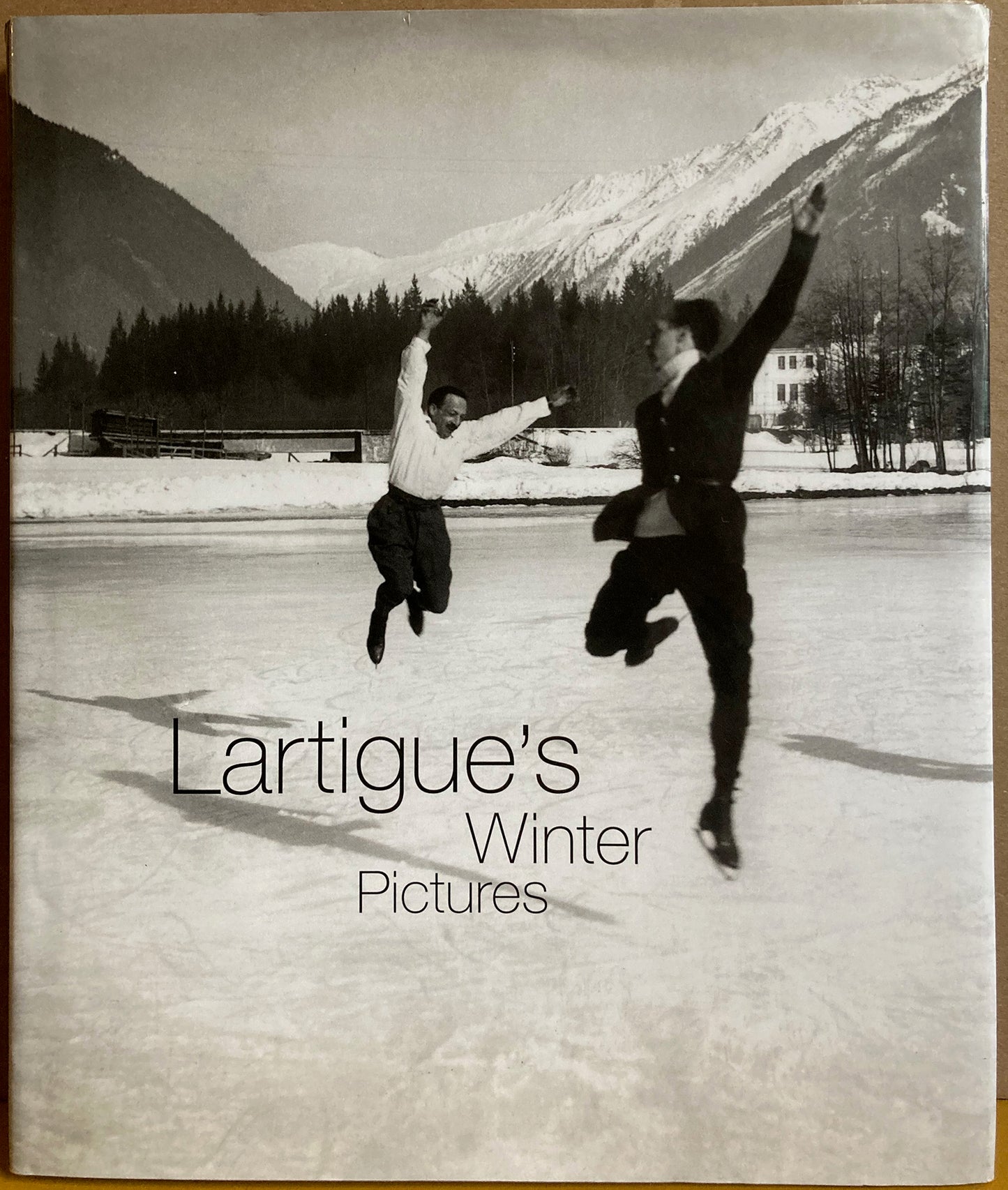
Lartigue, Jacques Henri. Lartigue’s Winter Pictures. Photographs by Jacques Henri Lartigue with text by Elisabeth Foch.
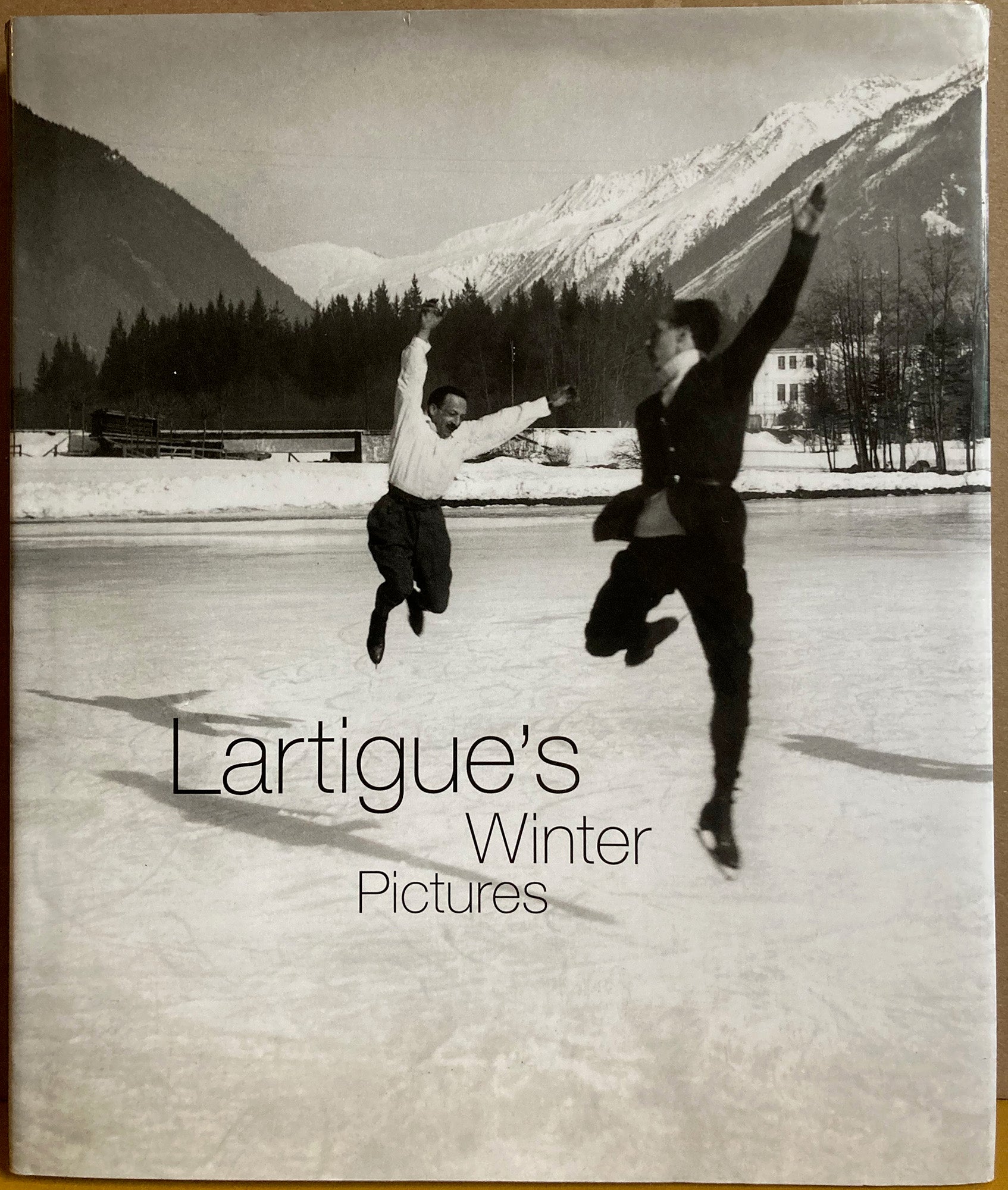
Lartigue, Jacques Henri. Lartigue’s Winter Pictures. Photographs by Jacques Henri Lartigue with text by Elisabeth Foch.
受取状況を読み込めませんでした
Flammarion, 2002. Hardcover in gray cloth, fine, with near very good newly protected dust jacket that has been reinforced discretely with two small pieces of tape on the inside at two edge tears. At the age of 19, Jacques Henri Lartigue began photographing the Alps on vacations beginning in 1913, visiting resorts such as Chamonix, Megève, and Saint Moritz. 144 pages. His photos depict vacationers in the snow, skiing, and engaging in other winter sports and activities in the Alps, as well as landscapes and some interior views. English edition, published simultaneously in French, both issued in Paris by Flammarion. Summary:
Lartigue’s Winter Pictures (1991), with an evocative essay by Elisabeth Foch, is a specialized curation focusing on the snowy, high-society retreats of Jacques Henri Lartigue. While Lartigue is famous for his sun-drenched "Belle Époque" summers, this volume explores his fascination with the "Frozen Moment"—both literal and metaphorical—capturing the elite at play in the winter landscapes of St. Moritz, Chamonix, and Megève.
Core Themes and Narrative
-
The "Weightless" Winter: Lartigue’s lens treats snow not as a burden, but as a "blank canvas" for motion. The book highlights his obsession with the physics of winter sports—bobsledding, skiing, and skating—viewing them as a joyous, modern choreography of the wealthy.
-
The Elegance of Isolation: Foch’s text delves into the "hushed" quality of these images. The winter settings provide a natural studio that isolates the subjects, making their furs, goggles, and fashionable silhouettes stand out against the high-contrast white of the Alps.
-
A Childhood Gaze: Even in his later years, Lartigue maintained the amateur spirit of his youth. The book documents a world that feels perpetually on holiday, where the harshness of winter is entirely mitigated by luxury and the thrill of speed.
Visual and Technical Notes
-
The "High-Key" Brilliance: These photographs often depict the blinding reflectivity of snow. Lartigue mastered the art of exposing for the highlights, creating images that are airy, luminous, and seemingly devoid of gray middle-tones.
-
Kinetic Snapshots: Lartigue’s winter work is famously "un-finished" in its framing. He embraced the blur of a speeding sled and the accidental tilt of the horizon, prioritizing the moment over formal perfection.
- Jacques Henri Lartigue (1894–1986) was a French photographer and painter famous for his spontaneous, joyful depictions of Belle Époque aristocrats, early automobile racing, aviation, and fashion. Born into a wealthy, upper-class family in Courbevoie, France, Lartigue was gifted his first large-format camera at age seven by his father, beginning an obsessive lifelong visual diary alongside written journals. Unburdened by formal photographic training, the young prodigy intuitively mastered shutter speed and composition to freeze kinetic motion—capturing family members jumping off stairs, gliders taking flight, and speeding race cars with a kinetic immediacy and lighthearted intimacy that presaged modern snapshot photography. Throughout most of his life, Lartigue considered himself primarily a professional painter, keeping his extensive archive of thousands of photographs, stereoscopic views, and albums private. His photographic genius remained unknown to the wider public until 1963, when, at the age of 69, a chance introduction to John Szarkowski led to a landmark solo exhibition at the Museum of Modern Art (MoMA) and a feature in Life magazine. Celebrated retroactively as a child prodigy who captured the spirit of turn-of-the-century innovation, Lartigue donated his entire photographic collection to the French state in 1979, cementing his place as an enduring master of motion, candid beauty, and joie de vivre.