Gary Saretzky Photo Books
Graham, Paul. A1 - the Great North Road by Paul Graham.
Graham, Paul. A1 - the Great North Road by Paul Graham.
受取状況を読み込めませんでした
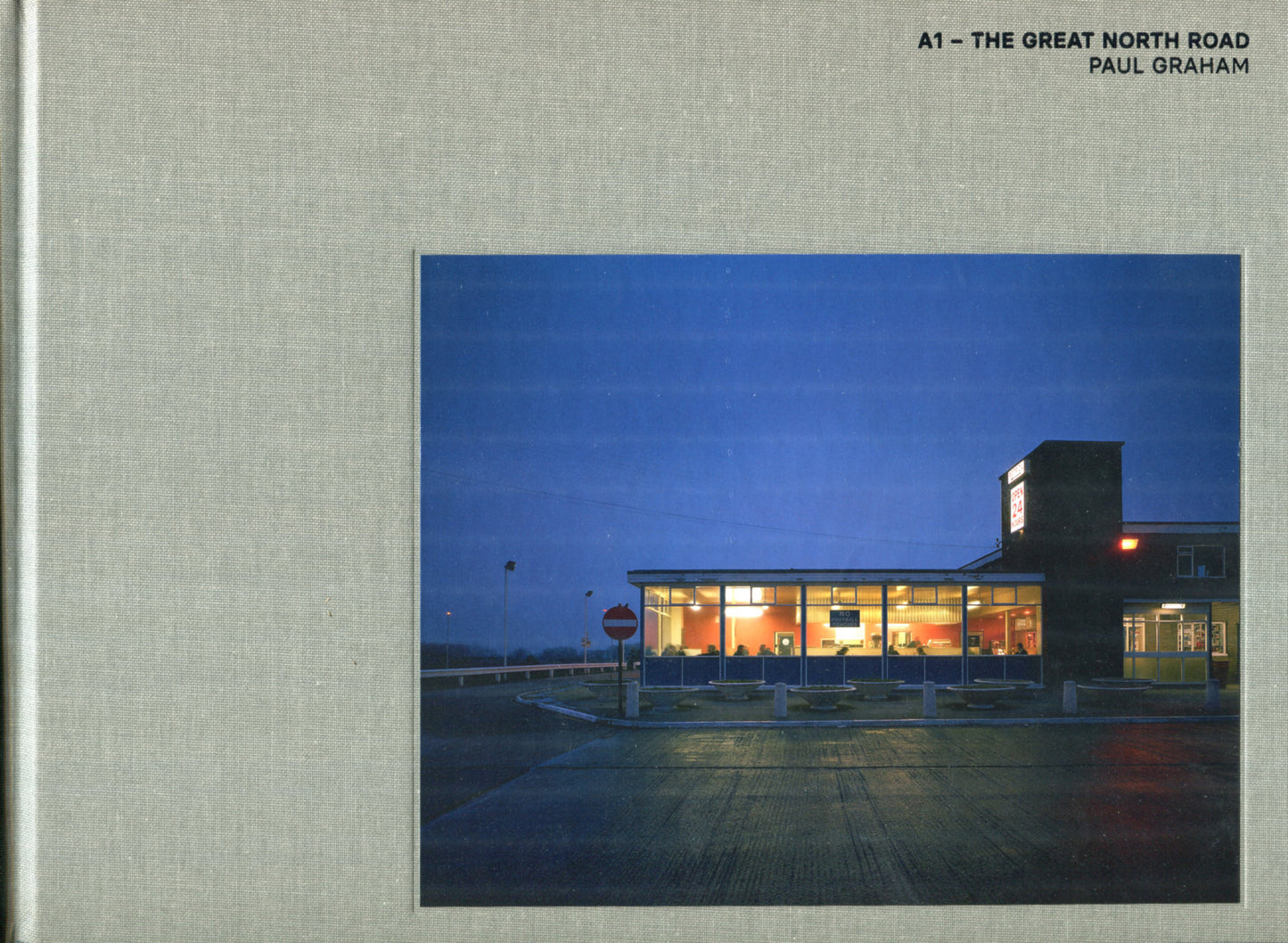
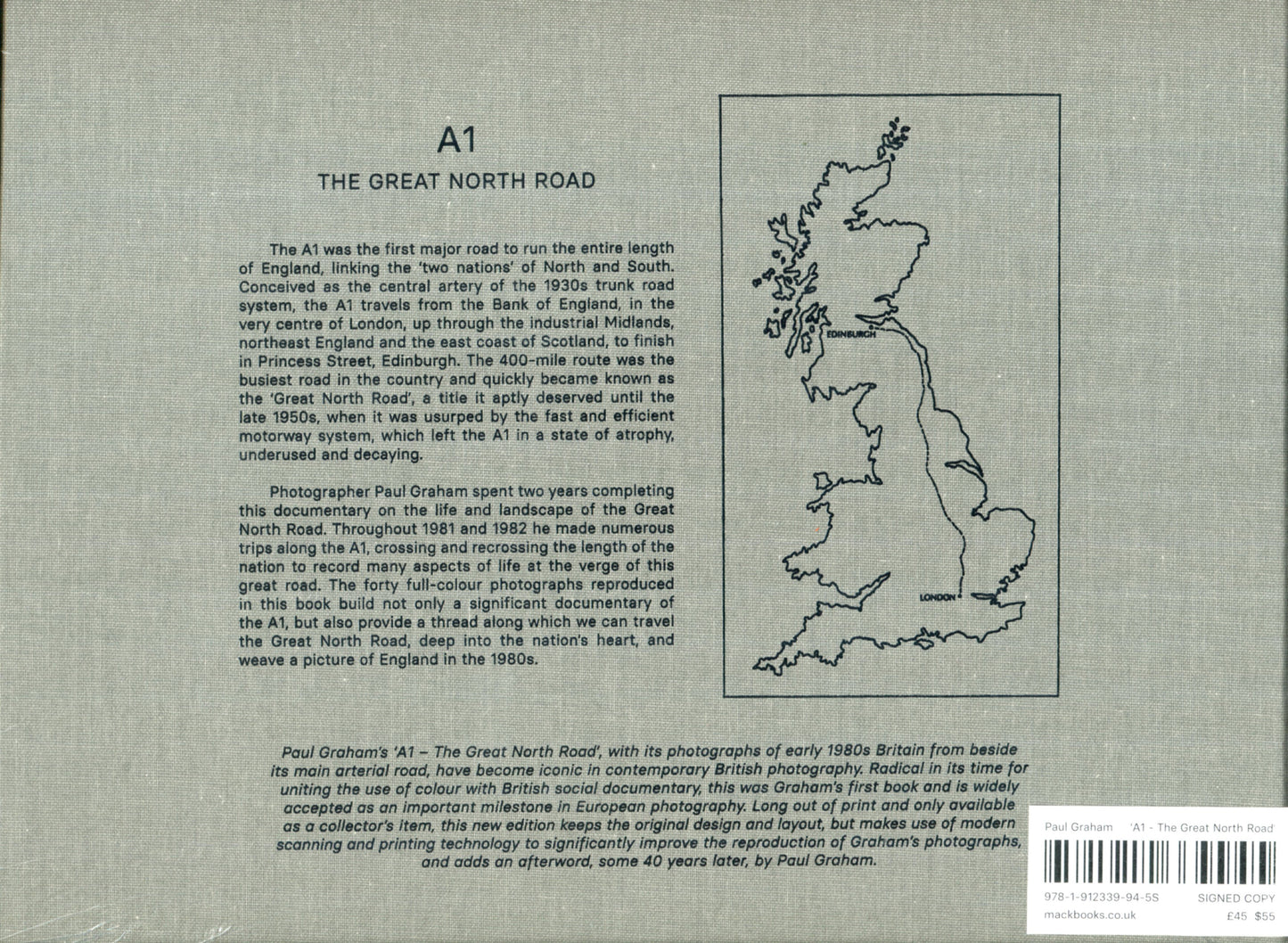
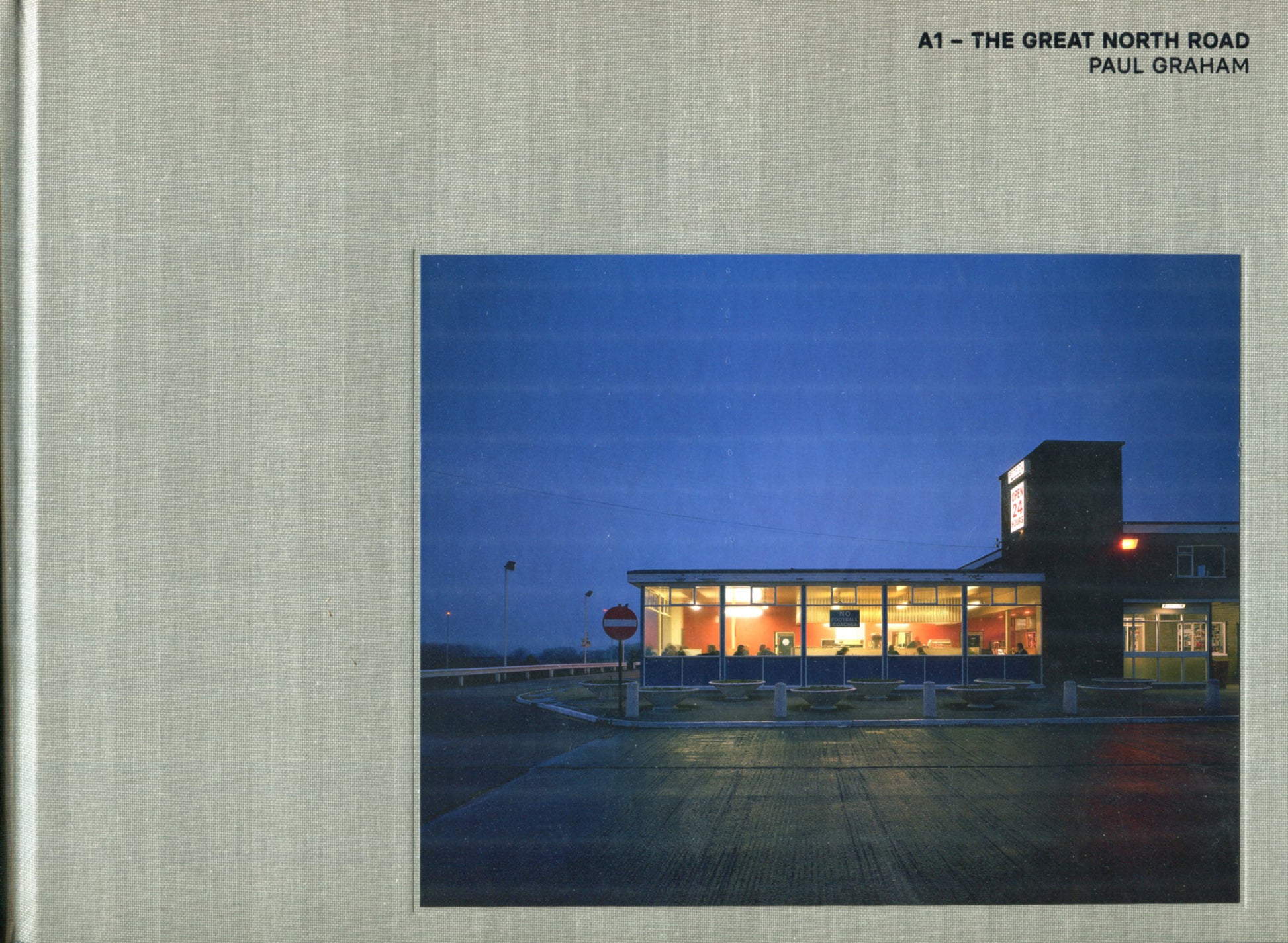
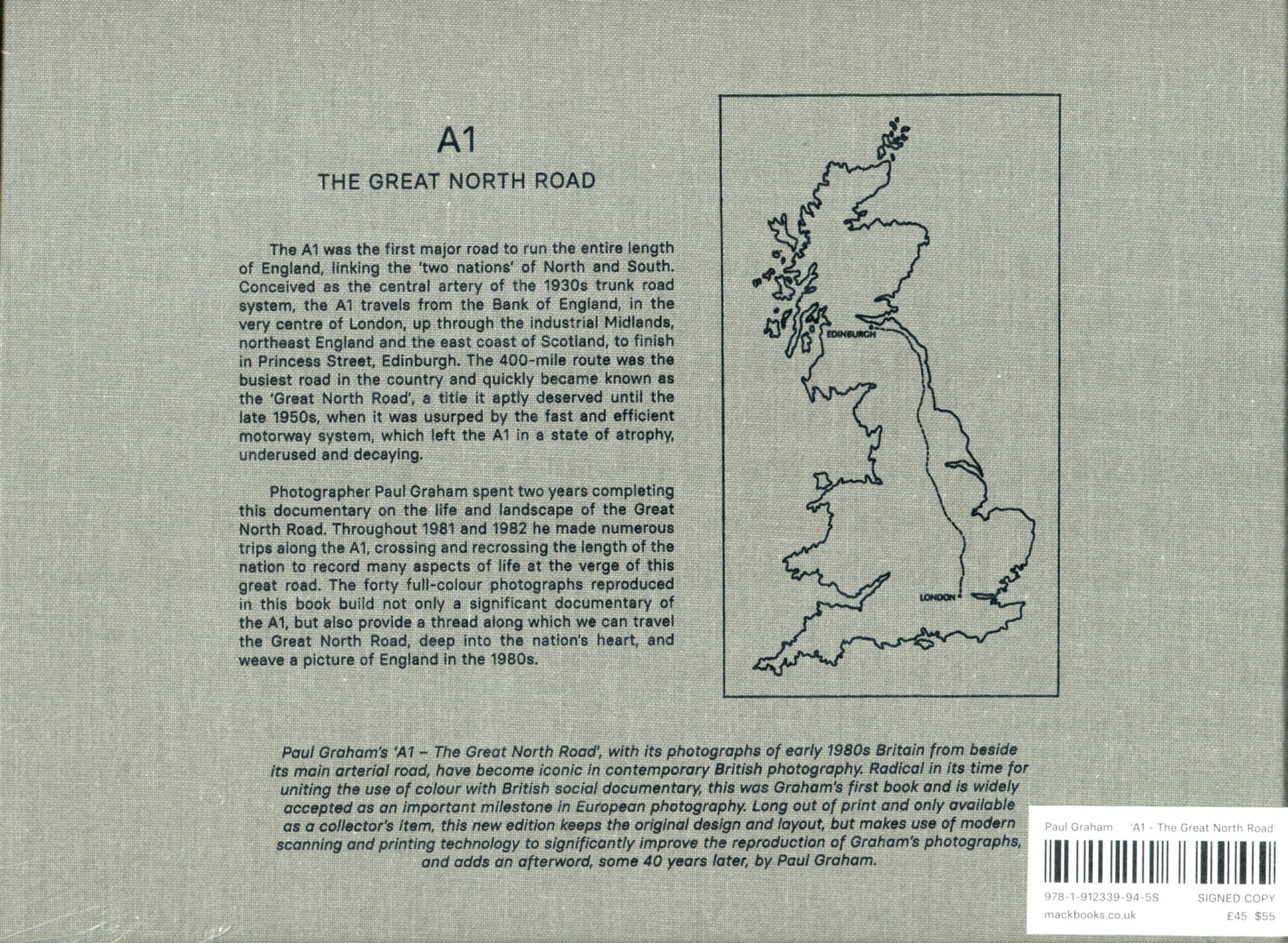
Mack, 2020. Second edition, first printing, signed. New in original shrink wrap. Reprint of the 1983 rare, self-published first edition of the photographer's first book. Hardcover, cloth with photo on front cover not issued with dust jacket. SIGNED by Paul Graham below an extra image adhered inside rear cover. 96 pages with numerous color photos. Summary:
A1 - The Great North Road, originally published in 1983 with a refined second edition released by Mack in 2020, is the debut monograph of influential British photographer Paul Graham. The book is a seminal work in the history of British documentary photography, marking a radical break from the traditional black-and-white aesthetic of the era.
The Concept and Route
The project documents the A1, Britain’s historic "Great North Road" that stretches from London to Edinburgh. Graham spent two years (1981–1982) traveling the road, capturing the people, landscapes, and roadside architecture that defined this arterial link during a period of profound national transition.
Core Themes and Style
1. The Introduction of Color
At the time of its release, "serious" documentary photography in Britain was almost exclusively black and white. Graham’s use of large-format color film was revolutionary. He utilized color not for decoration, but as a critical tool to describe the grit, social reality, and specific atmosphere of the early Thatcher years.
2. Post-War Decline and Modernity
The book captures a world at a crossroads. It features:
-
The Architecture of the Road: Dilapidated transport cafes, lonely petrol stations, and sterile service centers.
-
The Human Landscape: Lorry drivers, hitchhikers, and workers—faces that reflect the economic weariness of the 1980s.
-
Symbolism: The road serves as a metaphor for the state of the nation, showing a country caught between its historic past and an uncertain, industrialized future.
3. A New Documentary Language
Graham moved away from "decisive moment" photojournalism. Instead, his images are often still, formal, and deceptively quiet. This approach helped pioneer "New British Color," influencing a generation of photographers to view the mundane and the peripheral as worthy subjects of high art.
Features of the Second Edition
The second edition is a high-fidelity reproduction that restores the vibrancy and tonal depth of Graham’s original vision. It includes:
-
Restored Plates: Improved printing techniques that more accurately represent the "Technicolor" feel of the 1980s film stock.
-
Historical Context: It reinforces the book's status as a pivot point in photographic history, documenting the moment when British photography "came of age" in the world of contemporary art.
Summary Takeaway
A1 - The Great North Road is a visual eulogy for an era. It transformed a simple road trip into a profound social commentary, proving that color photography could be as politically and emotionally resonant as its monochrome predecessors. It remains a cornerstone for anyone studying the evolution of the modern photographic essay.
Biographical Summary
Paul Graham (born 1956) is an influential British documentary photographer celebrated for transforming social photojournalism through his pioneering use of vibrant color and conceptual narrative structures. Born in Stafford, England, Graham earned a degree in microbiology from Bristol University before self-teaching photography in the late 1970s. He gained international prominence in the early 1980s as part of a wave of British artists who broke away from traditional black-and-white documentary traditions, releasing ground-breaking monographs such as A1 – The Great North Road (1983) and Beyond Caring (1986), which critically examined Thatcherite Britain’s socio-economic landscape and unemployment offices in vivid color. After relocating to the United States in 2002, he expanded his conceptual approach to street photography with major projects including a shimmer of possibility (2007)—a multi-volume photographic poem depicting everyday American life through sequences of moments—and The Present (2012), which captured fleeting instances of New York street life using paired images. Graham’s work has earned him major accolades, including the Deutsche Börse Photography Prize (2009), a Guggenheim Fellowship (2010), and the Hasselblad Award (2012), solidifying his standing as a vital bridge between traditional documentary practice and contemporary fine art photography.