Gary Saretzky Photo Books
Goin, Peter. Stopping Time: A Rephotographic Survey of Lake Tahoe, photographs by Peter Goin.
Goin, Peter. Stopping Time: A Rephotographic Survey of Lake Tahoe, photographs by Peter Goin.
受取状況を読み込めませんでした
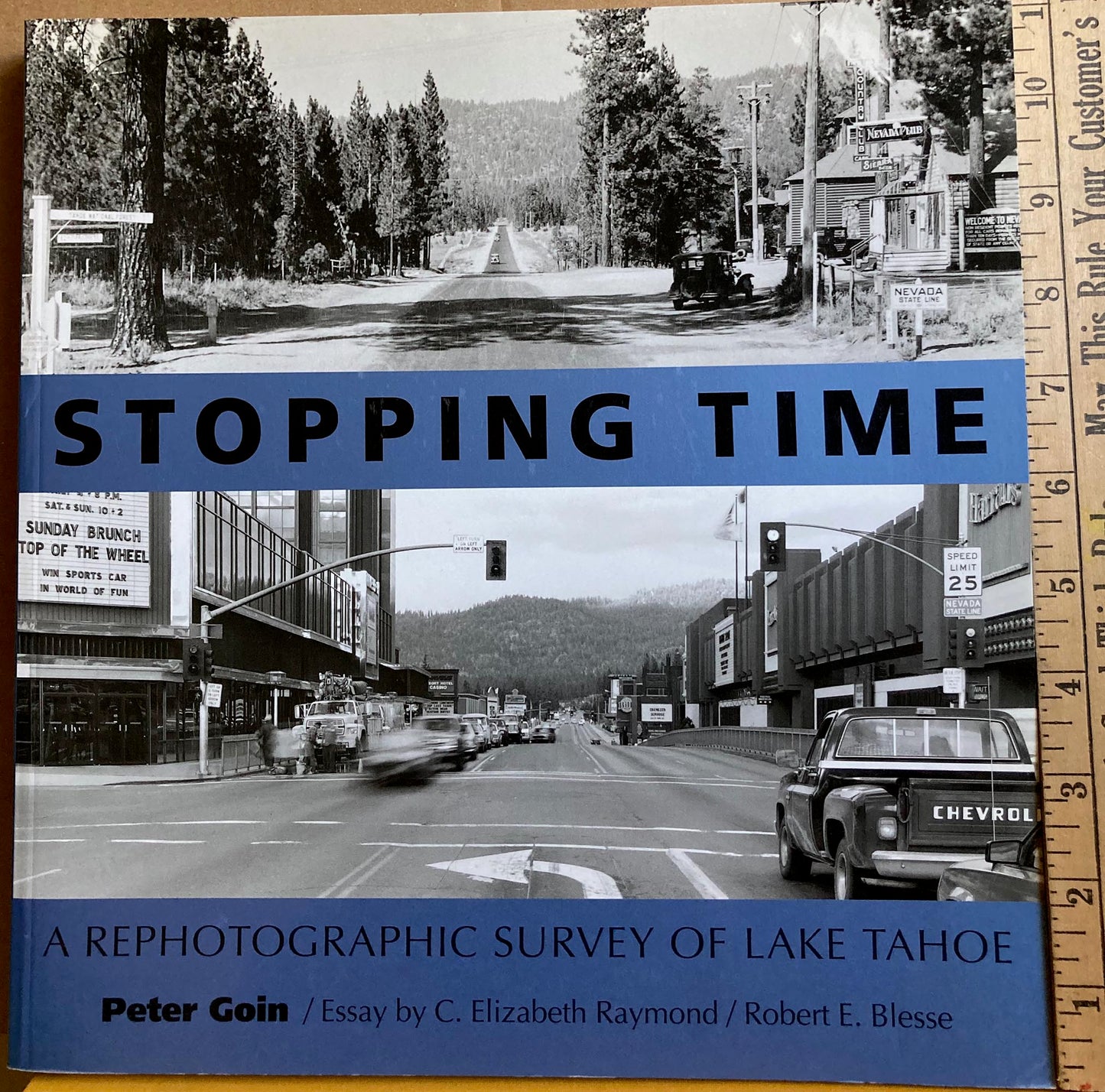
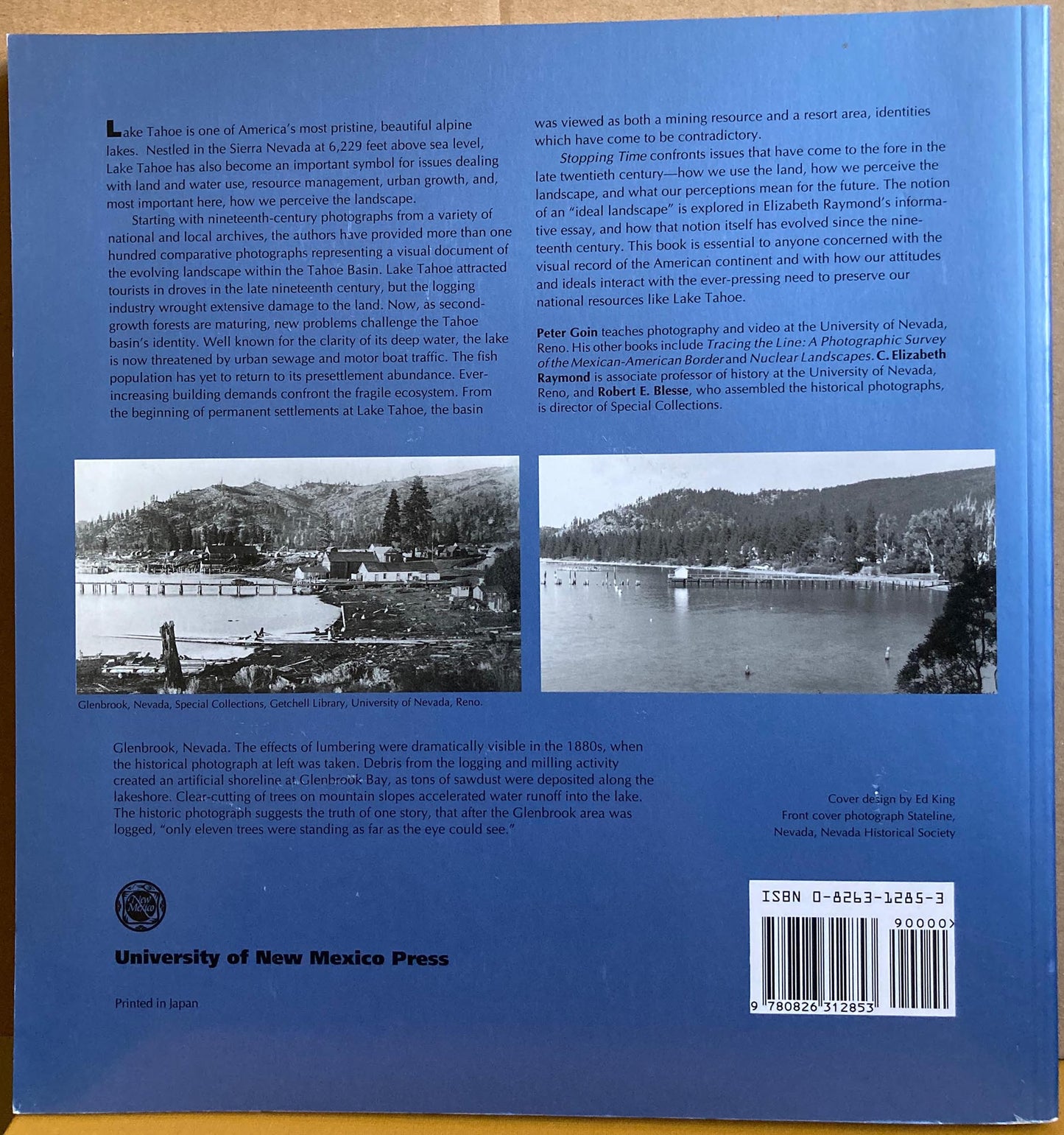
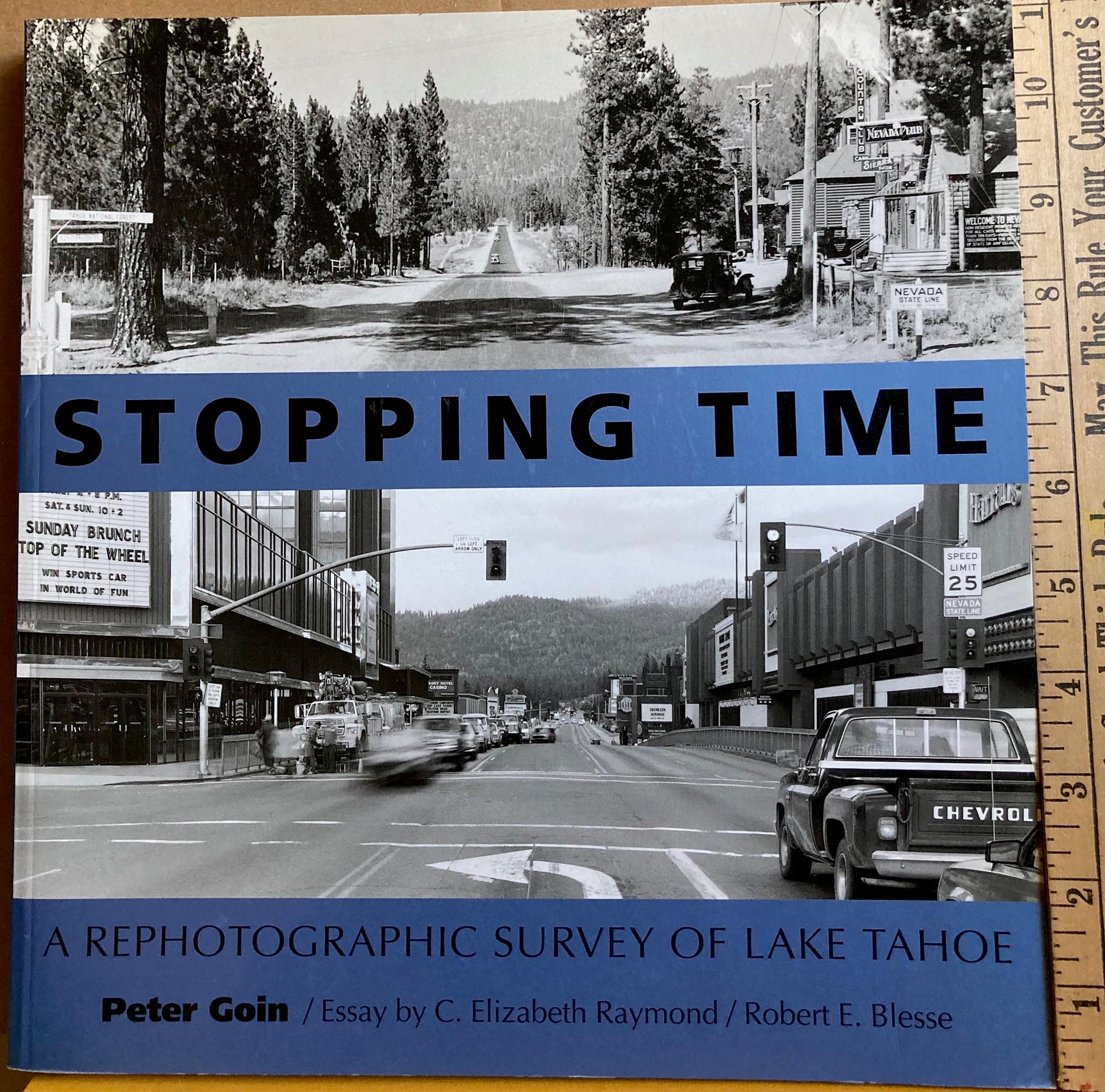
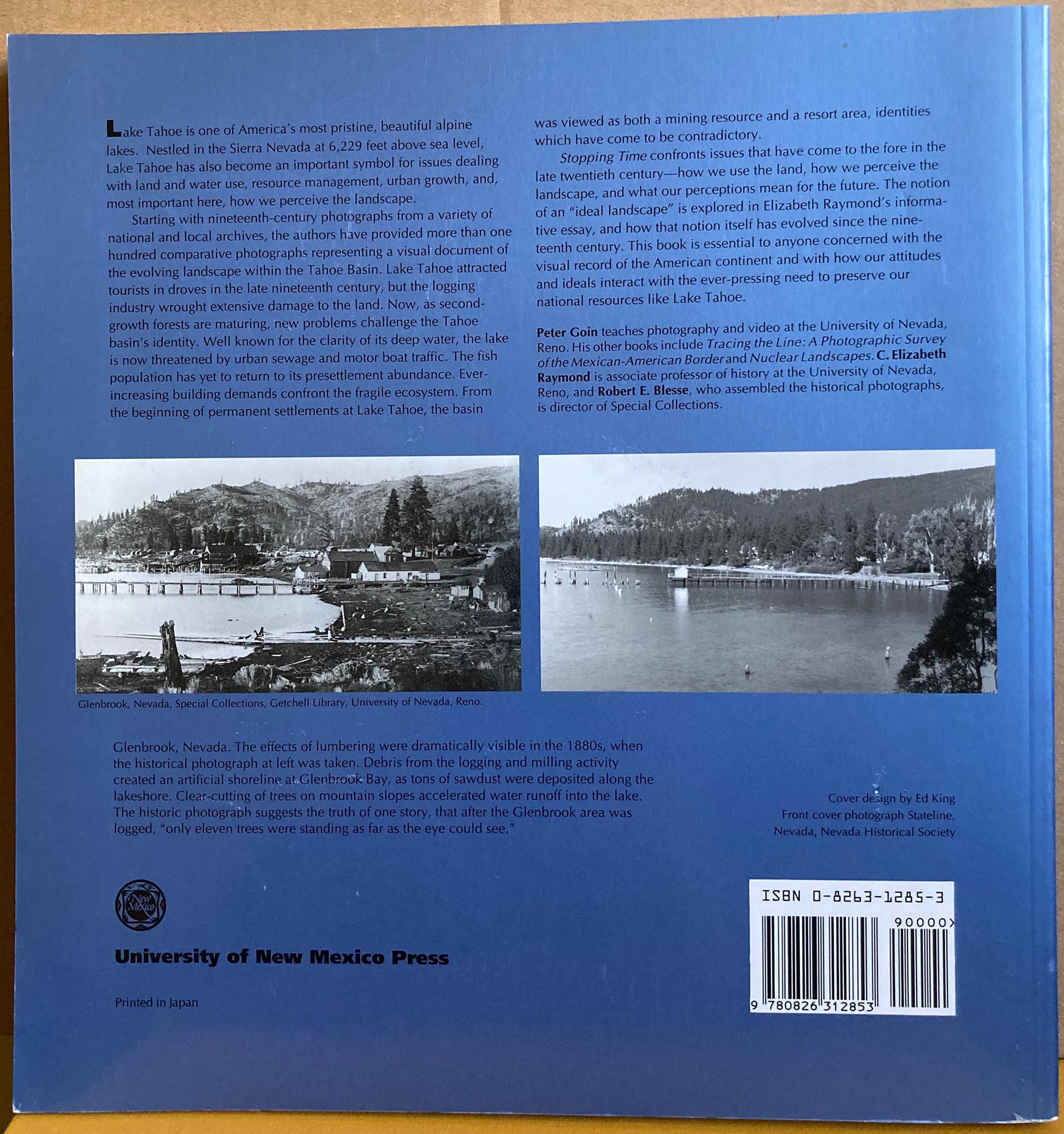
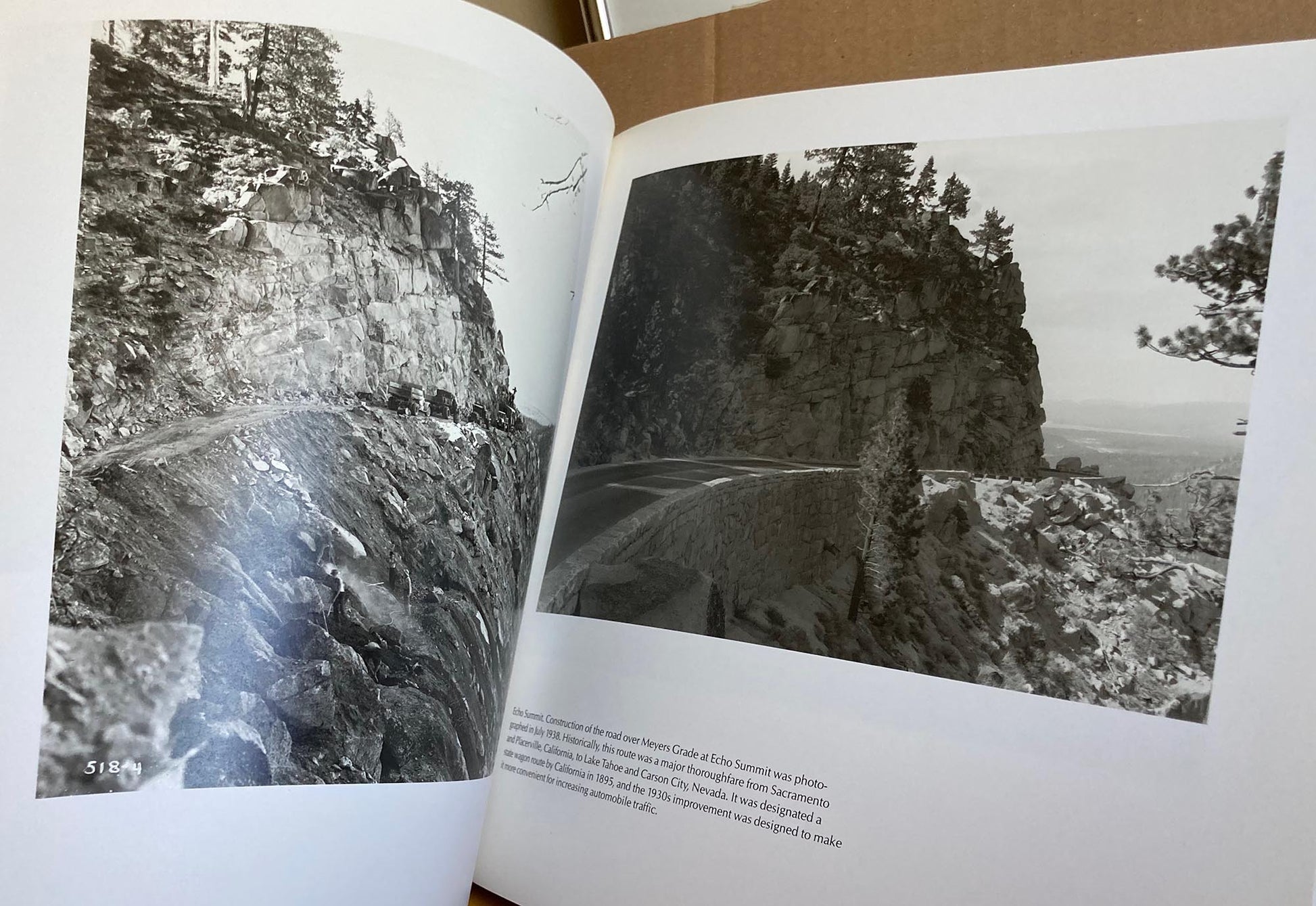
University of New Mexico Press, 1992. Black and white photographs by Peter Goin accompanied by historic photographs of the same views. Text by Elizabeth C. Raymond and Robert E. Blesse. First edition in wraps, very good with small crease in bottom right corner of cover and small round remainder mark at bottom of text block near spine. Large format, 134 pages. An excellent example of a re-photography project in the American West with comparative photographs of Lake Tahoe, Donner Lake, and Truckee, California from the 1870s to the 1950s selected by Blesse, a rare book and manuscripts librarian at University of Nevada, Reno. The photographers of the early images include a group by Carleton E. Watkins, with many of the others uncredited. Peter Goin, a photography professor at University of Nevada, Reno, published other photography books, including one on the Mexican border and another, Nuclear Landscapes. He was one of the photographers in Between Home and Heaven: Contemporary American Landscape Photography and in Arid Waters: Photographs from the Water in the West Project. Summary:
Stopping Time: A Rephotographic Survey of Lake Tahoe is a documentary photography book by Peter Goin that explores how the landscape of Lake Tahoe has changed over time.
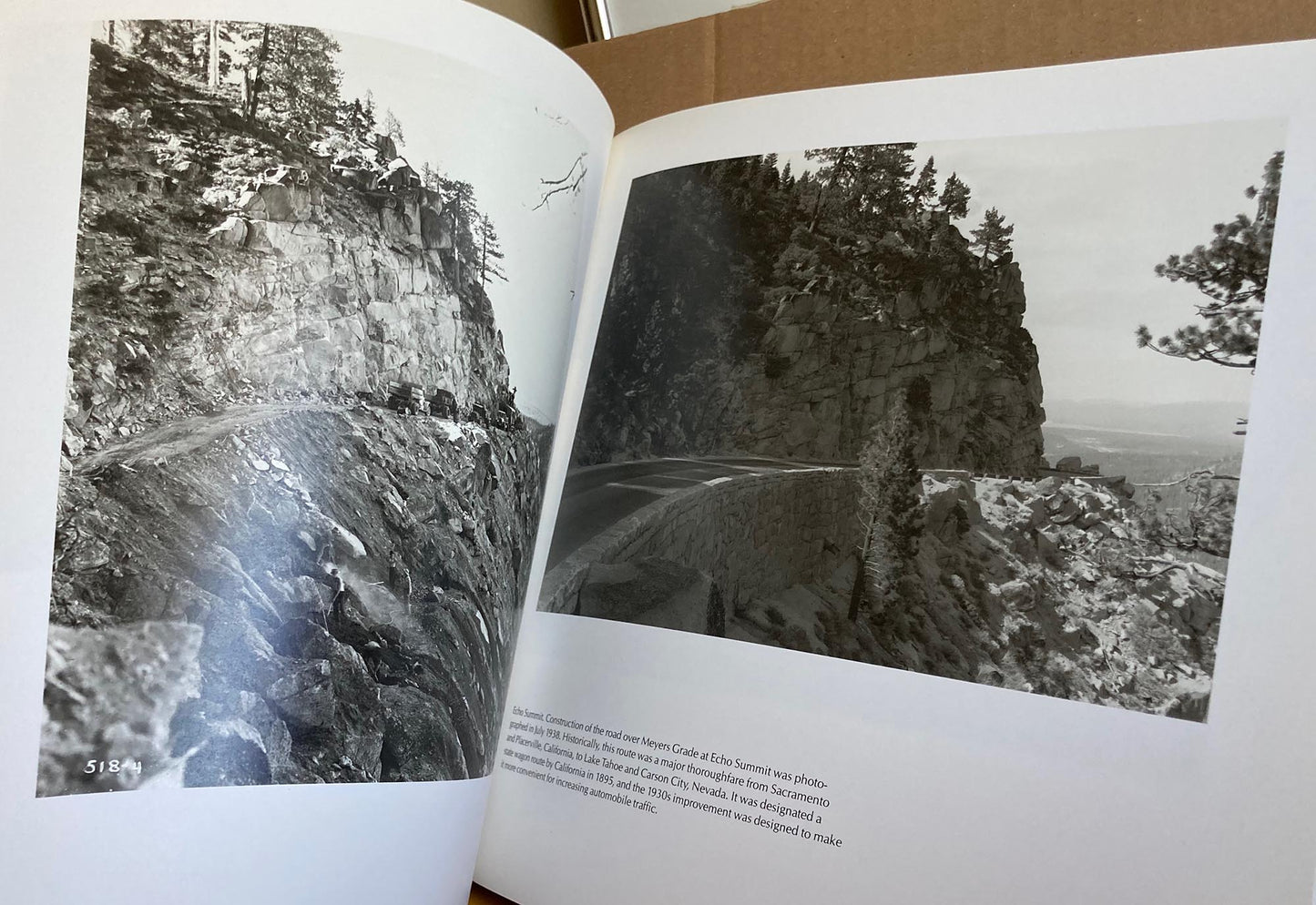
Using a technique called rephotography, Goin carefully recreates historic photographs taken in the late 19th and early 20th centuries, positioning his camera in the exact same locations as the original photographers. He then pairs the old images with his contemporary versions, allowing readers to compare the past and present side by side.
Through these visual comparisons, the book documents dramatic environmental and human changes—growing tourism, urban development, deforestation, road construction, and shoreline alteration. While the early photographs often show a relatively untouched wilderness, the modern images reveal expanding towns, highways, casinos, and recreational facilities.
Rather than simply criticizing change, Stopping Time invites readers to reflect on the complex relationship between natural beauty and human impact. It raises questions about preservation, progress, and responsibility, encouraging greater awareness of how landscapes evolve over time.
Overall, the book is both an artistic and environmental study, using photography as a powerful tool to “stop time” and make change visible.
Peter Goin (b. 1951) is an American fine-art photographer, author, and educator best known for his influential documentation of altered landscapes and the long-term environmental impacts of human culture, technology, and policy. Born in Madison, Wisconsin, Goin spent much of his youth living abroad before earning an MA and MFA from the University of Iowa. Joining the faculty at the University of Nevada, Reno, in 1984, where he served as a Foundation Professor of Art, Goin focused his practice on the American West, merging fine-art aesthetics with history, political science, and environmental studies. He gained wide acclaim for his groundbreaking book Nuclear Landscapes (1991), which visually examined irradiated nuclear test sites, power facilities, and weapons infrastructure. Over a prolific career spanning more than two decades of published monographs, Goin produced seminal books exploring ecological alteration, water rights, rephotography, and human intervention, including Tracing the Line: A Photographic Survey of the Mexican-American Border (1987), Stopping Time: A Rephotographic Survey of Lake Tahoe (1992), Humanature (1996), A Doubtful River (2000), and Changing Mines in America (2004). A recipient of two National Endowment for the Arts Fellowships and the Nevada Governor’s Millennium Award for Excellence in the Arts, Goin's photographs have been exhibited in over fifty museums worldwide and are held in major public collections, including the Museum of Modern Art, the Whitney Museum of American Art, and the Library of Congress.