Gary Saretzky Photo Books
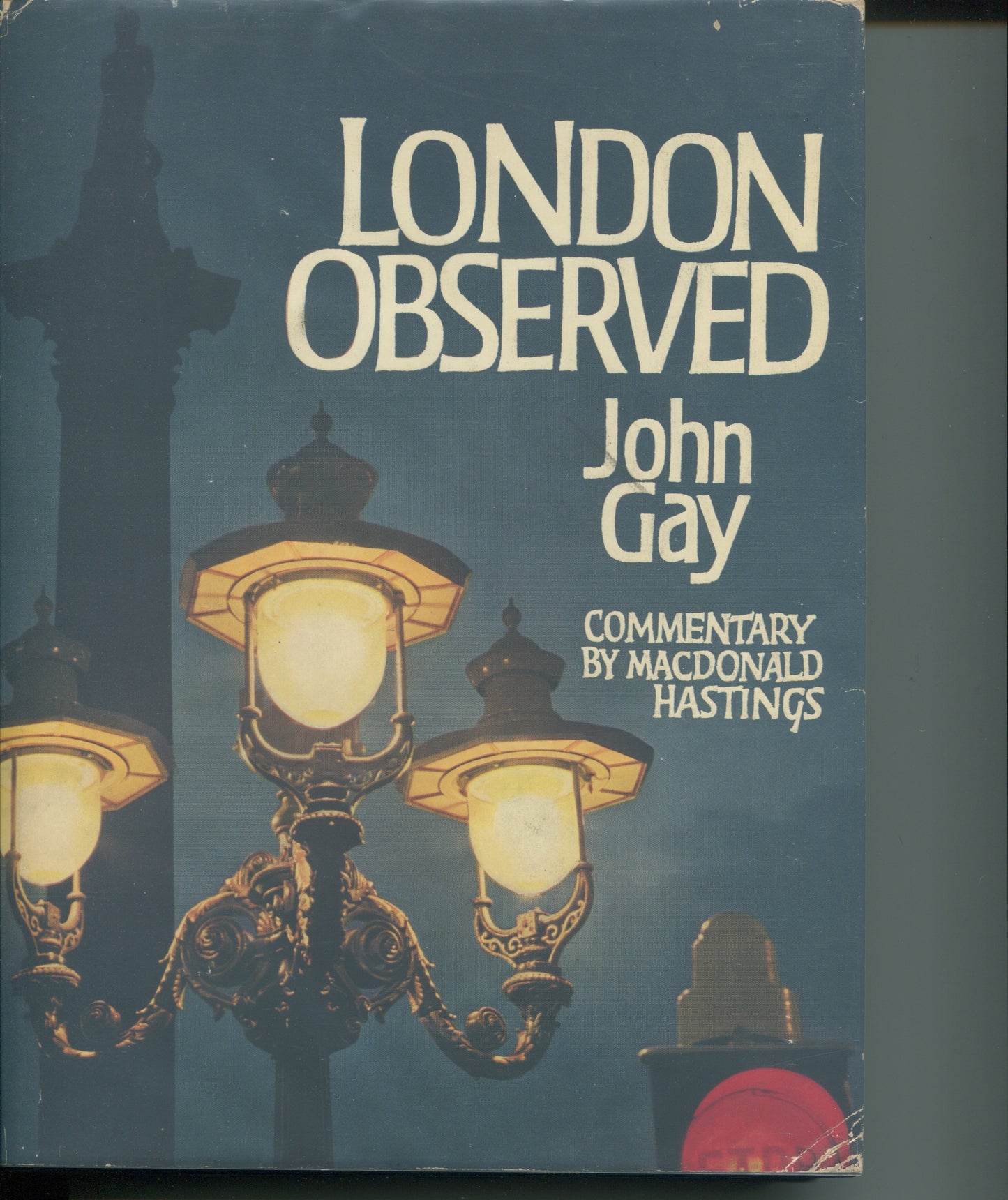
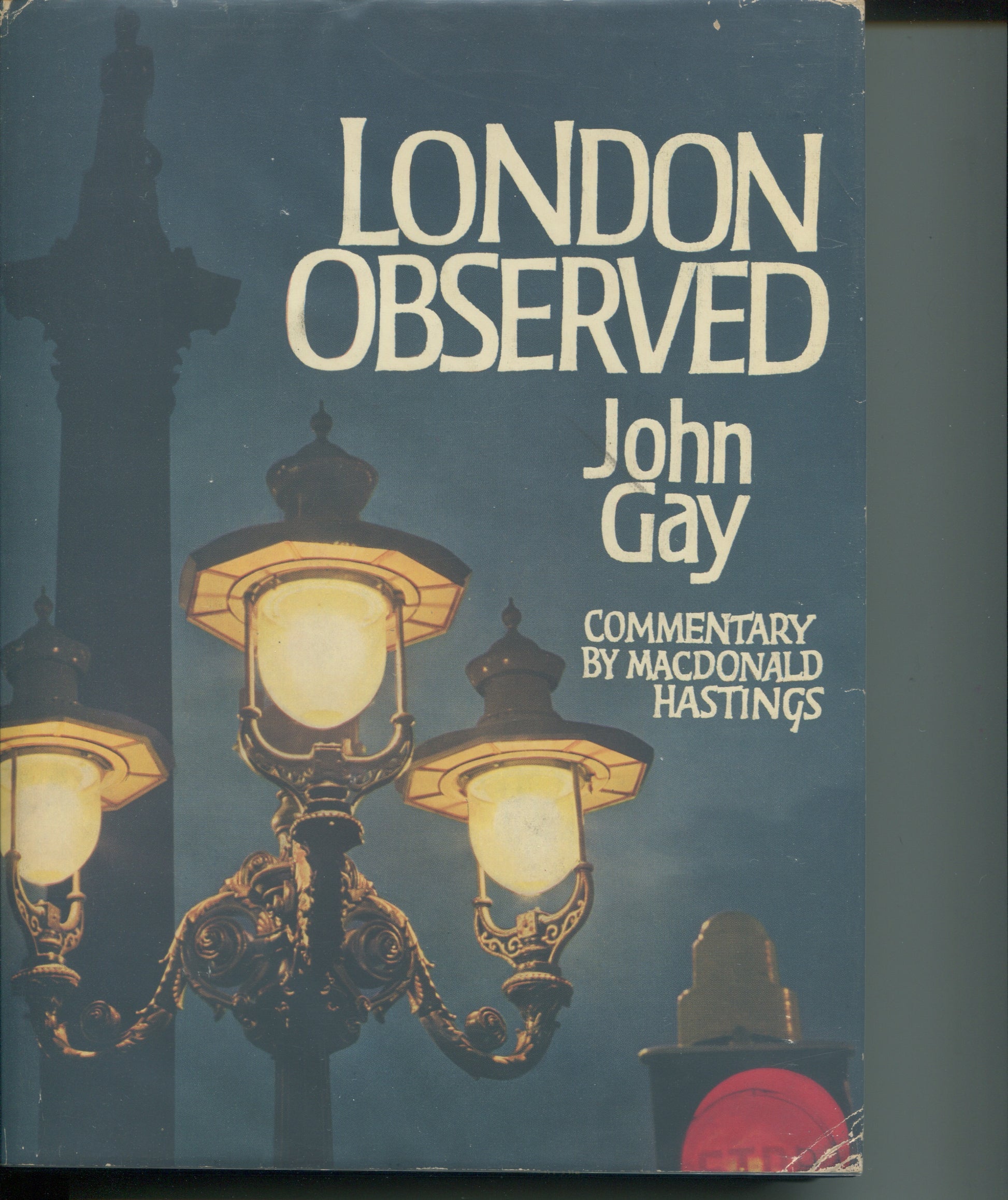
Gay, John. London Observed by John Gay. Commentary by MacDonald Hastings.
Gay, John. London Observed by John Gay. Commentary by MacDonald Hastings.
受取状況を読み込めませんでした
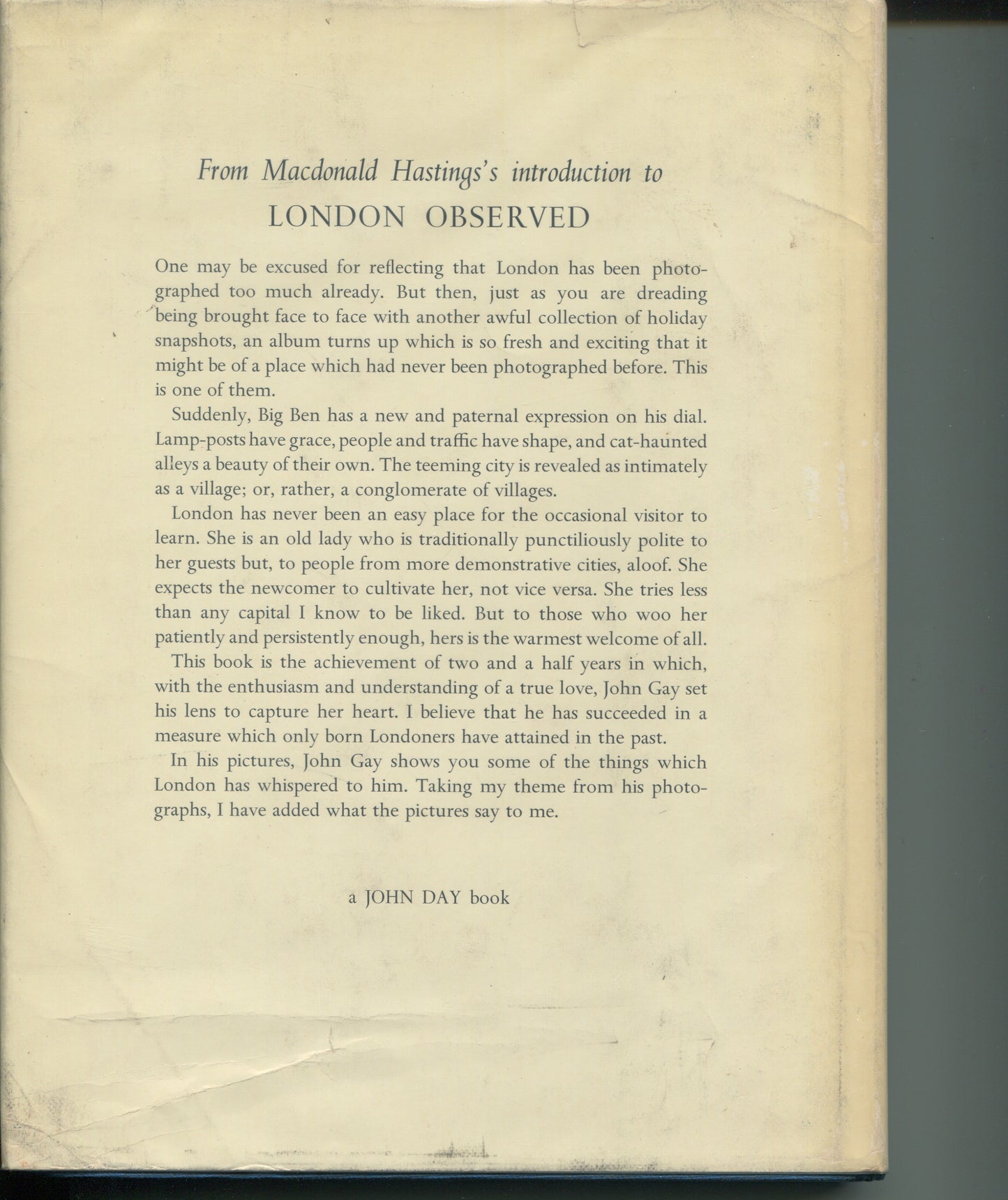
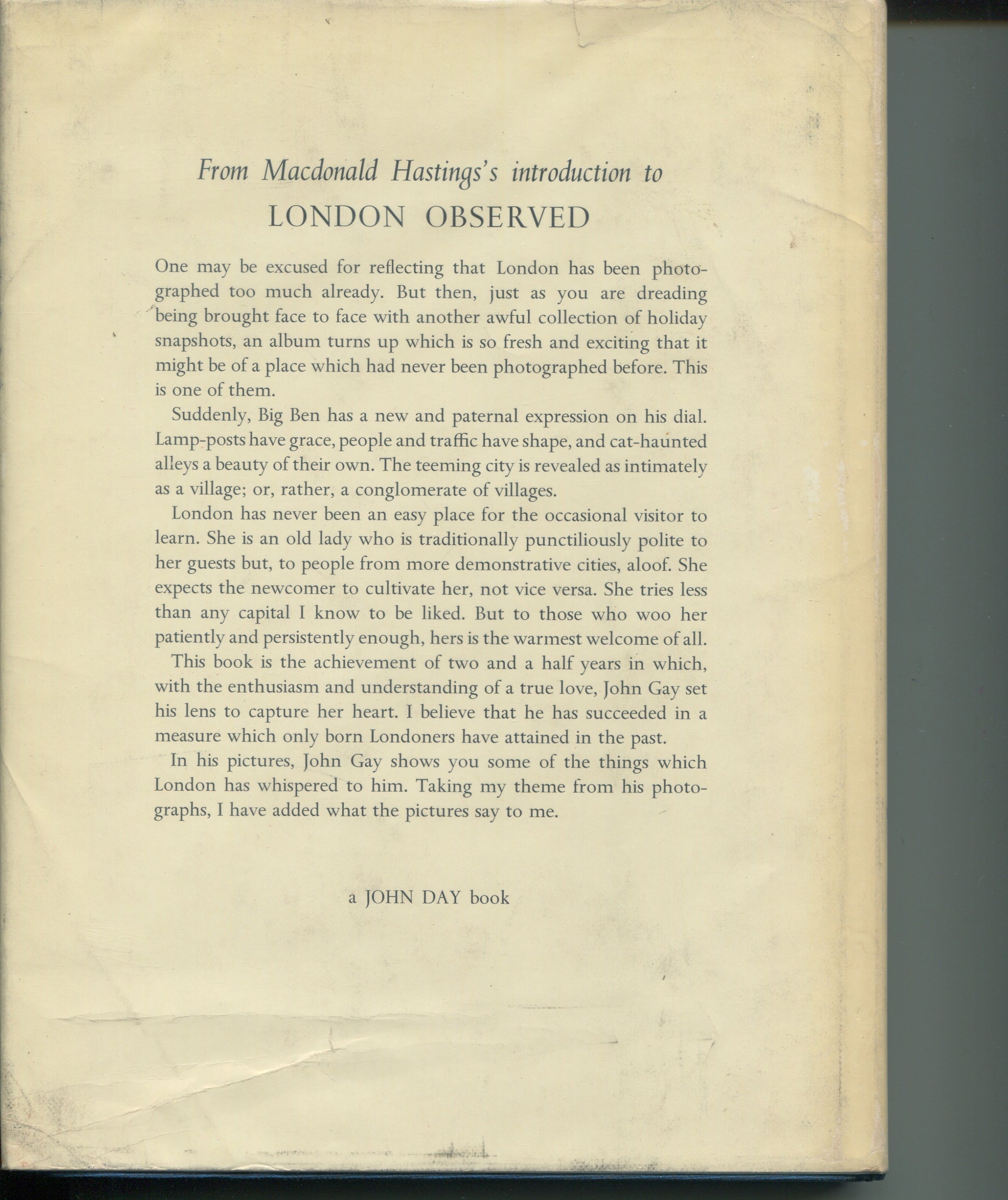
John Day Company, 1964. Hardcover in blue cloth with gilt decoration, with protected dust jacket. Presumed 1st U.S. edition, no later printings indicated. Book is in very good condition with small bump at front bottom right corner, otherwise fine. Dust jacket is near very good with spots of wear at extremities. Includes 105 photographs with wide-ranging subject matter by John Gay, 92 of which are full page. Provenance: From the estate auction of U.S. Camera publisher Tom Maloney. Laid in is an informative letter addressed to "Reviewer" from Pearl Goodwin, Publicity Director for the publisher. A much better copy of this book than usually found. Summary:
London Observed (1964) is a sophisticated photographic survey that captures the "Architectural Soul" of a city caught between its imperial past and the rapid modernization of the 1960s. The book pairs the precise, atmospheric photography of John Gay—a German émigré with a keen "outsider" perspective—with the witty, historically rich commentary of journalist MacDonald Hastings.
Core Themes and Narrative
-
The Geometry of Tradition: Gay focuses on the "unseen" London, finding geometric beauty in the curves of wrought-iron railings, the symmetry of graveyard monuments, and the repeating patterns of the city's unique brickwork.
-
The Humanized Monument: While many of the shots are architectural, the narrative emphasizes how Londoners inhabit these ancient spaces. It captures policemen in the fog, children in bomb-site playgrounds, and the quiet dignity of the Thames's industrial wharves.
-
A City of Contrast: The book highlights the friction between the "Old World" (churches and narrow alleys) and the "New World" (concrete towers and sleek steel), documenting London’s post-war structural transformation.
Visual and Technical "Finish"
-
The "Atmospheric" Finish: John Gay was a master of capturing London’s unique light—the "pea-souper" fogs and the soft, diffused grey of an English afternoon. His "finish" is characterized by deep blacks and silvery highlights, giving the city a timeless, almost cinematic quality.
-
Textural Precision: The book is noted for its focus on materiality. Gay’s lens emphasizes Portland stone and the slick, reflective surfaces of rain-drenched streets.
- John Gay (born Hans Ludwig Göhler; 1909–1999) was a German-born British photographer praised for his sensitive, humanistic documentation of mid-20th-century English life, historic architecture, and quiet rural landscapes. Raised in Karlsruhe, Germany, and educated in Paris, he emigrated to England in 1935 to escape the rising Nazi regime, adopting the Anglicized name John Gay and serving in the British Army's Pioneer Corps during World War II. Settling in Highgate, London, Gay built a prolific freelance career contributing feature photography to periodicals such as The Strand Magazineand Country Fair, where his light-filled, empathetic black-and-white studies captured ordinary citizens at leisure, working-class street scenes, and literary figures like Dylan Thomas. Gay established himself as a master of architectural and heritage photography through celebrated collaborative photobooks, including London's Historic Railway Stations(1972, with Poet Laureate Sir John Betjeman) and Highgate Cemetery (1984), a site he actively helped restore and preserve. Following his death, his massive archive of over 40,000 negatives was bequeathed to English Heritage (now the Historic England Archive), cementing his reputation as a pivotal visual chronicler of post-war Britain.