Gary Saretzky Photo Books
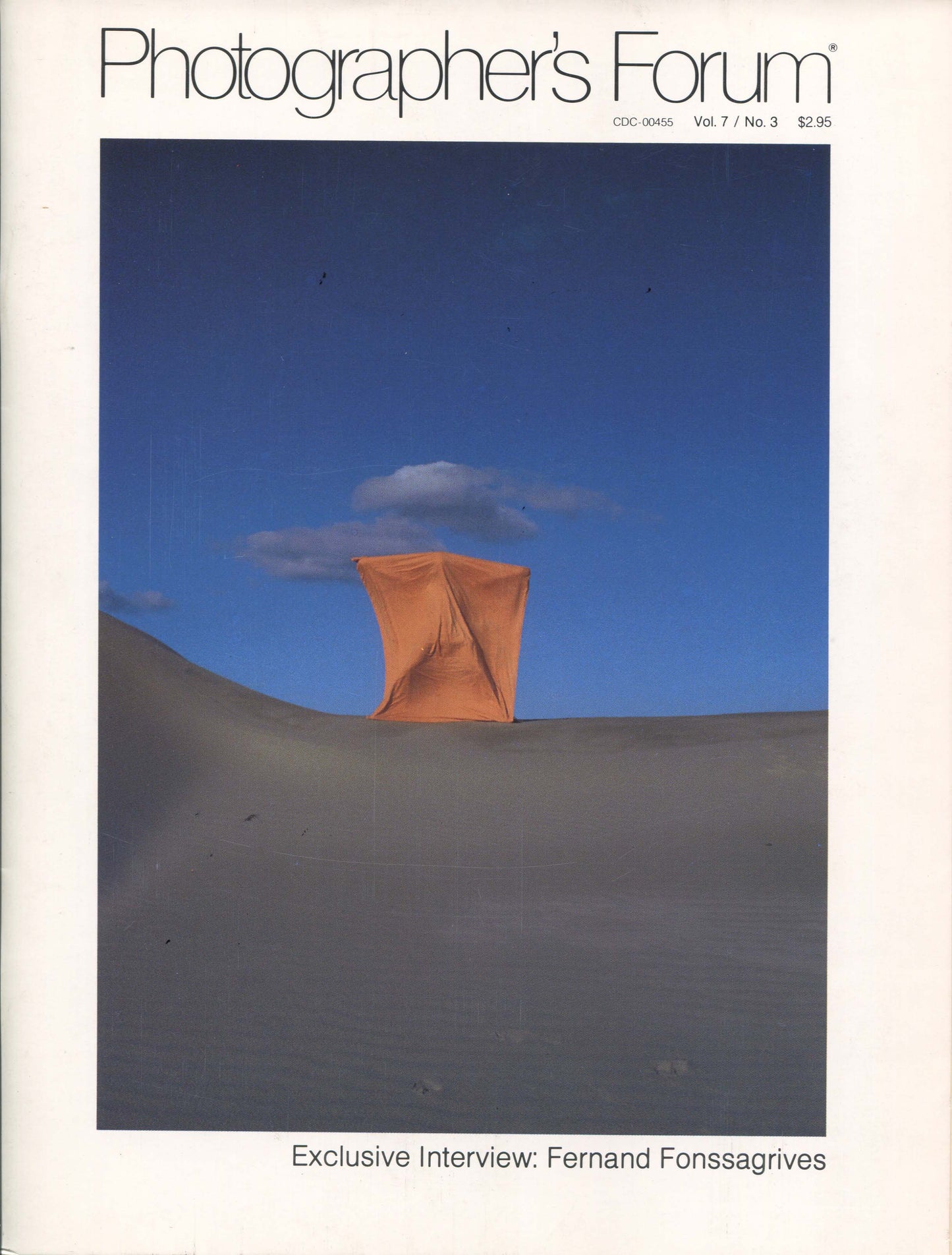
Fonssagrives, Fernand. Photographer’s Forum. Vol. 7/No. 3. May 1985.
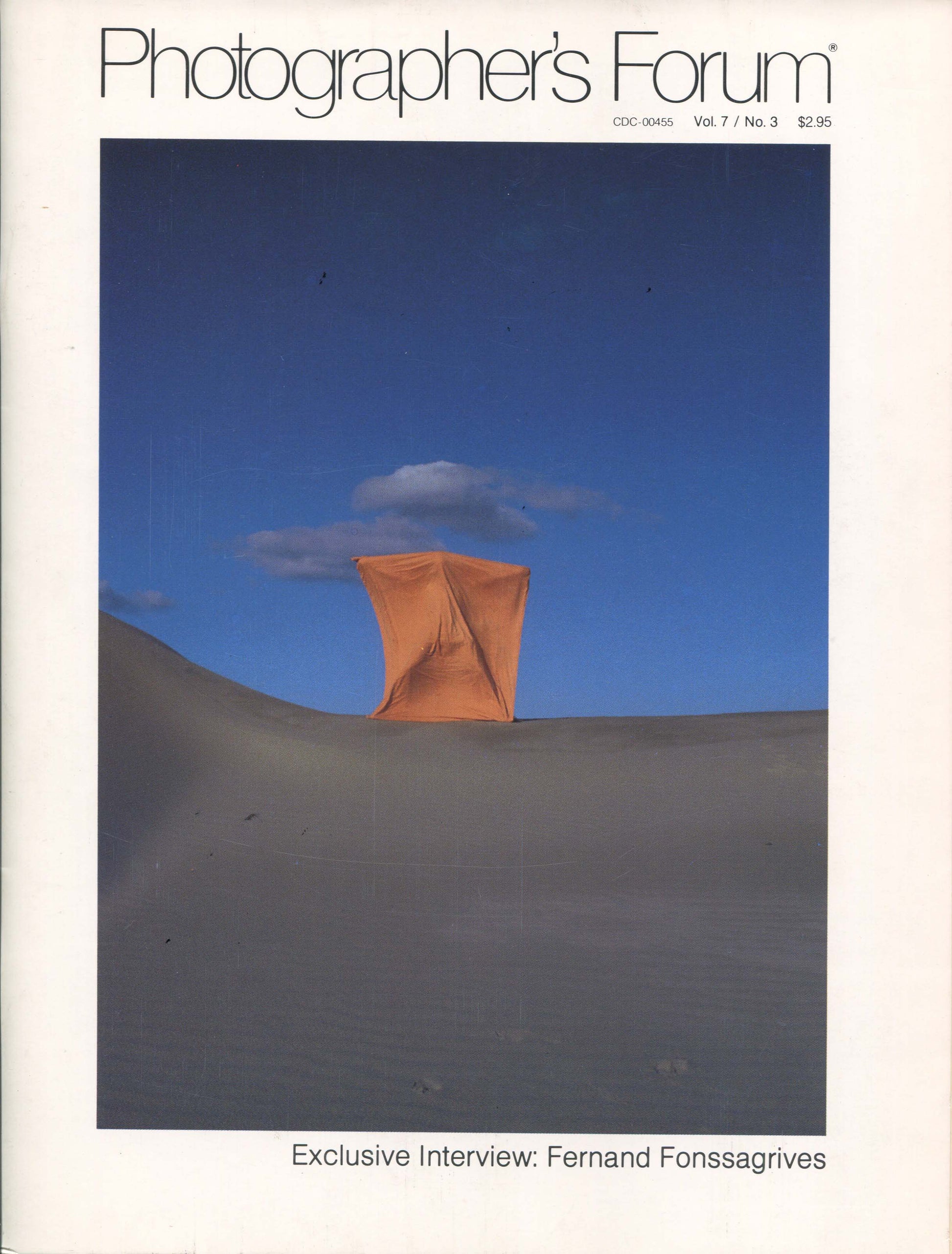
Fonssagrives, Fernand. Photographer’s Forum. Vol. 7/No. 3. May 1985.
受取状況を読み込めませんでした
Edited and published by Glen R. Serbin. Includes Fernand Fonssagrives (interview by George Shaub of the dancer, photographer, and sculptor whose wife Lisa was a top fashion model; School Profile: Southeast Center for Photographic Studies; Studio Update at RIT (by George Shaub); 1985 Student Contest Winners; Profile: Jon Bruton by Al Gardner; book reviews, and other columns. Cover by Catherine J. Lorenz. 64 pages, fine. 10 3/4" x 8 1/4". Summary:
Photographer’s Forum, Vol. 7, No. 3 (May 1985) is a vibrant spring edition that highlights the intersection of classical aesthetics and modern photographic education. Featuring a cover by Catherine J. Lorenz, the issue is anchored by an exploration of legacy and the evolving technical standards of the mid-1980s.
Major Interview & Profiles
-
Fernand Fonssagrives (Interview by George Shaub): This centerpiece feature delves into the life of the multidisciplinary artist known for his "beauty-in-motion" philosophy. Fonssagrives discusses his transitions between being a dancer, sculptor, and photographer. He offers unique insights into his iconic fashion work and his creative partnership with his wife, Lisa Fonssagrives (the era’s preeminent supermodel), emphasizing the importance of form and light.
-
Jon Bruton (Profile by Al Gardner): A study of Bruton’s work, examining his specific visual style and his approach to professional assignments. The profile highlights the blend of technical precision and artistic intuition required to succeed in the 1980s commercial market.
Educational & Technical Features
-
School Profile – Southeast Center for Photographic Studies: Based in Daytona Beach, Florida, this profile examines the center's reputation for practical, professional-grade training. It details how the school balanced vocational skills with creative development during a period of high growth for the Florida arts scene.
-
Studio Update at RIT (by George Shaub): Shaub provides an "insider" report on the state-of-the-art facilities at the Rochester Institute of Technology. The piece focuses on the latest advancements in studio lighting and large-format equipment, reflecting RIT’s status as the technical vanguard of photographic education.
Contest & Community
-
1985 Student Contest Winners: A significant portion of the issue is dedicated to showcasing the winners of the magazine’s annual student competition. These images serve as a barometer for the themes and techniques trending among the next generation of photographers, often featuring bold experiments in color and composition.
-
Book Reviews & Columns: The issue includes critical reviews of new spring releases and regular columns that address the economic and ethical questions facing photographers in the mid-80s.
Significance
This issue is particularly valued for the Fernand Fonssagrives interview, which captures a link to the "Golden Age" of fashion photography. By pairing this historical perspective with the RIT Studio Update, Vol. 7, No. 3 provides a comprehensive look at how the elegance of the past was being integrated into the high-tech studio environments of the 1980s.
Fernand Fonssagrives (1910–2003) was a French photographer and former professional dancer renowned for his lyrical, sculptural approach to fashion photography and the female form, pioneering what he coined "beauty photography." Born in Paris to an artistic family, Fonssagrives originally trained as a dancer before a severe diving accident curtailed his performing career; while recovering, his first wife—the iconic Swedish fashion model Lisa Fonssagrives (later Lisa Fonssagrives-Penn)—gifted him a Rolleiflex camera, redirecting his creative focus toward photography. Moving to New York in the late 1930s, Fonssagrives achieved swift commercial and editorial success, contributing regularly to major fashion periodicals including Vogue, Harper's Bazaar, Town & Country, and Life. Drawing directly on his deep understanding of dance, movement, and physical anatomy, he developed a signature style characterized by sunlight dappling across bare skin, dramatic graphic shadows, and organic outdoor silhouettes that contrasted sharply with the static, indoor studio conventions of mid-century fashion imagery. Following his divorce from Lisa and a gradual departure from high-fashion assignments in the 1950s, Fonssagrives relocated to Little Rock, Arkansas, where he spent his later decades creating intimate bronze sculptures and abstract photographic studies, leaving behind an influential body of work that celebrated fluid elegance, light, and natural human geometry.