Gary Saretzky Photo Books
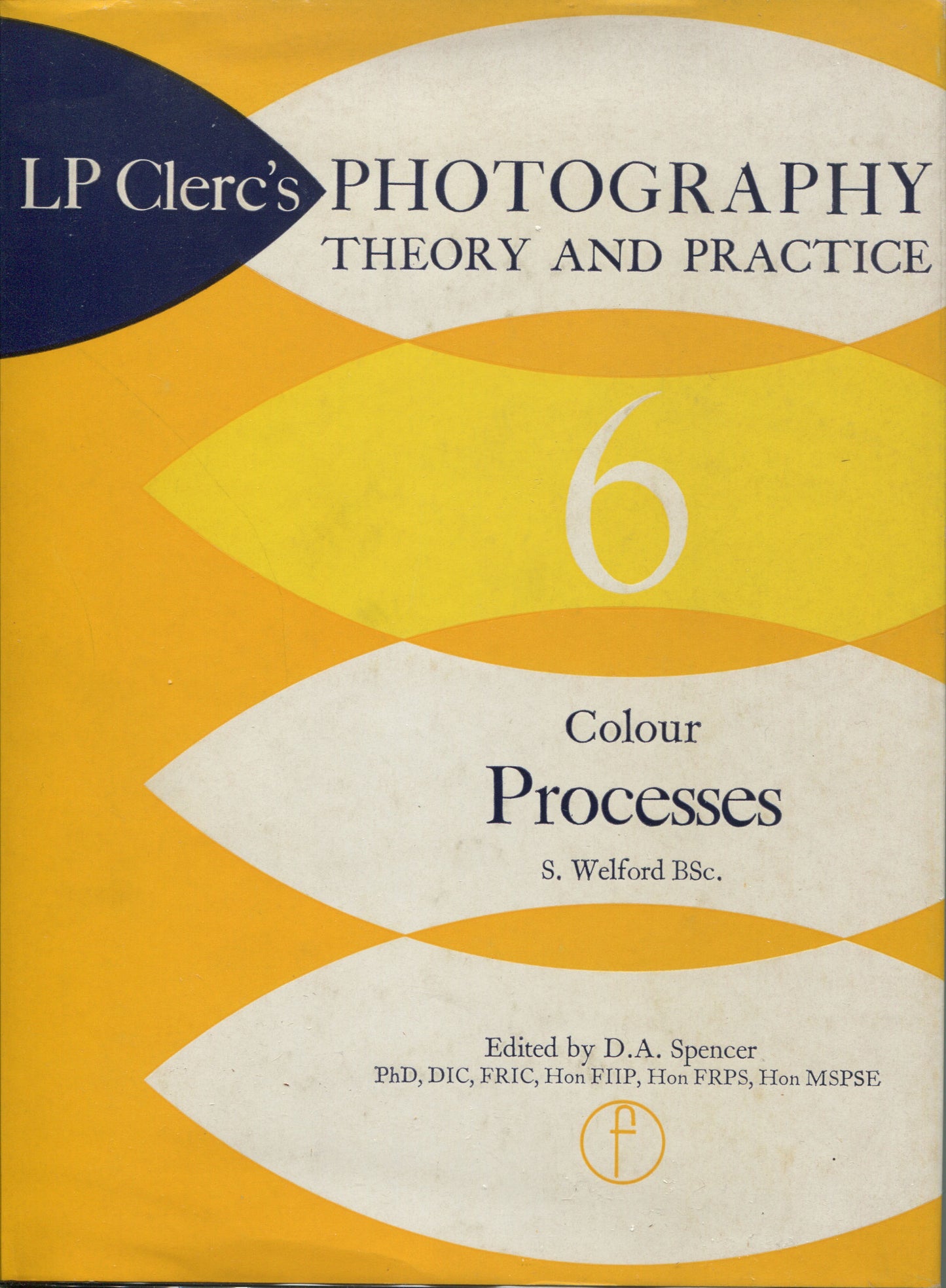
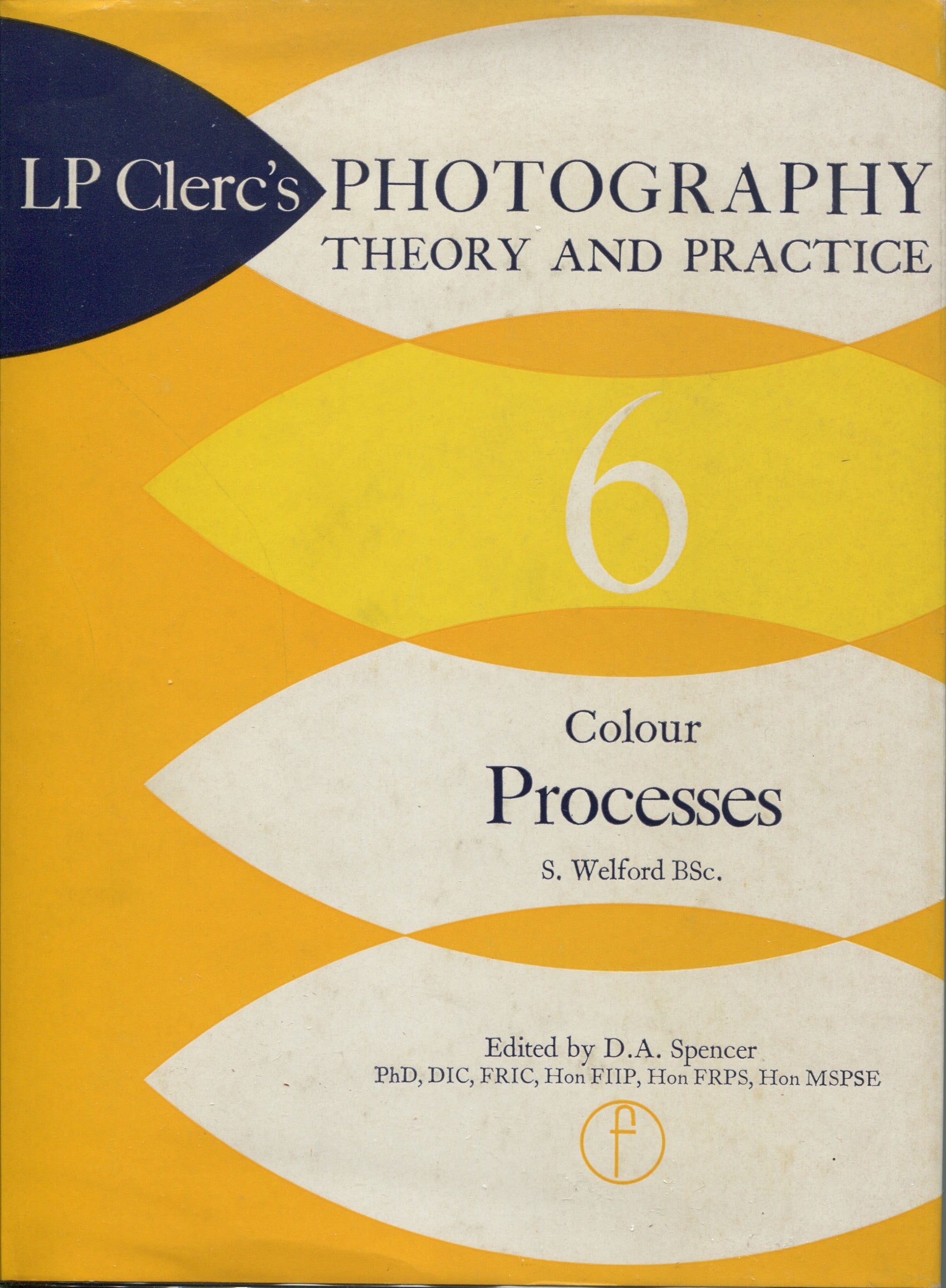
Color. L.P. Clerc's Photography, Theory and Practice: Colour Processes.
Color. L.P. Clerc's Photography, Theory and Practice: Colour Processes.
受取状況を読み込めませんでした
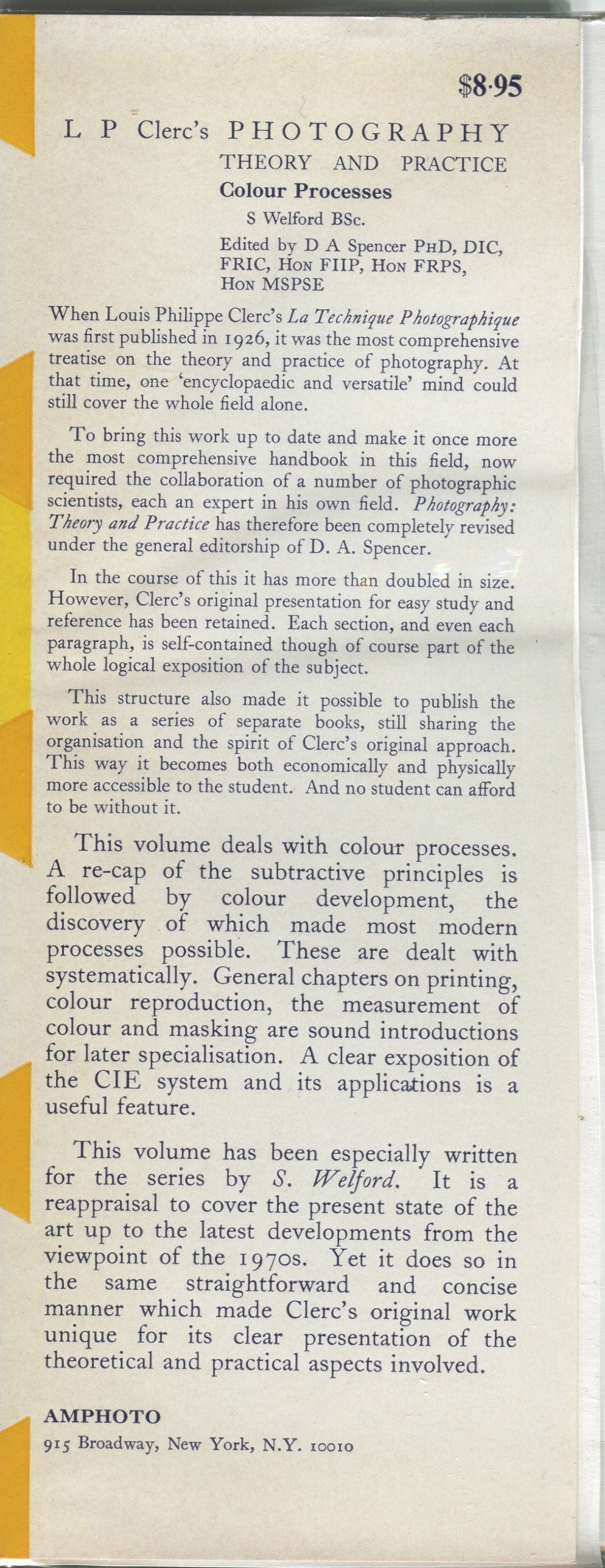
Volume 6 in the series. This volume by S. Welford. AMPHOTO, 1971. The U.S. edition prepared by Focal Press in the UK. Hardcover in gray cloth, like new with near fine protected dust jacket that is age-toned on the inside. Originally published in one volume in 1926 by Louis Philippe Clerc as La Technique Photographique, it was first issued in an English edition in 1930 and reprinted several times. This thorough update and complete revision of his seminal work on photochemistry and related topics required multiple authors and volumes, of which this is the one on color photography, expanding on the basic principles provided in Volume 1, Fundamentals. Here Welford provides details in chapters on chromogenic development, dye transfer processes, sensitometry, reversal transparencies with incorporated color couplers, color negative processes, color papers, printing color negatives, processing (including equipment), prints from transparencies, silver dye-bleach processes (like Cibachrome), Polacolor, image properties, perception and the reproduction of color, measurement of color, masking to improve the quality of reproduction, et al. Illustrated with numerous diagrams, charts, etc. This book is quite uncommon in hardcover with dust jacket except for ex-library copies lacking the dust jacket. Summary:
L.P. Clerc’s Photography, Theory and Practice: Colour Processes (specifically the 1971 revised edition of Book 6) is a technical manual that serves as a definitive historical and scientific record of color photography during the mid-20th century.
Originally authored by the French scientist Louis Philippe Clerc and later revised by modern experts, the book focuses on the transition of color photography from experimental chemistry to a standardized industrial process.
Key Themes and Content
1. The Physics and Chemistry of Color The book begins with the fundamental theory of color reproduction, explaining the Young-Helmholtz theory of trichromatic vision. It details how white light is decomposed and how additive and subtractive color synthesis form the basis of all photographic imaging.
2. Additive vs. Subtractive Processes Clerc provides an exhaustive technical breakdown of the two primary methods of creating color:
-
Additive: Using red, green, and blue light (e.g., historical screen plates like Autochrome).
-
Subtractive: Using cyan, magenta, and yellow dyes, which became the industry standard for film and prints.
3. Negative-Positive and Reversal Systems A significant portion of the text is dedicated to the chemistry of modern (for 1971) color materials. This includes:
-
Color Negative Film: The structure of multi-layered emulsions and the function of integral color masks (the orange tint) to improve color accuracy.
-
Reversal (Slide) Film: The processing steps required to produce a direct positive image.
-
Chromogenic Development: The chemical reaction between oxidized developers and color couplers to form dyes.
4. Color Printing and Manipulation The manual covers the practicalities of the darkroom, including color densitometry, the use of CC (color compensating) filters, and the complexities of "filtering" a print to achieve neutral balance. It also explores specialized processes like dye transfer and silver dye-bleach (Cibachrome).
5. Accuracy and Sensitometry True to Clerc’s scientific background, the book emphasizes precision. It discusses the limitations of photographic dyes, the "errors" inherent in chemical reproduction, and the mathematical methods used to measure color sensitivity and contrast (gamma) in different emulsion layers.
Significance
The 1971 edition acts as a bridge between the classic era of complex laboratory chemistry and the peak of the analog film industry. It is highly regarded for its "no-nonsense" academic tone, providing professional photographers and technicians with the exact chemical formulas and optical principles necessary to master color reproduction.