Gary Saretzky Photo Books
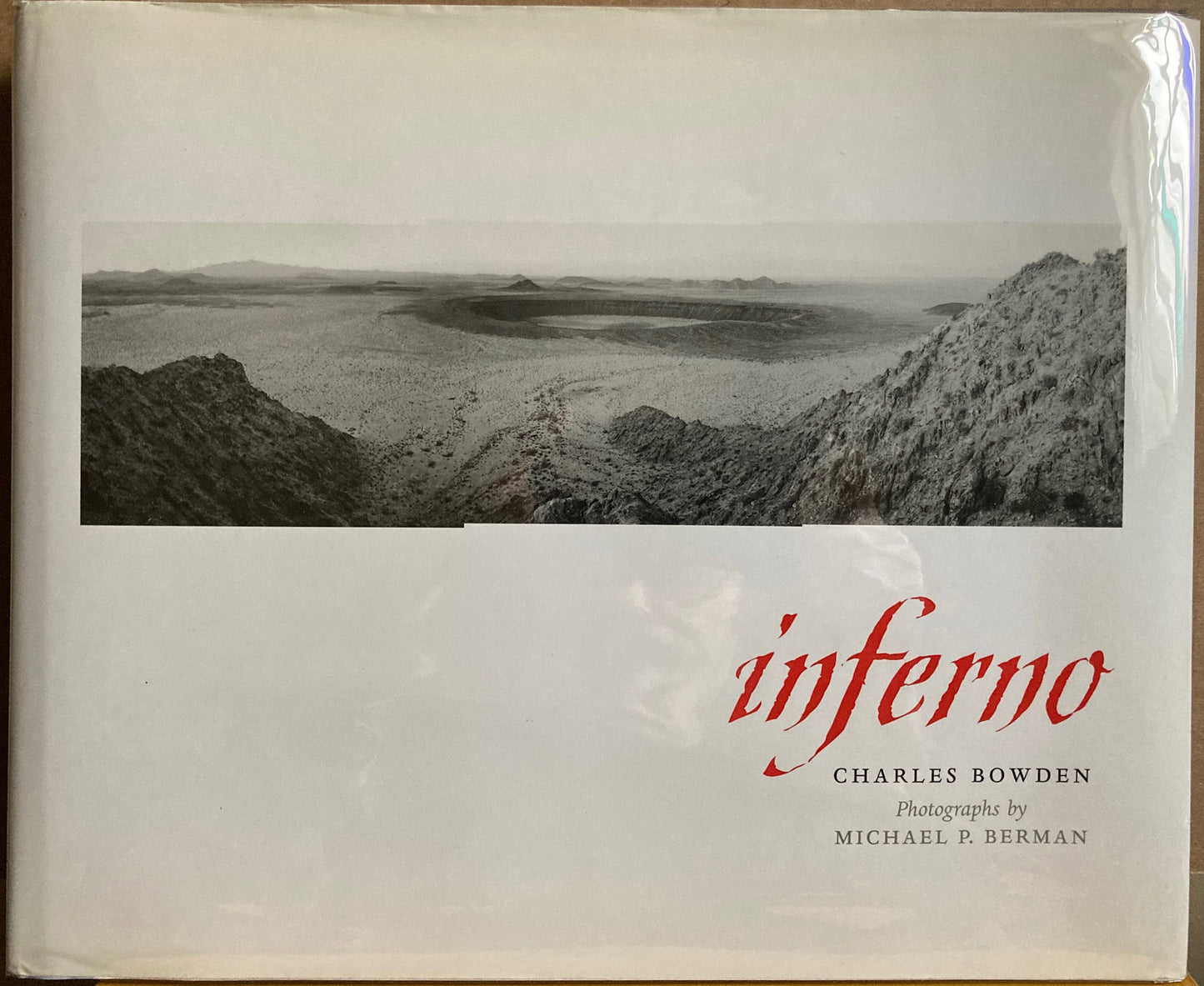
Berman, Michael P. Inferno by Charles Bowden. Photographs by Michael P. Berman.
Berman, Michael P. Inferno by Charles Bowden. Photographs by Michael P. Berman.
受取状況を読み込めませんでした
University of Texas Press, 2006. First edition, hardcover in gray cloth, very good with light corner bumps and slight shelf wear on protected dust jacket. An attractive copy, better than usually found. Issued at $45. Author Charles Bowden is an impassioned advocate for the Sonoran Desert and helped persuade the U.S. government to create the Sonoran National Monument in southern Arizona. His text is accompanied by numerous full page black and white photographs by Michael P. Berman, the photographer and artist of San Lorenzo, New Mexico. According to his website, Berman "was awarded a Guggenheim Fellowship in 2008 to photograph the remnant grasslands of the Chihuahuan Desert. His photographs are included in the collections of the Metropolitan Museum of Art, the Amon Carter Museum and the Museum of New Mexico. In 2013, he received the Governor’s Award for Excellence in the Arts in New Mexico and has also been a recipient of Painting Fellowships from the Arizona Commission on the Arts and the Wurlitzer Foundation; his installations, photographs, and paintings have been reviewed in Art in America, and exhibited throughout the country." Summary:
Inferno (2002) is a searing, visceral collaboration between the late writer Charles Bowden and photographer Michael P. Berman. It is not a traditional nature book; instead, it is a "brutal meditation" on the Sonoran Desert, specifically the "Lower Colorado River Valley"—a place Bowden describes as the most punished and lethal landscape in North America.
Core Themes and Narrative
-
The Desert as Purgatory: Bowden’s prose rejects the "scenic" beauty of the Southwest. He writes about the desert as a place of heat, death, and "bone-deep" reality, where the sun is an enemy and the landscape is a mirror for human desperation and endurance.
-
The Borders of Humanity: The book explores the literal and metaphorical borders of the region—the paths of migrants, the ghosts of explorers, and the "Inferno" of physical thirst. It documents a landscape that is simultaneously a "wasteland" and a "sacred space" of absolute truth.
-
Ecological Reckoning: Bowden and Berman confront the scars left by human intervention—military bombing ranges, irrigation failures, and the debris of civilization—treating the desert as a "Laboratory of Entropy."
Visual and Technical "Finish"
-
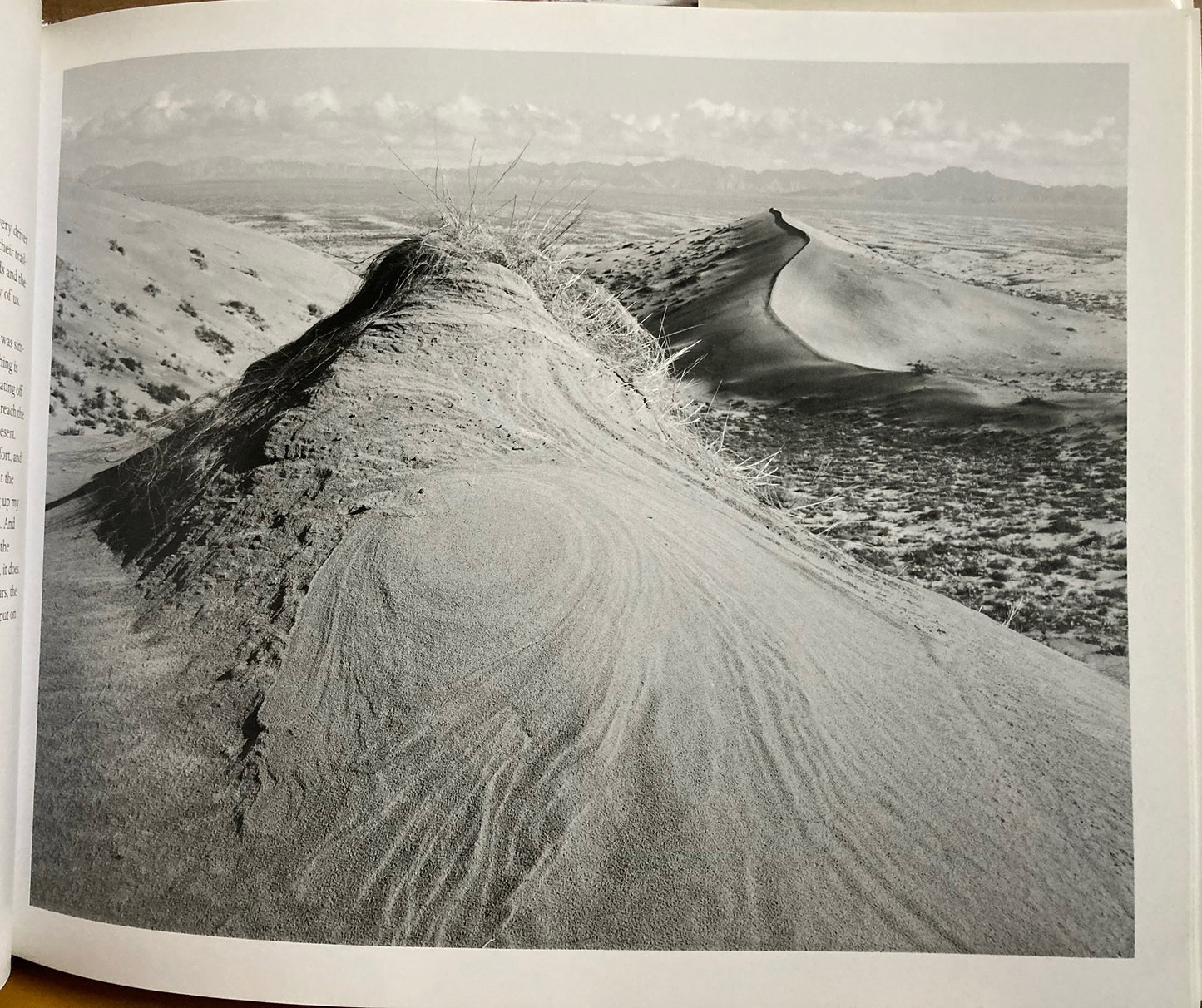
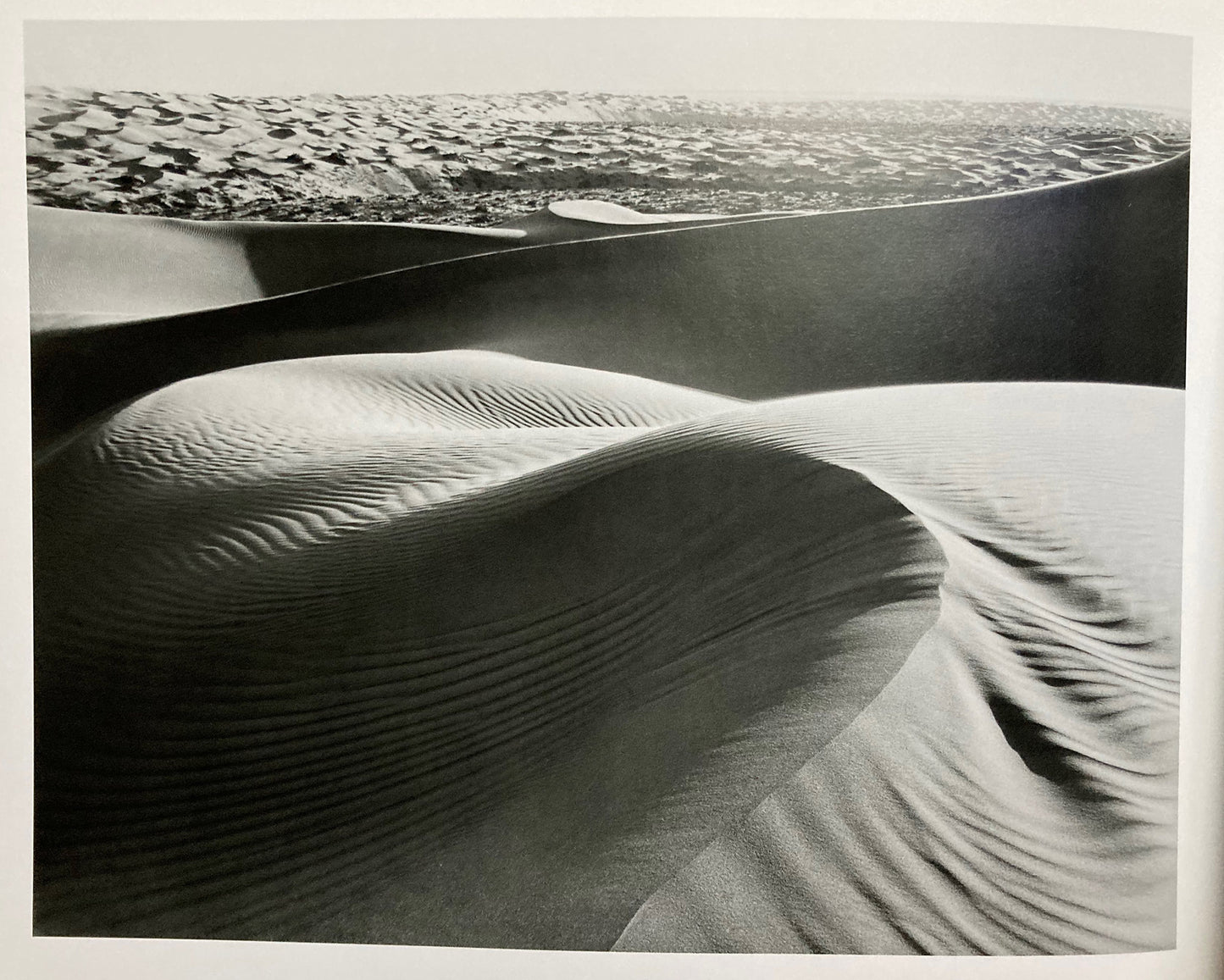
Berman’s Large-Format Desolation: Michael P. Berman utilizes a large-format view camera to produce black-and-white images that are breathtakingly sharp and relentlessly "hard." There are no soft sunsets here; the "finish" is metallic, gritty, and high-contrast.
-
The "Anti-Pictorial" Eye: Berman avoids the heroic compositions of Ansel Adams. Instead, he focuses on the "tangled and the torn"—shattered rocks, twisted creosote, and the shimmering heat waves. His lens treats the desert floor with the forensic detail of a crime scene.
- Michael P. Berman (born 1956) is an acclaimed American landscape photographer, artist, and Guggenheim Fellow based in San Lorenzo, New Mexico, known for his austere, large-format black-and-white studies of the arid American West and borderlands. Born in New York, Berman earned a BA in biology from Colorado College before receiving an MFA in photography from Arizona State University, a dual background in ecology and fine art that deeply informs his immersive, wilderness-driven approach. Working primarily with large-format view cameras and carbon-pigment or silver-gelatin printing processes, he travels extensively on foot, spending weeks carrying equipment through remote, unprotected desert landscapes, including the Chihuahuan Desert, the US–Mexico border region, and the Greater Gila ecosystem. His photographs reject romanticized, grand wilderness tropes in favor of quiet, complex, and subtle topographies that emphasize environmental fragility, land-use ethics, and historical layers. Awarded a John Simon Guggenheim Fellowship in 2008 for his extensive photographic documentation of the US–Mexico borderlands, Berman has authored and collaborated on several celebrated books—including Sunshot: Wild Times in the Chihuahuan Desert and Inferno (both with Charles Bowden), Trinity, and Gila: Radical Wilderness—and his work is held in major permanent collections, including the Metropolitan Museum of Art, the Amon Carter Museum, and the New Mexico Museum of Art.