Gary Saretzky Photo Books
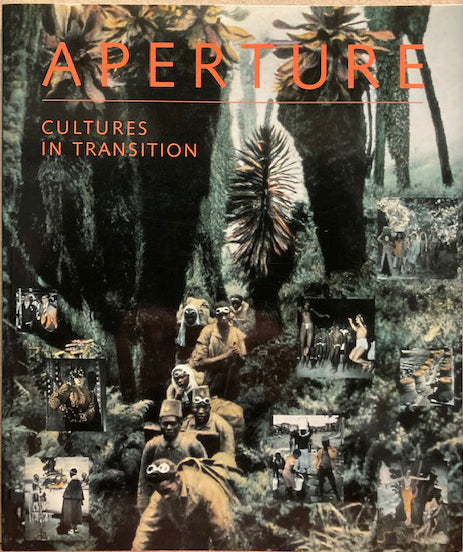
Aperture No. 119. Early Summer 1990. Cultures in Transition.
Aperture No. 119. Early Summer 1990. Cultures in Transition.
受取状況を読み込めませんでした
Includes "The Unveiled: Algerian Women, 1960" photos by Marc Garanger; "A House Divided: South Africa's Hostels," photos by Roger Meintjies; "Retrato de un Pueblo" text by Wendy Ewald with several photographers; "Other Viewpoints, Other Dimensions" photocollages by Elaine Reichek; "Sobriety and Variation: Notes on Brazilian/Yoruba Sacred Altars," photos by Phyllis Galembo; "the Past Becoming Future: Who Lives an Image, for Whom an Image Lives," by Nan Richardson with various photographers; "Reclaiming a Cultural Legacy: the Ju/'Hoansi of Namibia, photos by John Marshal and Paul Weinberg; "Native Visions: The Growth of Indigenous Media by Elizabeth Weatherford; "Making a New Culture: An Interview with Omar Badsha by Charles Hagen with photos by Badsha; "Of Wood and Stone" by Karoline Postal-Vinay with video stills from Edin Velez's Meaning of the Interval"; "The Psychoids of Oppression and a Faith in Healing: The Life and Work of W. Eugene Smith by A.D. Coleman, and more. Fine. Summary:
Aperture No. 119 (1990): Cultures in Transition
This issue serves as a critical examination of how photography can both oppress and liberate marginalized cultures. Rather than traditional Western travelogues, this volume highlights indigenous media, the politics of the "outsider" lens, and the spiritual resilience of transitioning societies.
1. The Politics of the Gaze and Oppression
Several features look at how photography has been used as a tool of state control and how artists are subverting that history:
-
Marc Garanger ("The Unveiled: Algerian Women, 1960"): Presents haunting portraits of Algerian women forced to unveil for French military identity cards—a stark study of photography as an act of colonial violence.
-
Roger Meintjies ("A House Divided"): Documents the grim reality of South Africa’s migrant labor hostels, capturing the architectural and human toll of Apartheid.
-
A.D. Coleman on W. Eugene Smith: A psychological deep-dive into Smith’s "faith in healing," analyzing how his obsessive documentary style sought to expose and mend the "psychoids of oppression."
2. Reclamation and Indigenous Visions
The issue places heavy emphasis on self-representation and the "insider" perspective:
-
Wendy Ewald ("Retrato de un Pueblo"): Continues her groundbreaking work in collaborative photography, allowing village residents to document their own lives and narratives.
-
The Ju/’Hoansi of Namibia: Photos by John Marshall and Paul Weinberg document the struggle of the Ju/’Hoansi people to reclaim their cultural legacy and land rights.
-
Elizabeth Weatherford ("Native Visions"): An essential essay on the growth of indigenous media, exploring how native peoples are using film and photography to tell their own stories on their own terms.
3. Spiritual and Artistic Syncretism
The volume explores the visual language of faith and the blurring of artistic boundaries:
-
Phyllis Galembo ("Sobriety and Variation"): Stunning photographs of Brazilian and Yoruba sacred altars, documenting the vibrant, syncretic religious traditions that survived the African Diaspora.
-
Elaine Reichek ("Other Viewpoints"): Uses photocollage to challenge ethnographic stereotypes, deconstructing the way Westerners have "packaged" native cultures for consumption.
-
Edin Velez ("Meaning of the Interval"): Video stills from Velez’s work provide a rhythmic, meditative look at the intervals of Japanese life, bridging the gap between still photography and video art.
4. Global Dialogues
The issue concludes with vital conversations on the future of the medium, including Nan Richardson’s essay on the ownership of images and an interview with Omar Badsha, a key figure in the South African "Resistance Photography" movement, conducted by Charles Hagen.
Summary Takeaway
Aperture No. 119 is a manifesto for decolonizing the lens. By moving from "taking" pictures of others to "sharing" the medium with them, it documents a world where marginalized groups are no longer just subjects, but authors of their own visual history. It remains one of the most socially significant issues in the magazine's history.