Gary Saretzky Photo Books
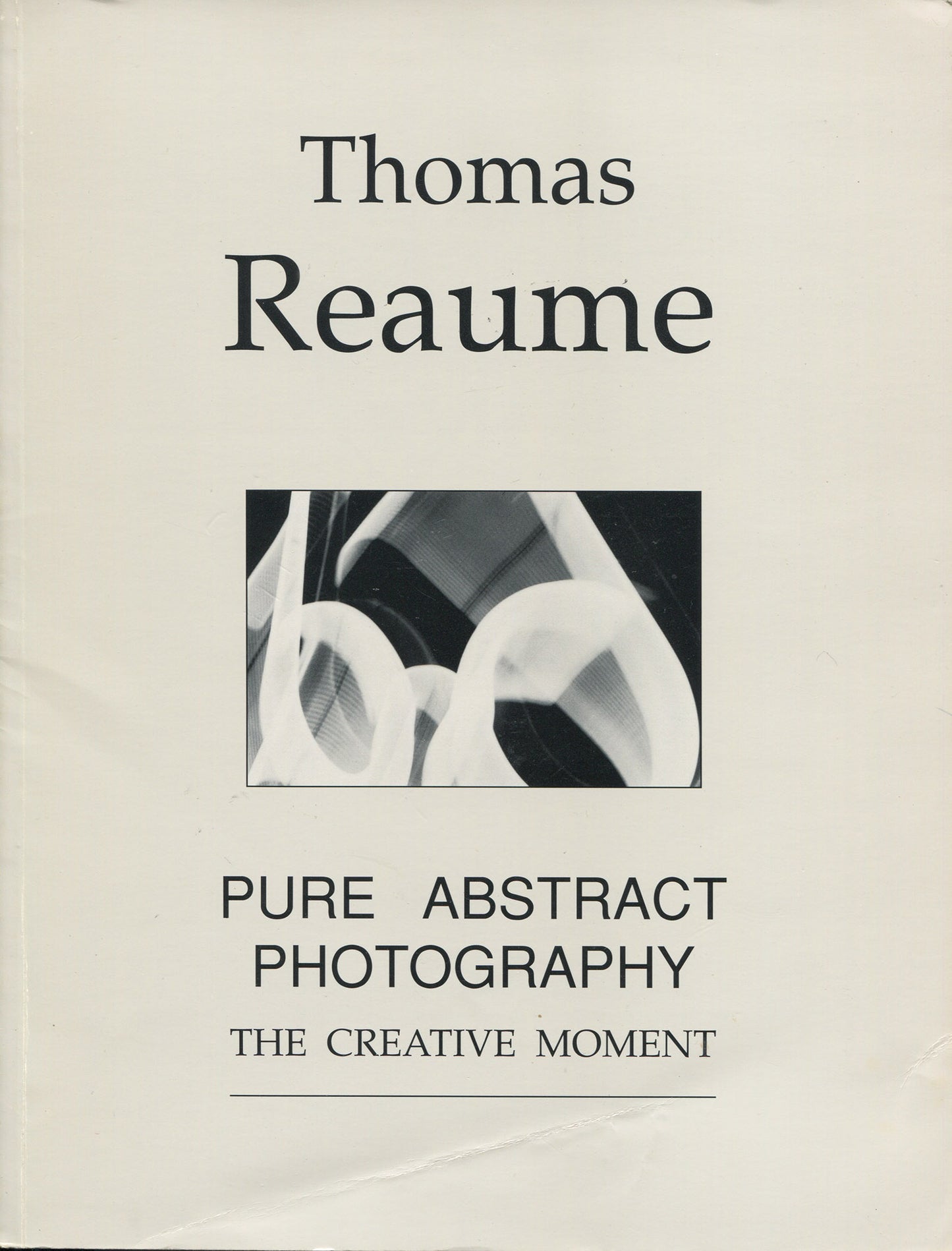
Abstraction. Pure Abstract Photography: The Creative Moment by Thomas Reaume. SIGNED.
Abstraction. Pure Abstract Photography: The Creative Moment by Thomas Reaume. SIGNED.
受取状況を読み込めませんでした
Kromar, 1995. Wraps, as issued, very good with crimps on cover, SIGNED inside cover at bottom center. 80 pages. Text and black-and-white pure abstract photographs by Reaume. Label on back of title page with Reaume’s contact information in Winnipeg, Manitoba, Canada. Back pages include list of Reaume's prior exhibitions. Reaume was the distributor for this copy. Summary:
Pure Abstract Photography: The Creative Moment (2021) by Thomas Reaume is both a philosophical manifesto and a technical guide for the "non-objective" photographer. Reaume argues for the total liberation of the photograph from the "burden of the subject," advocating for an approach where line, color, and texture are the sole protagonists of the image.
Core Themes and Narrative
-
The Rejection of the "What": Reaume posits that the question "What is it?" is the enemy of art. He encourages photographers to move past the identification of objects toward a "Pure Vision" where the viewer engages with the photograph as a physical and emotional surface rather than a window into a scene.
-
The Creative Moment: The "moment" in this book is not the "Decisive Moment" of Cartier-Bresson, but rather the internal spark where the photographer recognizes a formal arrangement of light and shadow that transcends its physical origin.
-
Aesthetics of the Mundane: Reaume focuses on the overlooked details of the industrial landscape—cracked paint, rusted metal, or the curve of a plastic pipe—and elevates them to the status of high art through radical framing.
Visual and Technical Notes
-
The "Flattened" Image: Reaume’s technique involves eliminating the sense of three-dimensional depth. By using specific focal lengths and angles, he makes the 3D world appear as a 2D canvas of shapes.
-
Micro-Texture: Because there is no central subject to look at, the eye is forced to wander, finding interest in the grain, the grit, and the tonal transitions.
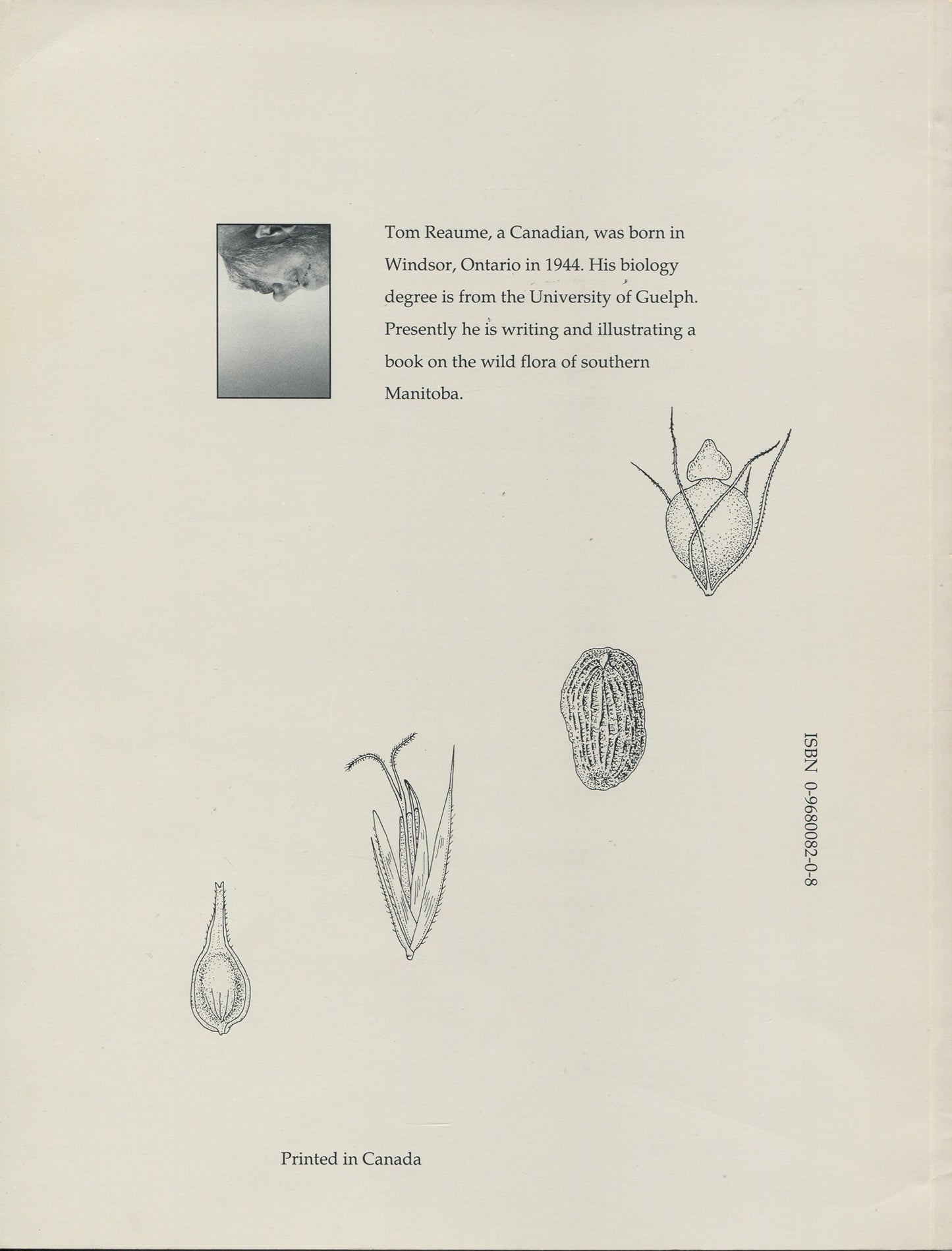
- Tom Reaume (born 1944) is a Canadian photographer, botanist, illustrator, and author recognized for his rigorous botanical documentation of North American flora as well as his inventive fine-art abstractions created through darkroom camera-less processes and light painting. Holding a master's degree in botany, Reaume spent decades conducting field research across Canada, publishing meticulously illustrated reference works such as 620 Wild Plants of North America(2009), for which he produced thousands of detailed pen-and-ink drawings and botanical photographs. Parallel to his scientific career, Reaume developed an expressive fine-art photographic practice that explores the fluid behavior of light, geometry, and motion. Utilizing custom-built light sources, fiber optics, and long exposures in total darkness, his abstract series transform kinetic gestures into luminous, ethereal calligraphic traces on film without digital manipulation. By bridging empirical scientific precision with experimental visual abstraction, Reaume has established a unique body of work that celebrates both the tangible structures of the natural world and the intangible poetry of pure light.