Gary Saretzky Photo Books
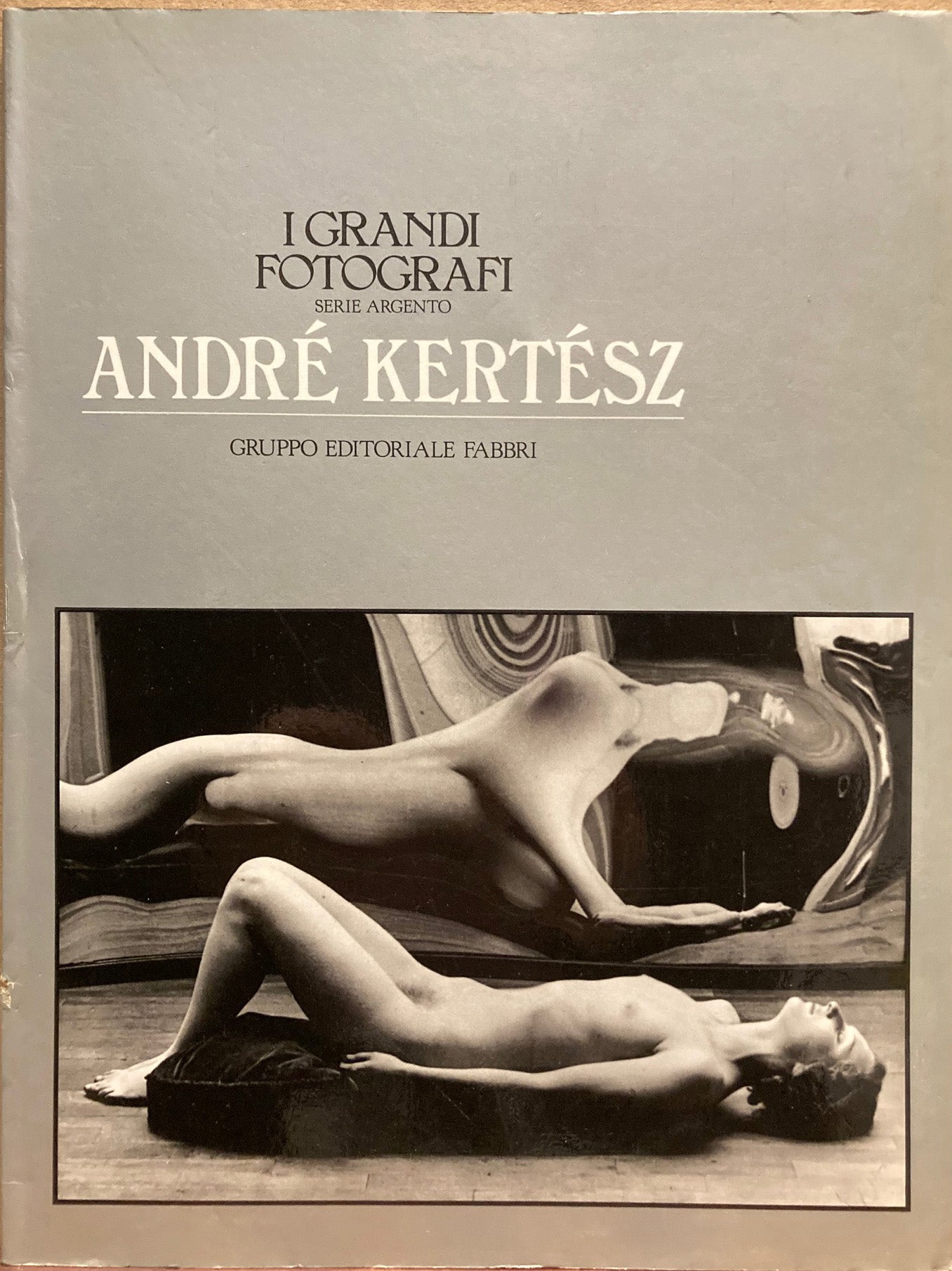
Kertesz, Andre. Andre Kertesz. I Grandi Fotografi.
Kertesz, Andre. Andre Kertesz. I Grandi Fotografi.
受取状況を読み込めませんでした
Serie Argento. Grulppo Editoriale Fabbri, 1983. Text in Italian by Attilio Colombo. Wraps, 64 pages, very good with minor shelf wear and small bump top edge of back cover. Not issued with ISBN number. Summary:
André Kertész: I Grandi Fotografi (published in 1983 by the Italian publishing house Gruppo Editoriale Fabbri as part of their acclaimed Serie Argento) is a 62-page retrospective monograph and critical study written in Italian. Serving as a volume within a landmark encyclopedic series dedicated to the world's master photographers, this book functions as a curated gateway into Kertész’s multi-decade career, providing European audiences with an accessible yet formally rigorous look at his pioneering role in shaping modern photojournalism and street photography.
Core Themes and Content
-
A Chronological Survey of a Nomadic Career: The monograph structures Kertész’s vast body of work into distinct historical and geographic epochs. It traces his trajectory from his raw, foundational years capturing everyday life and soldiers during World War I in Hungary, through his explosive avant-garde period in Paris during the 1920s and 1930s, to his later, more reflective and architectural observations in New York City.
-
The Fusion of Humanism and Geometric Form: A central thesis of the volume’s editorial text is Kertész's unique ability to marry emotional warmth with strict modernist composition. The curated selection of black-and-white plates showcases how he utilized high angles, radical shadows, and everyday street juxtapositions—such as a solitary figure framed by a massive urban grid—to transform candid moments into timeless, geometric fine art.
-
The Master of the Handheld Aesthetic: The book highlights Kertész's role as one of the very first adopters of the 35mm Leica camera in 1928. The essays analyze how this technological shift allowed him to break free from rigid studio setups, pioneering a spontaneous, kinetic style of visual reporting that directly influenced later masters like Henri Cartier-Bresson and Brassaï.
-
Realism Over Surrealism: While the book includes examples of his more experimental work—such as his famous Distortions series featuring nude forms warped by funhouse mirrors—the overarching curation emphasizes Kertész's self-proclaimed identity as an absolute realist. The book illustrates that for Kertész, the ordinary world, when observed with patience, yielded plenty of surrealism and poetry on its own without the need for darkroom manipulation.
By consolidating his most iconic plates alongside localized Italian critique, I Grandi Fotografi stands as an essential mid-81s cultural document that solidifies André Kertész's legacy not merely as a documentarian, but as the primary lyric poet of the photographic medium.
André Kertész (1894–1985) was a pioneering Hungarian-born American photographer celebrated for his lyrical, unmanipulated imagery and his groundbreaking contributions to photographic composition, street photography, and the photo essay. Born Andor Kertész in Budapest, he initially worked as a clerk at the local stock exchange while teaching himself photography, creating intimate depictions of daily life and moving portraits of soldiers while serving in the Austro-Hungarian army during World War I. Seeking greater artistic opportunities, Kertész moved to Paris in 1925, where he became a cornerstone of the interwar avant-garde scene, making portraits of icons like Piet Mondrian and Colette while serving as a lead photographer for the trailblazing illustrated magazine Vu. In 1928, he became one of the first major artists to adopt the handheld 35mm Leica camera, using its mobility to capture unexpected street juxtapositions, shadows, and reflections that proved photography could be considered a fine art. Fleeing the rise of Nazism, Kertész emigrated to New York City in 1936, where his poetic sensibility initially clashed with the commercial demands of American magazines, leading to a long, frustrating period shooting architecture for Condé Nast's House & Garden. His career was dramatically reawakened in 1964 with a major solo retrospective at the Museum of Modern Art (MoMA), cementing his legacy as a mentor to masters like Henri Cartier-Bresson and Brassaï, and securing his status as one of the most influential and poetic visual voices of the 20th century.
