Gary Saretzky Photo Books
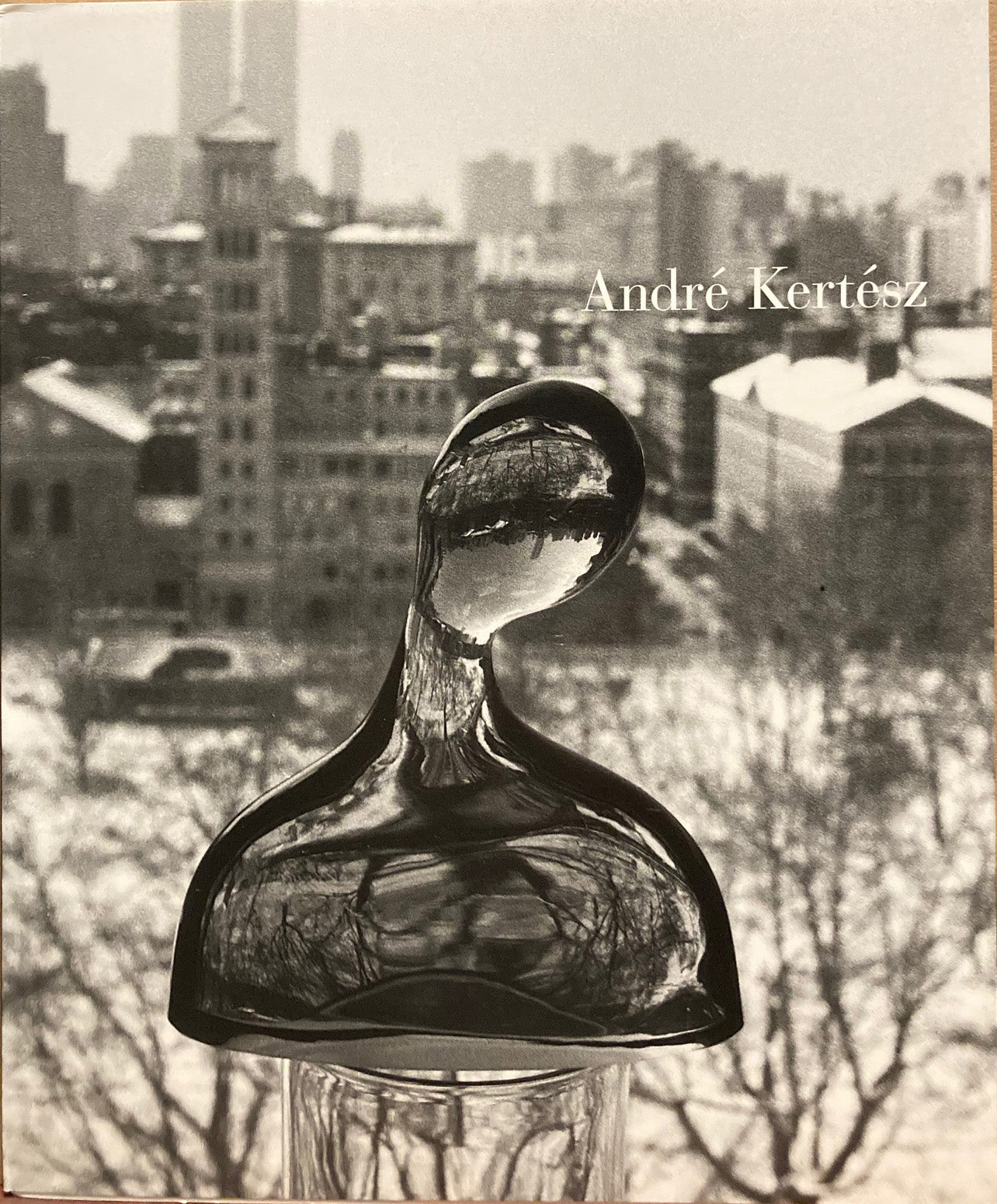
Kertesz, Andre. Andre Kertesz: New York State of Mind.
Kertesz, Andre. Andre Kertesz: New York State of Mind.
受取状況を読み込めませんでした
Essay by Robert Gurbo, stiff blank wraps with dust jacket. 38 pages. Stephen Daiter Gallery, 2001. As new, fine. Summary:
Andre Kertész: New York State of Mind (published in 2001 by the Stephen Daiter Gallery in Chicago) is an elegant, 36-to-38-page exhibition catalog produced in a small, limited print run. Featuring a curated selection of 26 duotone reproductions alongside biographical essays by Robert Gurbo and Paul Berlanga, this volume acts as a poignant critical survey of Kertész’s complicated relationship with New York City, contextualizing the iconic images he created during what he historically termed his "lost years."
Core Themes and Content
-
The Architecture of Isolation: The catalog focuses heavily on the decades Kertész spent in Manhattan after emigrating from Paris in 1936. Rather than capturing the bombastic, postcard-style grandeur of a booming metropolis, the curated images highlight Kertész’s internal feelings of exile and artistic obscurity in America, presenting subdued, melancholy compositions that transform New York into a stark stage of psychological isolation.
-
Whispers Among the Shouts: A primary thesis of the catalog's editorial text is Kertész's absolute refusal to adapt his style to the aggressive, fast-paced commercial demands of mid-century American photojournalism. The selection of plates demonstrates how he asked the city to "slow down and hear a whisper," capturing quiet moments like shadows lengthening across empty plazas, a single bird descending against a concrete wall, or a distant puddle reflection of the Empire State Building.
-
The Geometry of the Metropolis: Visually, the publication highlights Kertész’s masterful use of high-angle perspective and spatial framing, a vantage point heavily influenced by the views from his high-rise Greenwich Village apartment overlooking Washington Square Park. The catalog displays his signature ability to organize chaotic urban spaces into pristine geometric layouts, balancing human figures against massive architectural grids.
-
Autobiography as Art: The production design of the catalog reinforces the intimate nature of the exhibition. By reproducing Kertész's vintage prints complete with the authentic handwritten notes, cropping marks, and agency stamps exactly as they appeared on the backs of the physical photos, the book invites the viewer to treat the images not just as historical records of a city, but as a direct, unvarnished visual diary of the artist’s mind.
By re-examining his American archive with historical hindsight, New York State of Mind stands as a crucial testament to Kertész's artistic resilience, illustrating how a period of deep professional neglect resulted in some of the most enduring, poetic, and introspective landscape poetry in the history of street photography.
André Kertész (1894–1985) was a pioneering Hungarian-born American photographer celebrated for his lyrical, unmanipulated imagery and his groundbreaking contributions to photographic composition, street photography, and the photo essay. Born Andor Kertész in Budapest, he initially worked as a clerk at the local stock exchange while teaching himself photography, creating intimate depictions of daily life and moving portraits of soldiers while serving in the Austro-Hungarian army during World War I. Seeking greater artistic opportunities, Kertész moved to Paris in 1925, where he became a cornerstone of the interwar avant-garde scene, making portraits of icons like Piet Mondrian and Colette while serving as a lead photographer for the trailblazing illustrated magazine Vu. In 1928, he became one of the first major artists to adopt the handheld 35mm Leica camera, using its mobility to capture unexpected street juxtapositions, shadows, and reflections that proved photography could be considered a fine art. Fleeing the rise of Nazism, Kertész emigrated to New York City in 1936, where his poetic sensibility initially clashed with the commercial demands of American magazines, leading to a long, frustrating period shooting architecture for Condé Nast's House & Garden. His career was dramatically reawakened in 1964 with a major solo retrospective at the Museum of Modern Art (MoMA), cementing his legacy as a mentor to masters like Henri Cartier-Bresson and Brassaï, and securing his status as one of the most influential and poetic visual voices of the 20th century.
