Gary Saretzky Photo Books
Jackson, William Henry. Influence of the Photographs of William Henry Jackson upon the Passage of the Yellowstone Park Act.
Jackson, William Henry. Influence of the Photographs of William Henry Jackson upon the Passage of the Yellowstone Park Act.
受取状況を読み込めませんでした
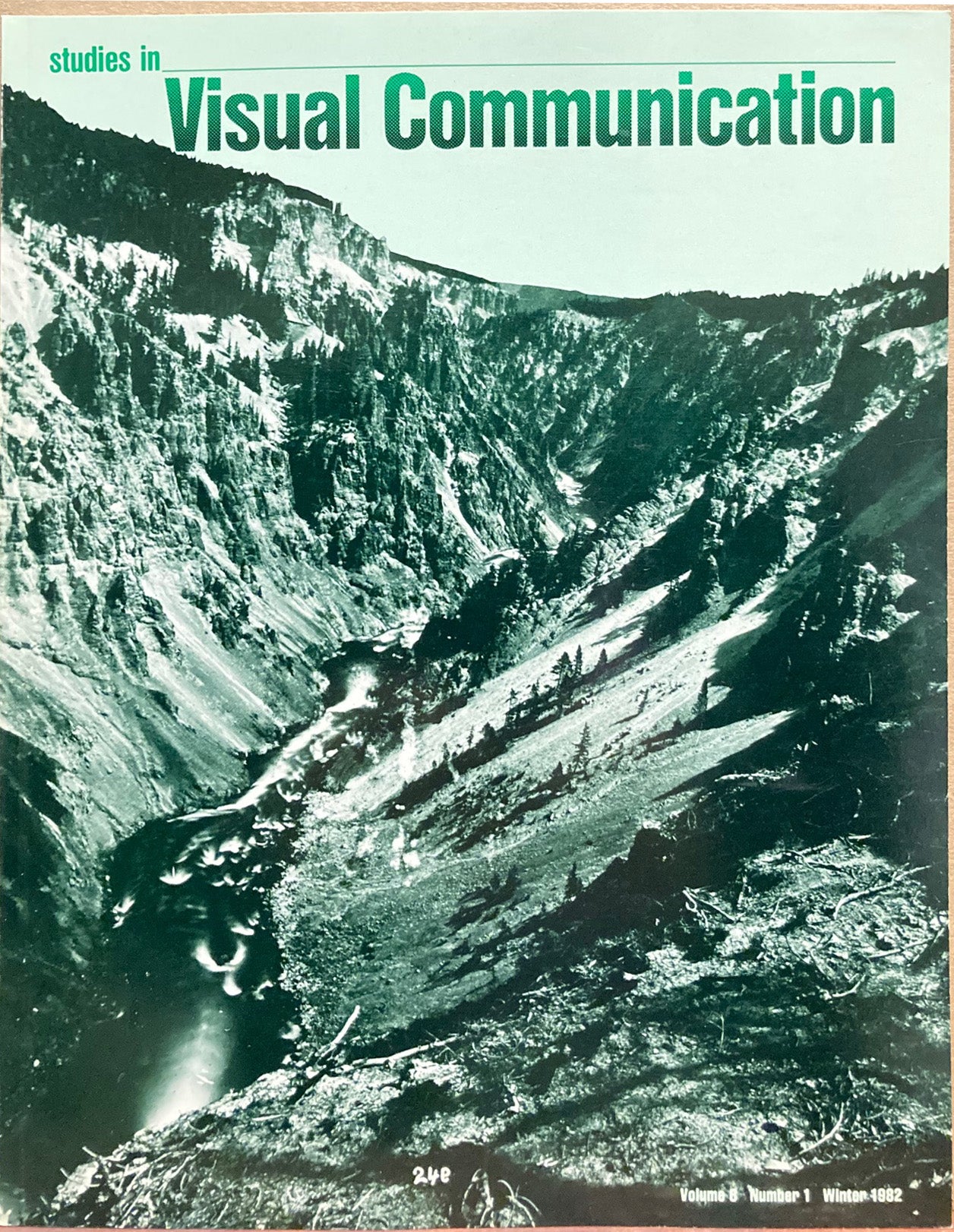
"A Tall Tale Retold: the Influence of the Photographs of William Henry Jackson upon the Passage of the Yellowstone Park Act of 1872." By Howard Bossen in Studies in Visual Communication, 8:1, Winter 1982, pages 98-109. Entire issue, 130 pages, like new. Other articles on documentary film on television; A-Bomb Footage; "An American Family"; Producing Documentaries for Network Television; Israel Television Documentary; Political Cartoons in 1980; reviews of Peter Galassi, Before Photography; Janet Malcolm, Diana and Nikon, and Gisele Freund, Photography and Society, et al. Summary:
The Winter 1982 issue of the scholarly journal Studies in Visual Communication features a compelling reassessment of early American frontier photography. Most notably, the issue contains a groundbreaking article by media historian Howard Bossen titled "A Tall Tale Retold: The Influence of the Photographs of William Henry Jackson on the Passage of the Yellowstone Park Act of 1872."
The issue examines how visual media interacts with historical narratives, tracking the following key themes:
-
Deconstructing the Photographic Myth: Bossen’s centerpiece article challenges the deeply entrenched historical belief that William Henry Jackson’s photographs were independently responsible for convincing Congress to establish Yellowstone as the world's first national park.
-
Analyzing Congressional Records: By evaluating the minutes of the Congressional vote and surrounding documentation, the text proves that the legislation was pushed through by complex political and economic interests—such as the Northern Pacific Railroad—rather than purely emotional reactions to Jackson's visuals.
-
The Construction of Environmental History: The journal explores how Jackson’s autobiography, Time Exposure, along with early historians, actively magnified the role of these photographs. This created an enduring, romanticized myth about the solo political power of environmental photography.
-
Broader Media Context: True to the journal's focus on anthropology and the sociology of visual expression, the rest of the issue contextualizes how iconic imagery shapes national identity, public memory, and our collective understanding of the natural wilderness.
