Gary Saretzky Photo Books
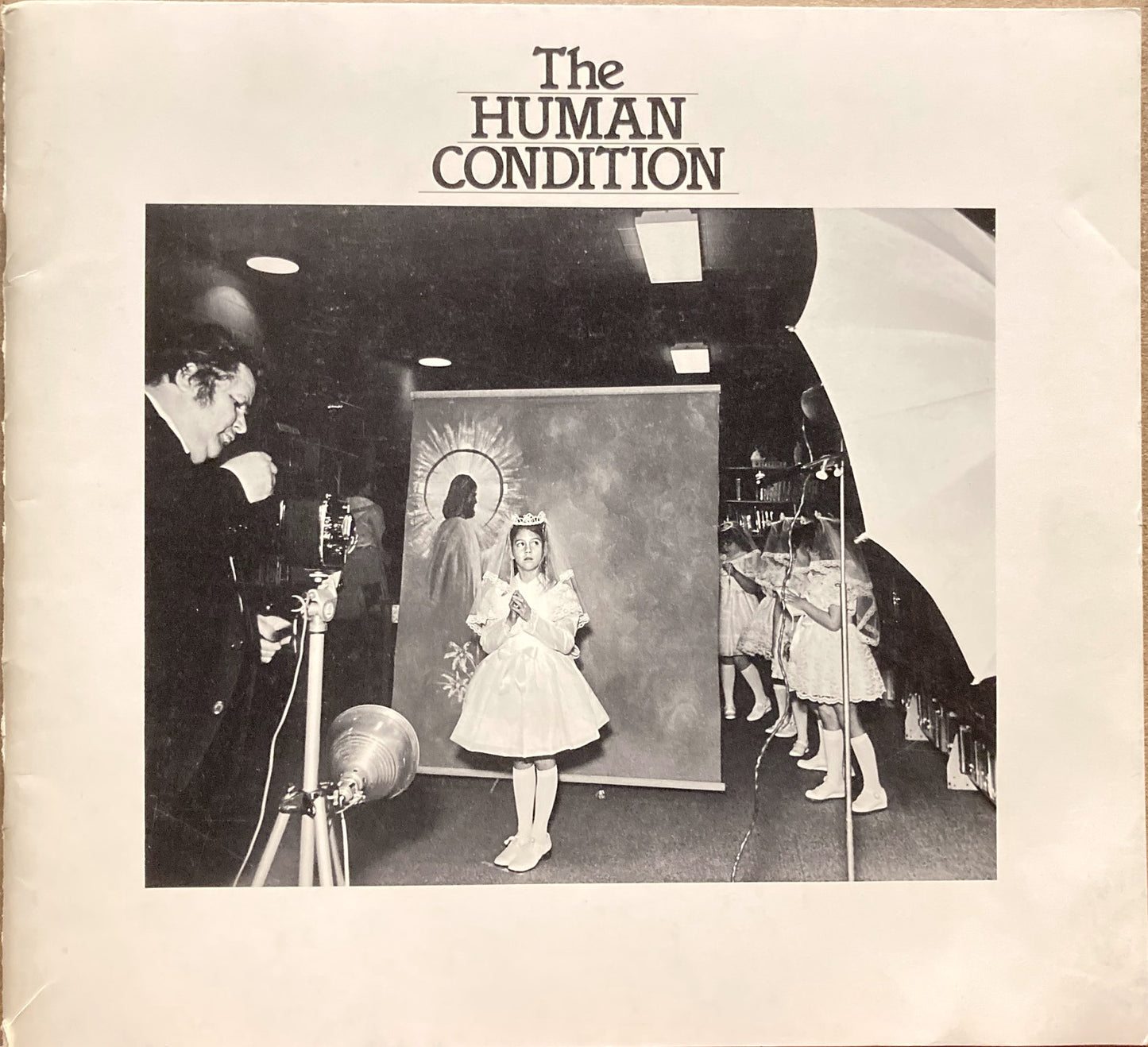
Human Condition. The Human Condition: A Photographic Exhibition of the 1980 Conference on Visual Anthropology, edited by Jay Ruby.
Human Condition. The Human Condition: A Photographic Exhibition of the 1980 Conference on Visual Anthropology, edited by Jay Ruby.
受取状況を読み込めませんでした
Exhibited at Philadelphia Art Alliance, March 3-10; Conference on Visual Anthropology, Temple University, March 12-15; and Los Angeles County Museum of Natural History, April 1-June 1, 1980. Includes: Stephen Williams, "The Eskimo Today"; Jane Bertholf, "The Troc: That Was Burlesque?"; Linda G. Rich, et al., "East Baltimore: Tradition and Transition; Guenther Cartwright, "Night Wind," about independent truck drivers; Bill Aron, "Religion in Cuba (1979): The Case of the Jews"; Walter Holt, "County Nurse"; Douglas Harper, "Adaptation and Interaction: The Cultural Definitions of Space" (a field study of American male migrants); Richard Tichich, "Los Presidentes Municipales (portraits of Mexican political leaders); Mary Koga, "Hutterites, 1972-1979"; and an Afterword by Howard Becker. Wraps, 41 pages, very good with a bit of waviness to bottom right corner of first few pages and crimp on back cover near spine. Summary:
The Human Condition: A Photographic Exhibition of the 1980 Conference on Visual Anthropology, edited by Jay Ruby, is the official exhibition catalog published in tandem with the landmark conference held at Temple University in Philadelphia.
The publication serves as an academic and artistic examination of how photography can be utilized as an objective research tool and a medium for cultural expression. Edited by Ruby, a foundational figure in the field of visual anthropology, the volume documents a curated exhibition designed to challenge traditional ethnographic perspectives and explore human behavior, social structures, and cross-cultural diversity through the camera lens. Rather than treating photographs as mere illustrations, the catalog frames them as primary data and complex symbolic systems, emphasizing the ethical obligations of the researcher and the importance of critical self-awareness when visually documenting diverse human societies.