Gary Saretzky Photo Books
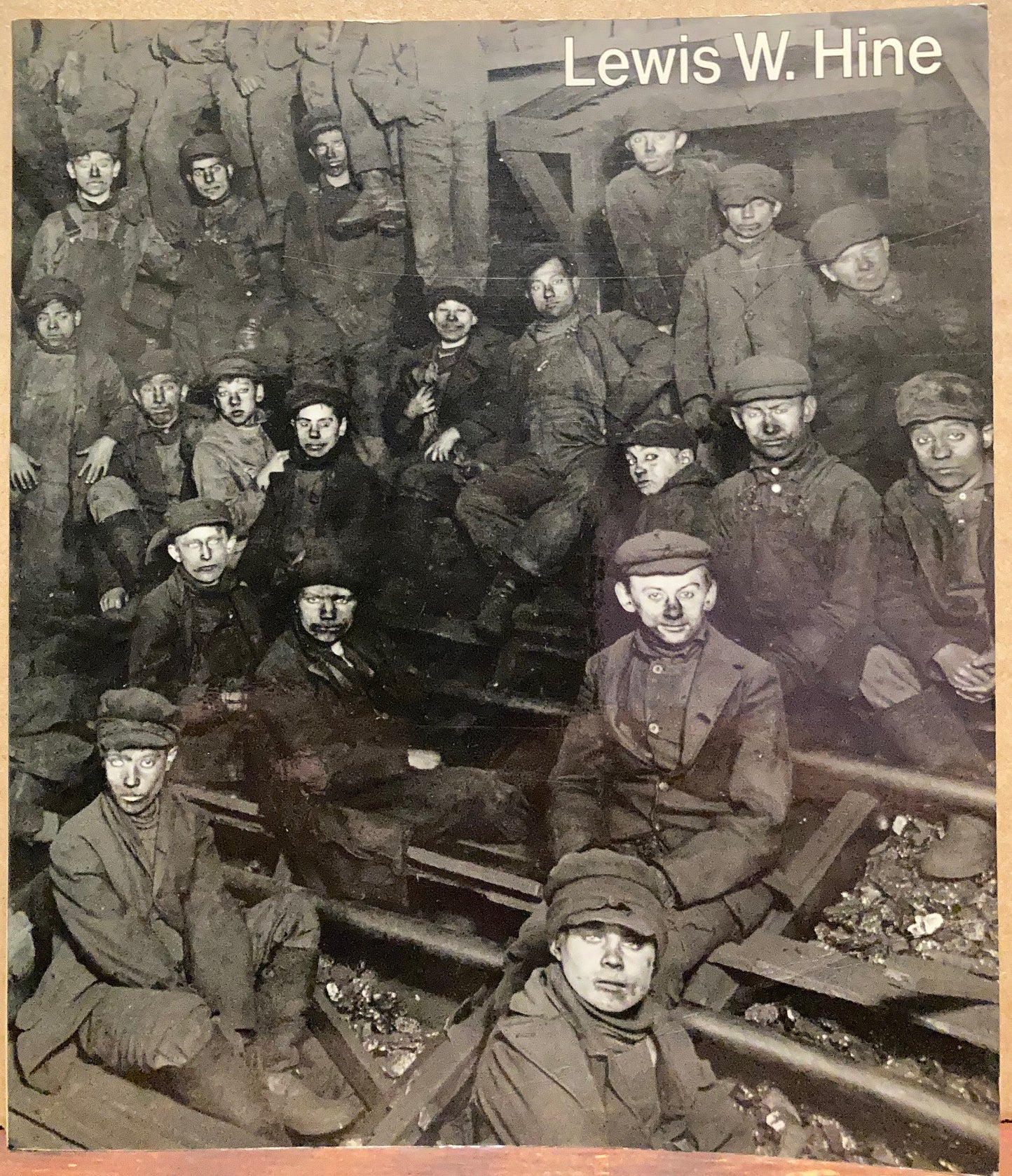
Hine, Lewis W. Lewis W. Hine, 1874-1940: Two Perspectives by Judith Mara Gutman.
Hine, Lewis W. Lewis W. Hine, 1874-1940: Two Perspectives by Judith Mara Gutman.
受取状況を読み込めませんでした
Grossman, 1974. Wraps, very good with crimps in cover, otherwise fine. By the author of Lewis W. Hine and the American Social Conscience. (1967). Summary:
Published in 1974, Lewis W. Hine, 1874-1940: Two Perspectives is a focused monograph written by cultural historian Judith Mara Gutman, featuring an introduction by legendary photojournalist Cornell Capa. Released as part of the International Center of Photography Library of Photographers series, this volume serves as a vital reassessment of Hine, the pioneering American sociologist who famously utilized his camera as an unyielding tool for social reform. The book features 45 high-quality black-and-white plates spanning Hine's decades-long career, alongside an exhibition history, detailed chronology, and bibliography.
1. Re-Evaluating the "Two Perspectives"
The book’s core analytical thesis rests on separating and juxtaposing two distinct angles of Hine's legacy:
-
The Reformer and Sociologist: Tracking his early, legendary investigative work for the National Child Labor Committee. The text explores how Hine adopted disguises—posing as a Bible salesman, postcard vendor, or machinery inspector—to infiltrate mines, mills, farms, and sweatshops to capture the brutal, hazardous conditions endured by working children.
-
The Modern Artist and Aesthetician: Shifting away from viewing Hine purely as a passive documentarian. Gutman argues that Hine was a highly deliberate artist who practiced what he termed "photo-interpretation." The text breaks down his subjective connection to his subjects, his masterful command of flash and framing, and how he laid the aesthetic groundwork for future documentary giants like Ben Shahn and Sid Grossman.
2. The Evolution of the American Worker
The text maps how Hine's photographic gaze evolved alongside the nation's industrial landscape. It shifts chronologically from his heartbreaking portraits of European immigrants arriving at Ellis Island to his later, celebrated "Men at Work" era. Gutman details how his focus matured from documenting the systemic exploitation of human beings to celebrating human dignity and the heroic, symbiotic relationship between modern laborers and machinery—culminating in his iconic coverage of the construction of the Empire State Building.
Lewis W. Hine, 1874-1940: Two Perspectives is significant for elevating academic scholarship on early American documentary photography. By refusing to isolate Hine's political activism from his formal visual choices, Judith Mara Gutman demonstrates that Hine’s work succeeded precisely because his deep empathetic humanism was paired with a sophisticated, pioneering mastery of the photographic craft.
Lewis Wickes Hine (1874–1940) was a pioneering American sociologist and documentary photographer whose imagery became a powerful catalyst for social reform in the early twentieth century. After studying sociology at the University of Chicago and Columbia University, Hine began using his camera as an educational and political tool, famously documenting the arrival of European immigrants at Ellis Island before working as an investigative photographer for the National Child Labor Committee (NCLC). Braving threats and using disguises to infiltrate mines, mills, and sweatshops, his poignant, unvarnished portraits of children working in hazardous conditions fundamentally swayed public opinion and directly influenced the passage of federal child labor laws. Later in his career, Hine shifted his focus toward celebrating human dignity in industry, capturing the symbiotic relationship between laborers and machinery in his "Men at Work" series and his iconic documentation of the construction of the Empire State Building.
