Gary Saretzky Photo Books
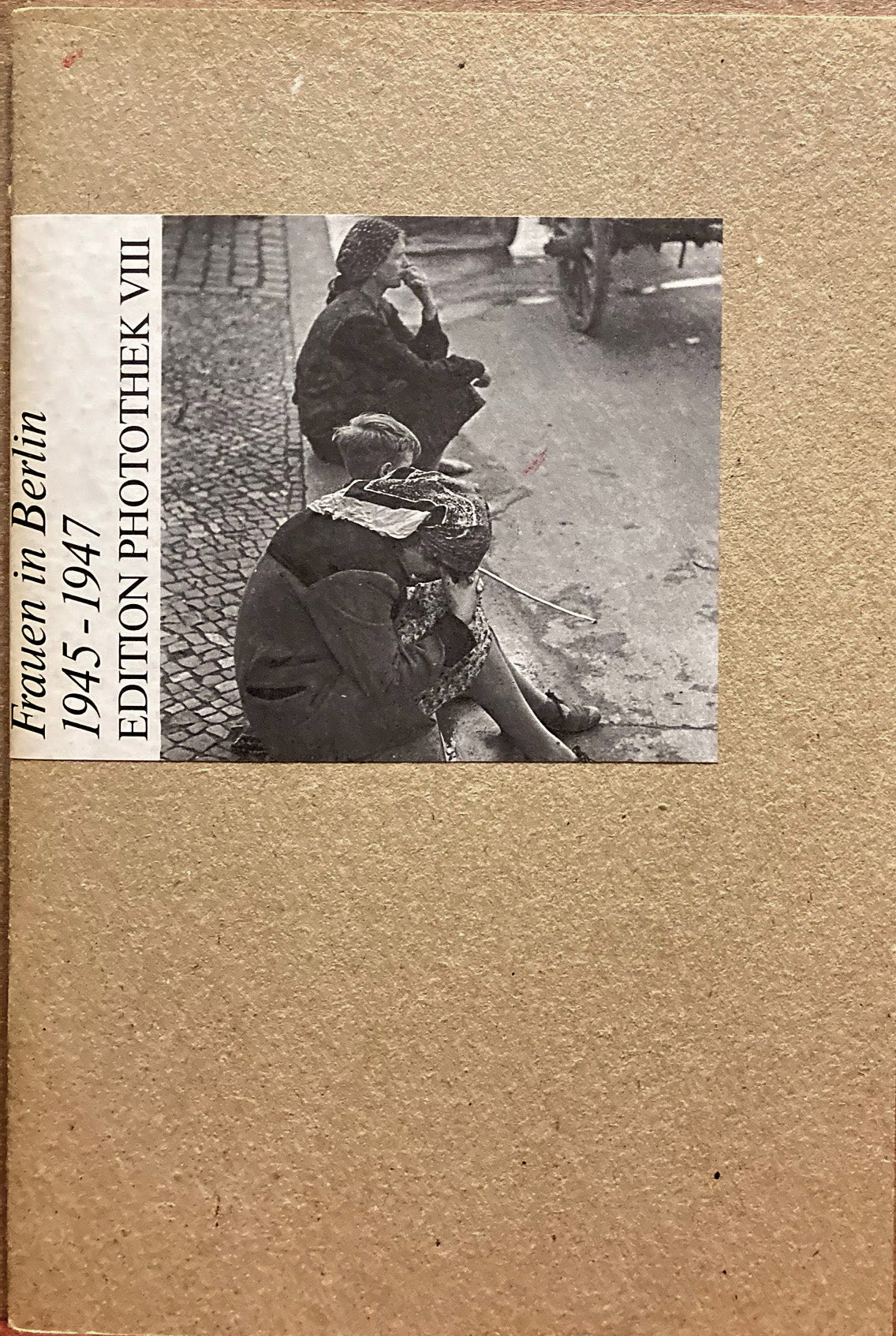
Gronefeld, Gerhard. Gerhard Gronefeld: Frauen in Berlin, 1945-1947.
Gronefeld, Gerhard. Gerhard Gronefeld: Frauen in Berlin, 1945-1947.
受取状況を読み込めませんでした
Herausgegeben von Diethart Kerbs, 1984. Introduction by Annemarie Troger. Dirk Nishen Verlag in Kreuzberg. Edition Photothek VIII. Text in German with English translation of two paragraphs about the photographer laid in, along with a postcard about three other similar books from the publisher. Staple bound in boards with title and photo pasted on covers. [Photos taken in 1945-1946 in aftermath of WWII. Born in 1911, Gronefeld was a photojournalist who, using a 35-mm camera, a Contax, supplied photos to Life, Today, Star, Quick, et al. This book contains black-and-white photographs of women in Berlin such as performers, flower sellers, prostitutes, college students, and beggars.] Fine. Summary:
Gerhard Gronefeld: Frauen in Berlin, 1945-1947 is a powerful photographic monograph that documents the lives of women in Berlin during the immediate, devastating aftermath of World War II. The book features the raw, street-level work of German photojournalist Gerhard Gronefeld. Utilizing a 35-mm Contax camera, Gronefeld captured the daily struggles and resilience of a city in ruins, focusing entirely on the female population that was left to rebuild it.
Key Themes & Highlights
-
The Diverse Realities of Survival: Gronefeld’s photographs move beyond simple stereotypes to show the wide-ranging roles women took on to survive in the occupied, destroyed capital. The book captures a diverse cross-section of Berlin’s female population, including university students, flower sellers, street performers, black-market traders, prostitutes, and beggars.
-
The Trümmerfrauen (Rubble Women): A central focus of the monograph is the iconic Trümmerfrauen—the women task forces responsible for clearing and salvaging millions of tons of debris from Berlin's bombed-out streets. Gronefeld's images detail their heavy physical labor and quiet determination amid the skeletal remains of the city.
-
Unvarnished Photojournalism: As a seasoned photojournalist who shot for major international publications, Gronefeld brought an objective, empathetic, and unposed quality to his work. His imagery avoids sentimentality, capturing instead the stark, everyday transaction of living under Allied occupation.
-
Historical and Sociological Context: The accompanying text provides critical context on the gender imbalance of post-war Germany, explaining how the absence of men forced a dramatic, structural shift in female independence and labor roles during these transitional years.
