Gary Saretzky Photo Books
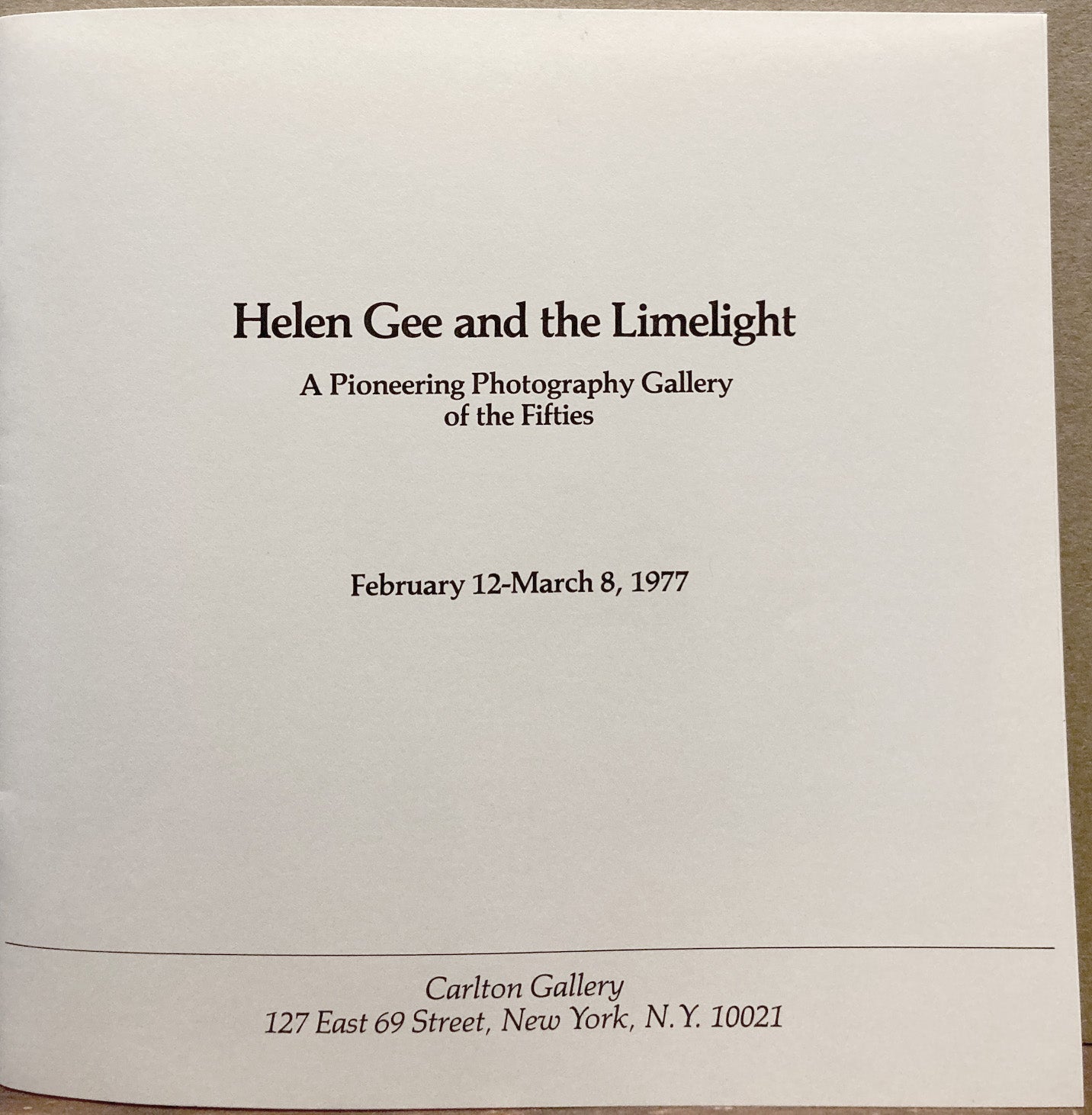
Gee, Helen. Helen Gee and the Limelight: A Pioneering Photography Gallery of the Fifties.
Gee, Helen. Helen Gee and the Limelight: A Pioneering Photography Gallery of the Fifties.
受取状況を読み込めませんでした
February 12-March 8, 1977. Carlton Gallery, New York. Essay by Peter C. Bunnell. Wraps, 20 pages. Includes illustrations by Paul Strand, Moholy-Nagy, Edward Weston, Leon Levinstein, W. Eugene Smith, Eugene Atget, Edouard Boubat, Aaron Siskind, Alfred Stieglitz, Berenice Abbott, Lisette Model, Robert Frank, and Wynn Bullock, plus list of Limelight exhibitors in individual and group shows and chronology of exhibitions, 1954-1961. Wraps, like new, without the fading to covers sometimes found. Summary:
Helen Gee and the Limelight: A Greenwich Village Photography Gallery and Coffeehouse in the Fifties (originally published in 1997 by the University of New Mexico Press and republished by Aperture) is an autobiographical memoir and historical account by curator and photo retoucher Helen Gee.
Key Details & Summary
-
Subject & Context: The book chronicles Gee's establishment and management of Limelight (1954–1961), New York City's first major post-war commercial photography gallery and the only gallery in the country during the 1950s dedicated exclusively to fine art photography.
-
The Business Model: To subsidize the financially risky gallery—where original prints by masters like Ansel Adams, Robert Frank, Berenice Abbott, and Edward Weston often failed to sell for even $20 to $50—Gee paired the exhibition space with a thriving 150-seat Italian coffeehouse at 91 Seventh Avenue South in Greenwich Village.
-
Cultural Hub & Masters: Over its seven-year run, Limelight hosted 60 exhibitions and served as a gathering spot for mid-century cultural figures, street photographers, and icons such as W. Eugene Smith, Diane Arbus, Philippe Halsman, Lisette Model, and Edward Steichen.
-
Personal & Social Narrative: Beyond the art world, the narrative details Gee's personal struggles as a single mother raising her daughter in Greenwich Village, navigating organized-crime landlords, and pioneering a commercial art space as a woman prior to the rise of the modern art market.
