Gary Saretzky Photo Books
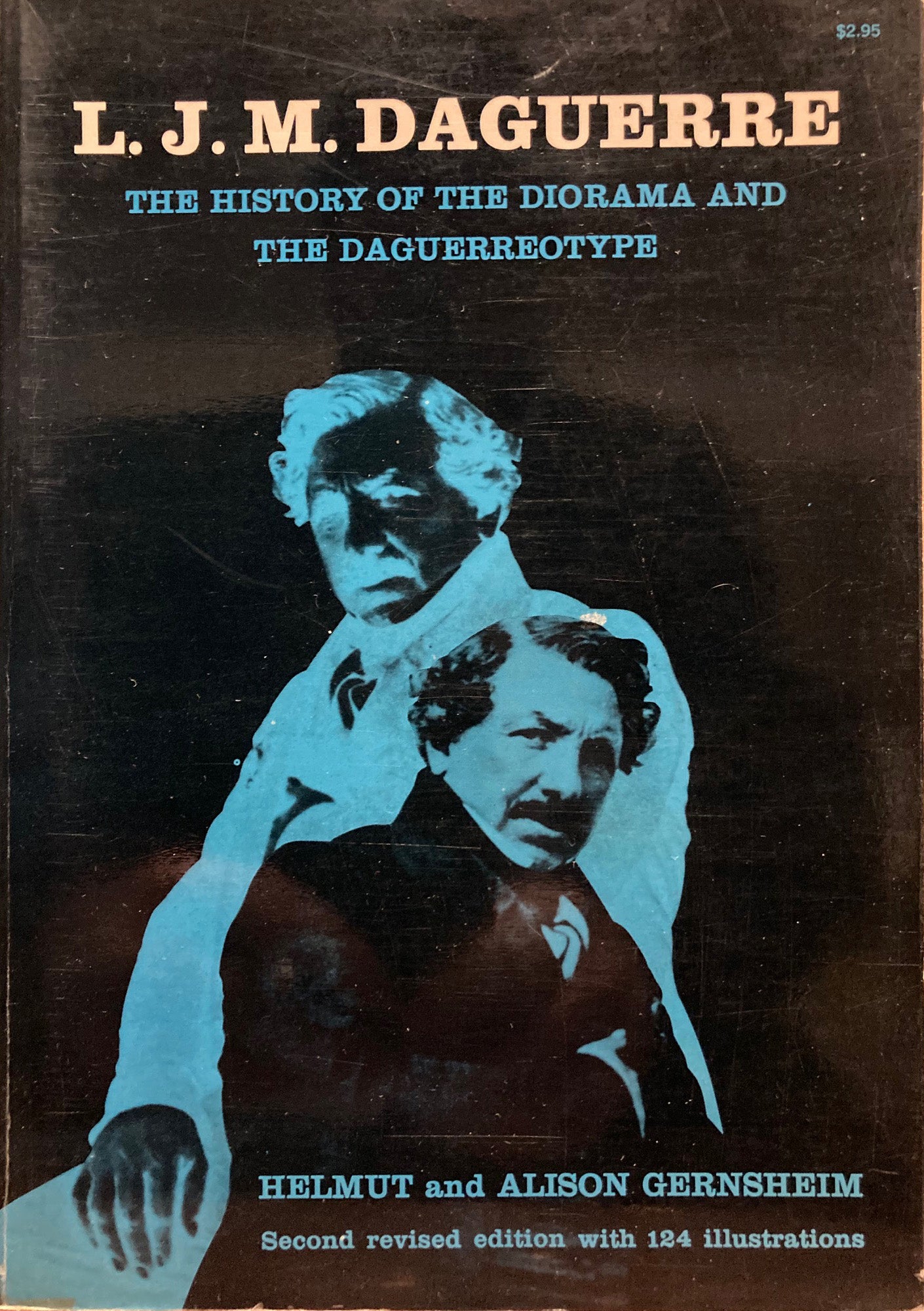
Daguerre. The History of the Diorama and the Daguerreotype by Helmut and Alison Gernsheim.
Daguerre. The History of the Diorama and the Daguerreotype by Helmut and Alison Gernsheim.
受取状況を読み込めませんでした
Second revised edition with 124 illustrations. Dover, 1968. Authoritative biography. Includes list of known daguerreotypes by Daguerre. First or early printing of the second edition, lacks ISBN number found in later printings of this edition. Wraps, VG+. Summary:
L. J. M. Daguerre: The History of the Diorama and the Daguerreotype by photohistorians Helmut and Alison Gernsheim (originally published in 1956 as L. J. M. Daguerre: The World's First Photographer) is the definitive biography and historical monograph tracing Louis-Jacques-Mandé Daguerre’s dual career as a master of visual spectacle and a pioneer of photography.
Key Summary & Highlights
-
The Diorama Era: The Gernsheims document Daguerre’s rise as a Parisian stage designer and co-inventor (alongside Charles Marie Bouton) of the Diorama in 1822. Using massive, semi-transparent painted canvases lit by shifting natural light through translucent screens and colored blinds, Daguerre created popular, highly realistic, trompe-l'œil illusions of changing seasons, times of day, and dramatic catastrophes.
-
Collaboration with Niépce: The authors detail Daguerre’s pivotal 1829 partnership with Nicéphore Niépce, who had produced the earliest permanent photograph (heliograph) in 1826. They trace how Daguerre built upon Niépce's foundational research following Niépce's death in 1833, replacing bitumen with light-sensitive silver iodide and discovering latent image development using mercury vapor.
-
The Invention and Announcement of the Daguerreotype: The book chronicles the dramatic 1839 public announcement by François Arago to the French Academy of Sciences, where the French government purchased Daguerre's process and gifted it "free to the world" (except Great Britain, where it was patented).
-
Impact and Legacy: The study covers the immediate international explosion of daguerreomania, detailing technical improvements, exposure reduction, and the widespread commercialization of portrait photography throughout the 1840s and 1850s until the daguerreotype was superseded by wet-plate collodion processes.
Note: On December 14, 1829, Louis J.M. Daguerre and Nicéphore Niepce signed a contract in France to share their research on photography. Daguerre (November 8, 1787–July 10, 1851) was an artist who was trying to invent photography but hadn’t gotten very far. Niépce (March 7, 1765–July 5, 1833) had already invented the heliograph; one he made on a pewter plate is now the oldest surviving image made with a camera. After Niépce’s death in 1833, Daguerre invented the daguerreotype with the photo on a silver-coated copper plate. The secrets of the daguerreotype and Niépce’s heliogravure were made public in 1839 in a deal with the French government, following which photography soon became practiced around the world.
